Introduction
China represents the largest automotive production and sales market globally, with annual vehicle output reaching tens of millions of units. A significant portion of automotive components depends on injection molds, making tooling capability a critical factor in production efficiency and quality consistency.
This guide reviews 5 leading mold manufacturers in China, outlining their technical strengths, production capacity, and industry positioning within the automotive sector.
What Are Automotive Molds and How Are They Used
In automotive production, molds function as precision tooling systems that control part shape, tolerance accuracy, and repeatability across large-scale manufacturing cycles.
Common Mold types:
- Plastic Injection Molds – Mainly used for the production of automotive interiors, lighting systems, and various plastic components, they can achieve the manufacturing of complex shapes and fine structures.
- Die-Casting Molds – Commonly used in the manufacturing of engine housings and other metal components that require high strength, ensuring the strength and durability of the parts.
- Stamping Molds – Suitable for the forming processing of electrical systems, vehicle body panels and structural components, and widely used in mass production.
Key Functions of Auto Parts Molds:
- Precision Manufacturing – Molds can ensure the consistency of the products, enabling manufacturers to produce extremely precise and structurally complex automotive components.
- Efficiency and Scale – Once the mold design is completed, high-efficiency large-scale production can be achieved, effectively reducing the manufacturing cost of individual products.
- Customization – With the development of the automotive industry, manufacturers are increasingly relying on molds to meet diverse demands. Whether it is components for lightweight electric vehicles or durable engine casings, they all need to be produced through precise molds.
- Durability – The high-quality molds have been meticulously designed and manufactured to withstand extreme temperatures and pressures, which makes them play a crucial role in continuous and large-scale production.
Automotive molds are central to precision vehicle manufacturing, affecting both production efficiency and part consistency. The following overview highlights several mold manufacturers recognized in the global market.
Top 5 Chinese Automotive Injection Molding Companies
Growing demand for precision automotive components has heightened the importance of mold quality and manufacturing capability. The following overview highlights 5 leading automotive injection molding manufacturers.
1. HingTung (Shenzhen Xingtong Precision Technology Co., Ltd.)
-
- Established: 2011
- Headquarters: Shenzhen, China
- Main Products: Auto Parts Mold, Plastic & Metal Molds, Mold Design, Injection Molding
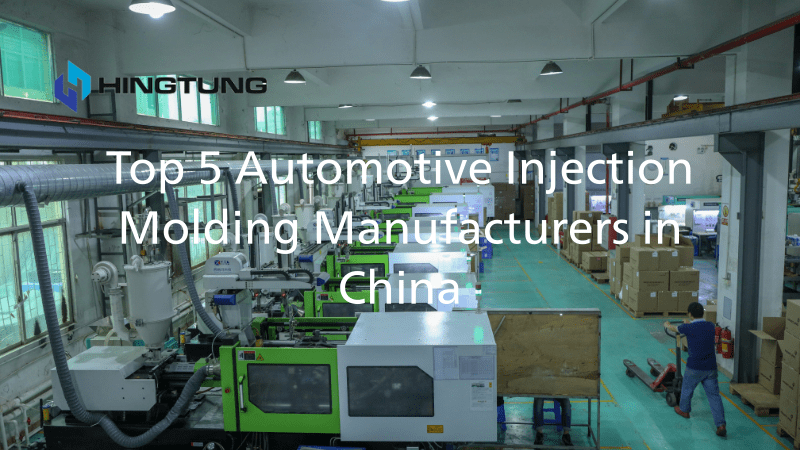
- Pros: HingTung injection molding factory combines advanced machining infrastructure, structured DFM review, and integrated tooling-to-production management within a single 50,000 m² factory. This alignment enhances dimensional control, shortens development cycles, and supports stable scaling from trial runs to full production..
- Established: 2011
- Cons: While digital platforms improve efficiency, some clients may still value face-to-face interaction for detailed technical discussions and project alignment.
2. Rapid Direct
-
- Established: 2009
- Headquarters: Shenzhen, China
- Main Products: Auto Parts Mold, Insert Molding, CNC Machining, 3D Printing
- Pros: By integrating conventional tooling know-how with advanced manufacturing processes, RapidDirect offers a diversified service portfolio, including CNC machining and sheet metal fabrication.
- Established: 2009
- Cons: For projects demanding extreme dimensional tolerances or extended mold lifespan, certain users have observed variations when compared with traditional premium tooling specialists.
3. Intertech
-
- Established: 2009
- Headquarters: Taiwan, China
- Main Products: Custom Auto Parts Mold, Silicone & Rubber Mold, Stamping Mold
- Pros: With a focus on tailored tooling solutions, Intertech has built experience in niche applications including chamfer molds, ejector mechanisms, and two-component injection systems.
- Established: 2009
- Cons: With production based in Taiwan, overall manufacturing costs may be comparatively higher. In addition, lead times for large-scale orders can vary when compared with some mainland-based manufacturers.
4. Auto Proto Way
-
- Headquarters: Guangdong, China
- Main Products: Auto Parts Mold, Prototyping, CNC Machining, Vacuum Casting
- Pros: The company brings over 20 years of expertise in automotive manufacturing, with particular emphasis on rapid prototyping and application-specific solutions.
- Headquarters: Guangdong, China
- Cons: Its operational focus is better aligned with small-batch development and early-stage validation, rather than ultra-large-scale standardized production programs.
5. Holly Plastic
-
- Established: 2000
- Headquarters: Zhejiang, China
- Main Products: Mold Design, Injection Molding, Rapid Prototyping
- Pros: With experience serving global automotive brands such as BMW and Honda, Holly Plastics has established a strong position within China’s plastic components manufacturing sector.
- Established: 2000
- Cons: The company has built significant scale and brand recognition in plastic parts production. However, its portfolio shows greater emphasis on polymer components than on complex metal molds or specialized high-end precision tooling.
How to Select an Automotive Mold Manufacturer
Given the wide range of injection molding suppliers available worldwide, companies should assess several key factors before making a final selection.
- Technical Expertise and Experience
Manufacturers with proven experience in automotive mold engineering should be considered first, especially those able to manage complex tooling solutions including multi-cavity and two-component molds.
It is important to evaluate whether the supplier possesses modern production infrastructure and the capacity to support both early-stage prototyping and large-scale manufacturing programs.
Quality assurance is a key indicator when evaluating suppliers, covering inspection procedures, certification compliance, and production processes that follow recognized international standards.
- Customization and Innovation
Growing demand for EV components and customized products favors mold manufacturers capable of delivering tailored solutions.
Beyond pricing, manufacturers should demonstrate the ability to deliver consistent timelines while maintaining cost efficiency across production programs.
Long-term mold reliability often depends on structured after-sales services, including maintenance programs, repair capability, and ongoing technical support.
Trends in Market Demand for Auto Parts Molds
New technologies, evolving market demands, and the rise of electric vehicles are transforming mold design and manufacturing. Several key trends are shaping the industry.
1. New Model Development
As automobile manufacturers continue to introduce new models featuring advanced safety features, superior handling capabilities, and intelligent functions, the demand for engine, body, and suspension molds is continuously increasing.
2. Replacement & Maintenance
The aging of vehicles and the fierce market competition have driven the demand for high-quality replacement parts, which in turn has led to the demand for molds capable of producing durable components. .
3. Manufacturing Process Optimization
Automobile manufacturers aim to enhance efficiency and reduce costs. Precision molds not only lower the waste rate but also ensure production consistency, thus aligning with the goals of lean production.
4. Customization and Personalization
Consumers are increasingly seeking personalized vehicles. Custom molds enable manufacturers to offer diverse designs and configurations for specific markets.
5. New Energy Vehicle (NEV) Growth
The booming EV market has brought about new demands, including specialized molds needed for battery casings, motor systems, and lightweight components, creating new opportunities for mold manufacturers.
Overall, the market outlook remains optimistic. Mold manufacturers expect to continuously innovate in areas such as material selection, cooling systems, and design technologies in order to maintain their competitive edge and meet the growing industry demands.
Frequently Asked Questions (FAQs)
Q1: What are the common problems with auto parts molds?
During production, automotive molds can experience wear, fatigue, demolding challenges, and in extreme cases deformation or cracking caused by high injection pressures. Preventive maintenance, durable materials, optimized structural design, efficient cooling, and controlled operating practices help reduce these risks.
Q2: How does mold quality affect auto manufacturing?
High-quality molds enable accurate dimensions, smooth surfaces, and consistent performance, helping manufacturers reduce rework and improve production efficiency.
Q3: What materials are commonly used in automotive parts?
Polypropylene (PP) is widely used for automotive seats, body parts, and under-hood components. Polyurethane (PU) is commonly applied in seat cushioning and interior parts, while polyvinyl chloride (PVC) is used for upholstery, electrical components, and interior trim.
Conclusion
Auto parts molds play a critical role in modern automotive manufacturing, enabling precision, efficiency, and repeatability in large-scale production. While many global manufacturers provide capable tooling solutions, HingTung differentiates itself through integrated services, advanced production facilities, and a structured transition from prototype development to mass production.
For companies seeking stable manufacturing support, HingTung offers coordinated engineering, tooling, and production capabilities designed to meet both current project requirements and evolving automotive industry demands.