
Share
Share
Share
Share
A pervasive, highly frustrating, and consistently misunderstood issue plagues property owners during the intense summer months: exterior gates that operated flawlessly in the cool morning hours suddenly refuse to close, bind against their posts, or fail to latch properly by mid-afternoon. Often misdiagnosed by laypersons as shifting ground soil, failing hinges, or poor initial craftsmanship, the actual culprit is an immutable fundamental principle of thermodynamics known as thermal expansion. Understanding the physics behind material behavior is crucial for engineering a boundary system that functions predictably year-round, regardless of the ambient temperature.
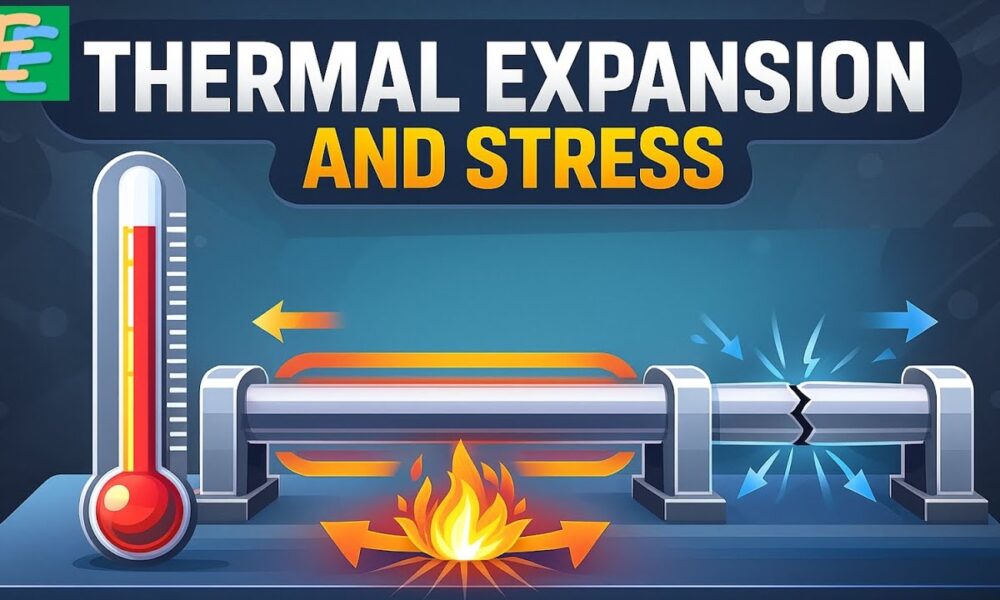
When structural materials are subjected to thermal energy from direct solar radiation, their internal molecular kinetic energy increases. In synthetic polymers like polyvinyl chloride (PVC), this heightened energy causes the long-chain molecules to vibrate more aggressively and push further apart from one another, resulting in macroscopic, measurable dimensional expansion. The exact degree to which a specific material expands is governed by its unique coefficient of linear expansion, denoted by the symbol (). The mathematical relationship governing this change is expressed by the formula:
Where represents the total expansion or contraction in inches, is the coefficient of linear expansion for the specific material, is the length of the material run in feet, and is the total change in temperature measured in degrees Fahrenheit.
| Material Type | Coefficient of Thermal Expansion (α per ∘F) | Estimated Expansion per 100 ft over a 100$^circ F$ shift |
| Steel | 0.0000065 | 0.78 inches |
| Aluminum | 0.0000128 | 1.56 inches |
| Standard PVC / Vinyl | ~0.0000330 to 0.0000406 | 4.00 to 4.87 inches |
As the data illustrates, the expansion coefficient for PVC is substantially higher than that of aerospace metals. While a steel panel might expand less than an inch over a massive temperature swing, a continuous run of synthetic polymer can expand nearly half a foot under identical conditions. Consequently, a standard synthetic gate exposed to direct, radiant solar heating will increase in both width and height. Furthermore, darker pigments actively absorb significantly more solar radiation than lighter colors, pushing the vinyl surface temperatures much higher than the ambient air temperature. This creates steep temperature gradients between the hot exterior surface and the cooler interior core, which not only drives uneven thermal expansion but can also lead to permanent warping, edge curling, and structural creep if not properly accommodated.
This thermomechanical reality becomes acutely problematic at the precise tolerances of the gate hinge and latch points. If the clearance between the gate frame and the latch post is too narrow—often the result of an inexperienced contractor prioritizing a tight, visually seamless look over required functional mechanical tolerances—the natural expansion of the material will cause the latch mechanism to violently collide with the strike plate, rendering the gate inoperable. As the ambient temperature drops in the evening and the sun sets, the polymer loses kinetic energy, contracts back to its baseline dimensions, and the gate miraculously functions again.
To permanently resolve this issue, the installation methodology must respect the material’s inherent physical properties. When installing vinyl fencing los angeles, professional installers must calculate the maximum anticipated thermal load based on local climate data and leave precise expansion gaps. Industry best practices dictate leaving an opening approximately two inches wider than the gate itself to accommodate this seasonal and diurnal movement. Furthermore, utilizing heavy-duty, fully adjustable stainless steel hinges allows for rapid micro-adjustments to the gate’s pitch and yaw, ensuring the latch aligns perfectly without requiring the system to be uninstalled.
For properties requiring zero-tolerance structural rigidity—such as high-security estates utilizing automated sliding driveway gates—transitioning to metallic alloys is highly recommended. Utilizing aluminum fencing services provides a barrier with a vastly lower thermal expansion profile, ensuring that heavy latch mechanisms and sensitive automated gear motors maintain absolute perfect alignment regardless of extreme Southern California temperature fluctuations. Proper material selection, combined with a deep understanding of thermodynamic tolerances, ensures decades of frictionless, reliable operation.