
Share
Share
Share
Share
Is Your Truck Sagging? How an Air Suspension Kit Solves the Problem
You know the feeling. You load up your truck bed with heavy stuff or hook up a big trailer. The rear end sinks down. This “truck squat” looks bad. But it’s more than that. It points your headlights up into the trees. It hurts your steering. It makes braking less safe. It puts huge stress on your factory suspension. This leads to a bouncy, unsafe ride.
The modern fix for this problem is a high-quality air suspension kit. These systems add support right where you need it. You can adjust them too. They level your truck. They restore ride quality. They make towing and hauling safer. This guide will walk you through everything you need to know. You’ll learn how to choose and use an air suspension kit in 2026.
Key Takeaways
- Solves Truck Squat: Air suspension kits level your truck when carrying heavy loads. This improves safety and stability.
- Improves Ride Quality: They reduce bouncing and body roll. You get a smoother, more controlled ride.
- Does Not Increase Capacity: An air kit helps you safely manage weight within your truck’s existing limits. It does not increase those limits.
- Types Vary: Kits range from simple, manual-fill bags to advanced systems. Some have onboard compressors and in-cab controls for quick adjustments.
- DIY or Pro Install: Installation can be a rewarding DIY project for those with basic tools. Professional installation is always an option for guaranteed results.
What an Air Suspension Kit Is
An air suspension kit either helps or replaces your truck’s stock suspension. It uses tough, flexible air springs to do the work. These are often called “air bags.” They are not balloons. They are made of durable rubber and fabric, similar to a tire. You can add or remove air. This makes the suspension firmer or softer.
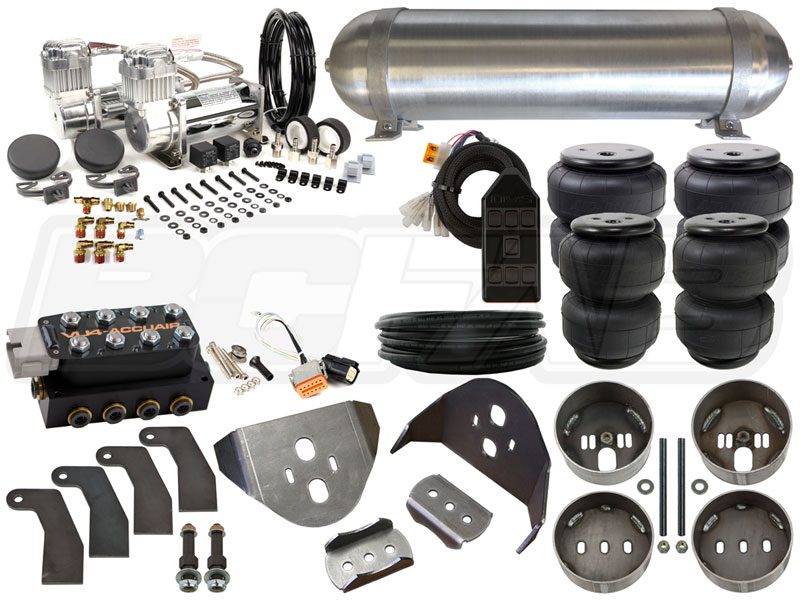
Here are the main parts of a complete system:
- Air Springs (Air Bags): These are the core of the kit. They sit between your truck’s frame and axle. They provide lifting power when filled with air.
- Air Compressor: This is an electric pump. It fills the air springs. Compressors come in different sizes for light or heavy use.
- Air Tank (Reservoir): A tank stores compressed air. This lets you make fast suspension adjustments. You don’t have to wait for the compressor to run.
- Valves & Manifold: This part acts like the brain. It controls where the air goes. It sends air to the specific air springs you want to adjust.
- Controller: This is how you interact with the system. It can be a simple gauge in the cab. It can be a wireless remote. It can even be an app on your phone.
- Air Lines & Fittings: These are the tubes and connectors. They carry air from the compressor to the tank and then to the air springs.
Many brands offer these parts together. They come in convenient, complete air suspension packages. This ensures everything works together perfectly.
Why Your F-250 Needs Air Bags for Towing
Heavy-duty trucks like the Ford F-250 are built to work hard. The 2026 models have amazing towing and payload numbers. However, their factory suspension is a compromise. It has to provide a smooth ride when the truck is empty. It also has to handle a heavy load. It can’t do both perfectly.
This is where f250 air bags make a huge difference. They provide the extra support needed to level the truck under load. This brings the vehicle back to its proper stance. This is critical for safety and performance.
Think about it in terms of before and after.
- Before: With a heavy trailer, you might feel the truck “porpoising” or bouncing on the highway. Steering can feel light and vague. You might bottom out on big bumps.
- After: With an air suspension kit installed, the ride is stable and controlled. Steering feels confident again. You have your full suspension travel back to absorb bumps.
It is important to remember one thing. An air suspension kit does not increase your truck’s weight rating. Its job is to help you safely and comfortably handle heavy loads within the limits set by the manufacturer.
How to Choose the Right Air Suspension Kit
With so many options, picking the right air suspension kit can feel overwhelming. By answering a few key questions, you can narrow down the choices. You’ll find the perfect fit for your truck and your needs.
-
What is Your Primary Use?
Occasional Heavy Loads: If you only haul a big load a few times a year, a simple kit with manual inflation valves may be all you need. You can fill them with an air compressor at a gas station.
Frequent Towing/Varying Loads: If you often tow different trailers or carry different loads, an onboard compressor with a controller is a great upgrade. It lets you make adjustments from the driver’s seat.
Performance/Custom Builds: For show trucks or maximum performance, a high-end kit with a large air tank and a sophisticated digital controller offers the fastest adjustments and most features.
-
What is Your Budget?
Prices for an air suspension kit can vary widely. Basic manual kits are the most affordable. Advanced systems with tanks, powerful compressors, and app control are a larger investment. Set a budget to help guide your decision.
-
Load-Assisting vs. Full Replacement?
For most trucks like the F-250, “helper bags” are the most common choice. These kits work with your existing leaf springs. They provide extra support. Full replacement systems remove the factory springs entirely. These are more common for custom low-rider or high-performance applications.
-
What Brand Should You Trust?
Look for brands with a solid history of quality and customer support. A good warranty and clear installation guides are signs of a trustworthy company. Established brands like Retrue offer detailed product information and support. This helps you make a confident purchase.
Installation: DIY vs. Professional Help
Once you have your air suspension kit, it’s time for installation. You can either do it yourself or hire a professional.
The DIY Route
Installing an air suspension kit is a very doable project. You need basic mechanical skills. The most satisfying part is often routing the air lines cleanly along the frame rails. You secure them with zip ties so they’re safe from heat and moving parts. You’ll feel a sense of accomplishment when you hear the compressor kick on for the first time. You’ll see the truck lift.
A simple overview of the steps includes:
- Assemble the air springs and mounting brackets.
- Mount the assemblies to your truck’s frame and axle.
- Install the compressor and air tank (if you have them).
- Run all the air lines and electrical wiring.
- Test the entire system for leaks and proper function.
You will need basic hand tools. These include a socket set, a drill, a torque wrench, and a good set of jack stands. You need these to safely support the vehicle.
Hiring a Professional
If you’re not comfortable with the work, a professional installer offers peace of mind. They have the experience and tools to get the job done quickly and correctly. You also get a warranty on their labor.
When choosing a shop, ask a few questions. “Have you installed an air suspension kit on an F-250 before?” “How do you check for leaks?” “What is your labor warranty?”
Keeping Your Ride Smooth: Maintenance
A quality air suspension kit is built to last. But a little maintenance will ensure it performs well for years.
- Maintenance Tips:
- Regularly check for leaks. Use soapy water on fittings and air lines.
- If you have an air tank, drain it every few months. This removes moisture.
- Visually inspect the air bags for any signs of cracking or rubbing.
- Always keep the minimum recommended air pressure in the bags. This is usually 5-10 PSI. This prevents them from being damaged when unloaded.
Below is a table for common issues and how to solve them.
| Problem | Possible Cause | Solution |
| System Won’t Hold Air | Leaky fitting, punctured air line, or damaged air bag. | Use soapy water to find the leak; tighten or replace the fitting/line. |
| Compressor Won’t Turn On | Blown fuse, bad relay, or poor electrical ground. | Check the fuse and relay; inspect and clean the ground connection. |
| One Side is Lower | A leak on one side, or a faulty valve in the manifold. | Isolate and test the side that is losing air to find the leak. |
If a specific part fails over time, you can often find replacements. It’s usually possible to buy individual air suspension components. This gets your system working like new again.
Frequently Asked Questions (FAQ)
Do air suspension kits increase my truck’s towing capacity?
No. An air suspension kit does not legally increase your vehicle’s weight rating or towing capacity. Its purpose is to help you more safely and comfortably manage the weight within your truck’s rated limits. It does this by leveling the load and improving stability. Always follow the manufacturer’s weight ratings.
How long do f250 air bags last?
A high-quality air suspension kit from a reputable manufacturer can last for many years. Often 100,000 miles or more. This requires proper installation and basic maintenance. The lifespan depends on usage, climate, and how well they are cared for.
Will installing an air suspension kit void my truck’s warranty?
In the U.S., the Magnuson-Moss Warranty Act protects consumers. A manufacturer cannot void your entire vehicle warranty just because you’ve installed an aftermarket part. However, if the air suspension kit directly causes a failure in a related factory component (like a shock or axle), the dealer may deny a warranty claim for that specific repair.
Is a complex air management system with a tank and controller necessary?
Not always. For users who tow the same load consistently, a basic kit with manual inflation valves can be very effective. It’s like filling a tire. It’s also budget-friendly. An onboard compressor and controller are a convenience upgrade. They’re ideal for those who frequently change loads. They let you make adjustments from the driver’s seat.
What is the ideal air pressure to run in my air bags?
This varies greatly depending on the load. Most kits have a recommended minimum pressure. This is usually 5-10 PSI. This prevents damage when unloaded. When loaded, you should add air until the truck is level. There is no single “correct” pressure. It’s all about achieving a level stance for the specific weight you are carrying.





