Share
Share
Share
Share
In Singapore, the focus on early development starts much earlier than many people realise. An infant care centre isn’t just a place for babysitting while parents work. It is the first stage of a child’s educational journey. The transition into a formal pre-nursery curriculum begins with the sensory experiences a baby has in their first few months. It’s about building a scaffold of trust and curiosity that will support them as they grow. When the environment is right, even the smallest baby can start to explore their world with confidence.
The Power of Responsive Caregiving
The most important detail in any infant care centre is the quality of the relationship between the caregiver and the baby. This is often called responsive caregiving. It means that when a baby reaches out, someone is there to respond, not just with a bottle or a diaper change, but with a smile and a warm voice. These tiny interactions are the building blocks of the brain. They tell the infant that the world is a safe and predictable place. Without this foundation of trust, no amount of fancy toys or curriculum will matter.
A professional caregiver in a top-tier infant care centre is trained to be an expert observer. They notice if a baby prefers a certain toy or if they are feeling a bit overwhelmed by the noise. This personalised attention is what helps a baby develop a sense of self. It’s about respecting each infant’s unique temperament and pace. When a child feels truly seen and understood by their caregiver, they are much more likely to settle in quickly and begin engaging with the world around them. It is the invisible work that makes all the difference.
Designing for Sensory Discovery
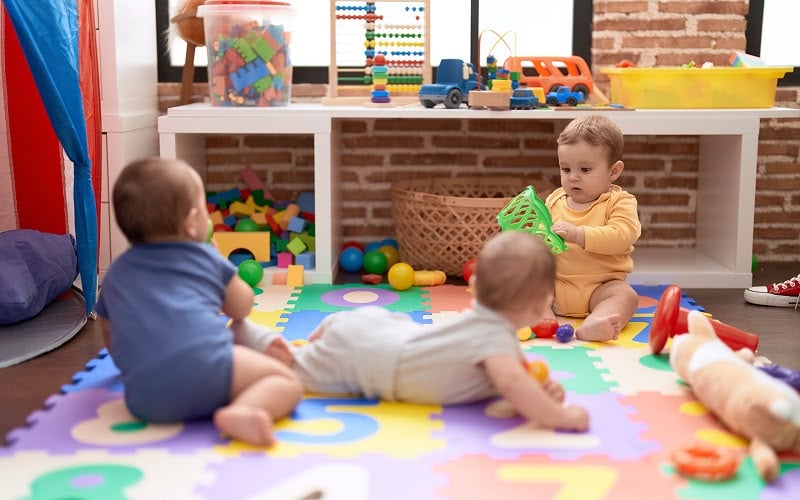
Infants learn through their senses: touch, sight, sound, and even smell. A thoughtfully designed infant care centre uses this as the blueprint for their space. Instead of overwhelming babies with bright, screaming colours and loud electronic toys, a good centre focuses on soft textures, natural wood, and gentle lighting. This calm environment prevents overstimulation and allows babies to focus on the things that actually matter, like the texture of a piece of silk or the sound of a soft bell.
This is where the seeds of a pre-nursery curriculum are sown. Activities are designed to be open-ended. For example, a sensory basket filled with items of different weights and temperatures, like a cold metal spoon and a warm woollen ball, provides a rich learning experience for a six-month-old. They are learning about physics and materials long before they can even say the words. These micro-lessons are carefully planned to spark curiosity without causing stress. It’s about providing just the right amount of challenge for their developing minds.
Hygiene and Safety: The Non-Negotiables
In an infant care centre, the little details of hygiene are actually big deals. Babies have developing immune systems, and they explore everything with their mouths. This means a rigorous cleaning schedule is essential. But it’s also about how the space is laid out. Are the diaper-changing areas completely separate from the play areas? Is the milk preparation station kept to hospital-grade standards? A parent should be able to feel the cleanliness of a centre the moment they walk in, without it smelling like harsh chemicals.
Safety, too, is in the details. It’s about the rounded corners on furniture, the finger-guard protectors on doors, and the way the floor is cushioned to handle those first wobbly steps. Even the way babies are put down for naps, following the latest safe sleep guidelines, is a critical detail that provides peace of mind. When a centre obsesses over these technicalities, it allows the parents and the caregivers to focus on the joyful parts of early childhood. You can’t have great learning without a foundation of total safety.
Preparing for the Next Big Step
As a baby approaches the age of eighteen months, their needs start to change. They become more mobile, more social, and hungry for more complex challenges. A high-quality infant care centre will have a clear pathway into their pre-nursery curriculum. This transition shouldn’t be a cliff that the child falls off, but a gentle slope. The children might start visiting the pre-nursery classroom for short play sessions, or the big kid teachers might come in to read stories to the older infants.
This phased approach helps manage the separation anxiety that often comes with a change in routine. It also ensures that the data about a child’s preferences and development is passed on to the next set of teachers. It’s about continuity of care. When a school takes the time to manage these hand-offs with care, the child feels secure enough to take on the new challenges of a more structured pre-nursery curriculum. It is the final detail that completes a successful first chapter of their education.
Conclusion
In the world of infant care, there are no small things. Every choice, from the fabric of a blanket to the tone of a caregiver’s voice, plays a role in shaping a child’s experience. By choosing an infant care centre that focuses on these little details, you are providing your child with a premium start in life. You are giving them a place where they are safe, loved, and encouraged to be curious. It’s these small beginnings that lead to the most extraordinary futures.
Ready to find a nurturing environment for your little one? Get in touch with E-Bridge Pre-School today.