
Share
Share
Share
Share
In addition to keeping your dog busy, play provides a dogs body with physical activity, a dogs mind with mental stimulation, emotional satisfaction and opportunities to strengthen relationships between dogs and people. In addition to building trust through a well designed play session, it also creates good manners for your dog and allows them to demonstrate their innate nature by expressing themselves in a safe environment.
Not all forms of play provide the same level of benefit to you and your dog. Some forms of play could promote unwanted behavior or result in the possibility of injury. If you understand how your dog experiences and views play, each playtime will be both more enjoyable and significant.
Why Play Is Important
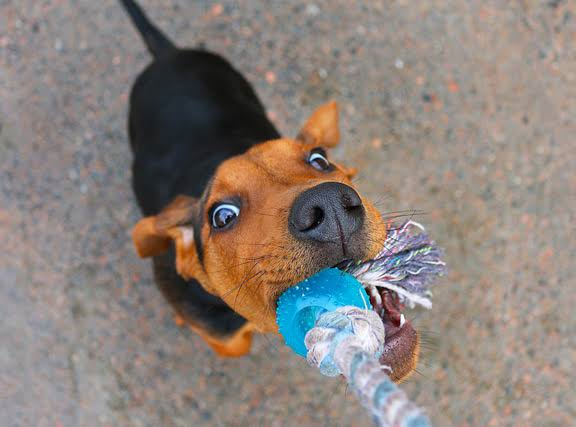
Chasing, seeking out items, tugging at objects, chewing on items and discovering new things are all things dogs enjoy doing because they represent what we consider natural behavior for a dog.
Even though this type of behavior may be less active today as companion animals (and therefore is not necessary), these behaviors are still very much a part of who your dog is today. Engaging in regular playtime will satisfy your dog’s physical needs while providing mental challenges.
Regular playtime reduces boredom, improves confidence and prevents frustrations from forming into extreme examples of barking excessively or chewing everything in sight. For many dogs, engaging in some form of play together represents one of the best means to create a positive association with you.
Choose Activities That Match Your Dog
All dogs have individual preferences, varying levels of energy and differences in physical ability. Selecting games that suit your dog’s preferences ensures that play time remains fun and does not cause undue stress.
Active breeds typically enjoy games similar to fetch or those that allow them to run and solve problems (such as agility type games). Dogs that are smaller in stature or older in years tend to enjoy slower paced games or simple tug of war games where the emphasis is placed upon mentally stimulating activities rather than physically demanding ones.
Puppies require additional considerations when choosing playtime. While puppies’ bones and joints are still developing, prolonged high impact activities or repeated jumping activities should be avoided.
Keep Play Structured
Many pet owners believe excitement is the main goal of play; however, developing structured play provides dogs with an understanding that the time for play can be initiated and stopped by the owner, as opposed to being based solely upon how long the dog wants to engage in play.
The inclusion of brief interruptions within play activities enables the owners to provide their pets with the opportunity to experience reduced excitement levels and demonstrate responsiveness (even if they are currently engaged in activity).
Structured play allows dogs to develop self control through enjoyable experiences.
Common Mistakes During Play
Certain playful habits will inadvertently promote behaviors that will prove challenging to address at a future date.
Encouraging rough jumping
While jumping up onto the owner during playtime may appear innocuous in a puppy, once the puppy grows into a full-grown adult dog, the potential for serious injury exists due to increased size and strength.
Separate training of calm greeting responses from play will assist the dog in distinguishing between a greeting and play.
Using Hands as Toys
Playing wrestling with your hands or engaging your puppy in biting your fingers can create an association between human skin and items used in play.
The use of acceptable toy alternatives will establish a differentiation between items intended for play and people.
Playing without breaks
If you continuously run after your dog, chase your dog or have your dog engage in continuous fetch-type activities, you may eventually tire your dog prior to recognizing it. Many dogs will continue to engage in physical exertion regardless of the extent of their exhaustion. Fatigue leading to muscle strains or heatstroke can occur.
The inclusion of regular brief rest periods will contribute to maintaining safe conditions for both the dog and the owner’s enjoyment.
Ignoring Overstimulation Signs
If you have a dog that gets overly excited, it will start barking nonstop, jump up for your clothes, etc., and respond less frequently to the usual things we give our dogs. When the dog’s excitement has reached an all-time high, stopping the game at a calm point is usually easier than going on until your dog has no energy left.
Building Trust Through Play
Strengthening the bond between a dog and its owner can be done by playing with your dog. Games that are enjoyable, predictable and comfortable for the dog will create many opportunities to have positive times together. As the owner engages in enjoyable games with his dog, the dog begins to make an association with the owner as safe, fun and rewarding.
Building trust can be enhanced while playing with your dog if you are aware of your dog’s body language. Being able to recognize when a dog is ready to continue, needs a break or has become uncomfortable during play indicates that you are being responsive, which enhances the bond between you and your dog.
Mental Stimulation Is Part of Play
Not all forms of play need to include high levels of physical activity.
Dogs appreciate engaging in activities that provide mental stimulation. This includes searching for hidden treats, working out a simple puzzle toy or using basic obedience within a game to keep a dog mentally stimulated.
Activities like those listed above can be particularly beneficial for older dogs who can no longer engage in strenuous physical activities or dogs that are physically limited due to illness or injury. If you’re unsure what kind of activity is safe for a dog recovering from an injury, a quick check with a Dubai Vet can help you choose appropriate games. The types of mental exercises mentioned are very effective at providing a dog with a form of tiredness that is balanced and does not cause excessive wear and tear on the dog’s muscles or joints.
Let Your Dog Communicate
Interactive play is better than one-sided play.
Your dog communicates continuously through body language. If your dog appears relaxed, has a loose tail and appears willing to re-engage with you, then it is likely that it enjoyed interacting with you.
On the other hand, if your dog continues to try and leave the interaction area repeatedly, tucks their tail, has a stiffened posture or is panting excessively, this may be a sign that the dog needs a break. Becoming aware of these signs allows you to avoid allowing playtime to become over-stimulating or stressful for your dog.
Variety Keeps Play Interesting
Engaging in the same activity each day could lead to boredom for your dog.
Rotate through different activities; this will keep your dog interested while developing various aspects of their physical and mental development.
Some days you might be playing fetch, some days you might engage them in scent games, tug gently, etc., and some days you might have them explore obstacles.
You can also create additional stimulation by changing the location where they are playing. Dogs love to investigate new areas and smells.
End Every Session Calmly
Ending a play session is as important as beginning one.
It is possible to cause dogs to become overstimulated if you end a play session when the dog is at its peak excitement. This can be avoided by ending sessions as the activity slows down. As the play session comes to a close, the level of excitement should begin to dissipate naturally.
If you want to help your dog transition from being excited to being calm after active play, try walking him quietly, sitting quietly, resting with him, etc.
The routine you develop will teach your dog that excitement is temporary and that relaxation is part of daily life.
Conclusion
Playing with your dog has many benefits beyond burning off excess energy. The most significant benefits include building trust between you and your dog, providing healthy behaviors for your dog and providing both physical and mental enrichment for your dog.
To ensure that all play sessions provide opportunities to build a stronger bond between you and your dog while enhancing your dogs overall health and wellbeing, choose an activity that is suitable for your dog, avoid making common mistakes, pay attention to your dogs cues and limit the time spent on activities based on what seems to work best for you and your dog.