Share
Share
Share
Share
Healthcare emergencies do not wait for paperwork.
Yet, for many patients in developing countries with underserved healthcare, accessing treatment depends on a chain of processes that were never designed for the speed or complexity of a medical emergency: identifying a patient, verifying a case, approving funding, coordinating with a hospital and ultimately getting payment to the facility.
For healthcare charities, the challenge is majorly building the operational infrastructure to ensure that the right support reaches the right patient at the right time.
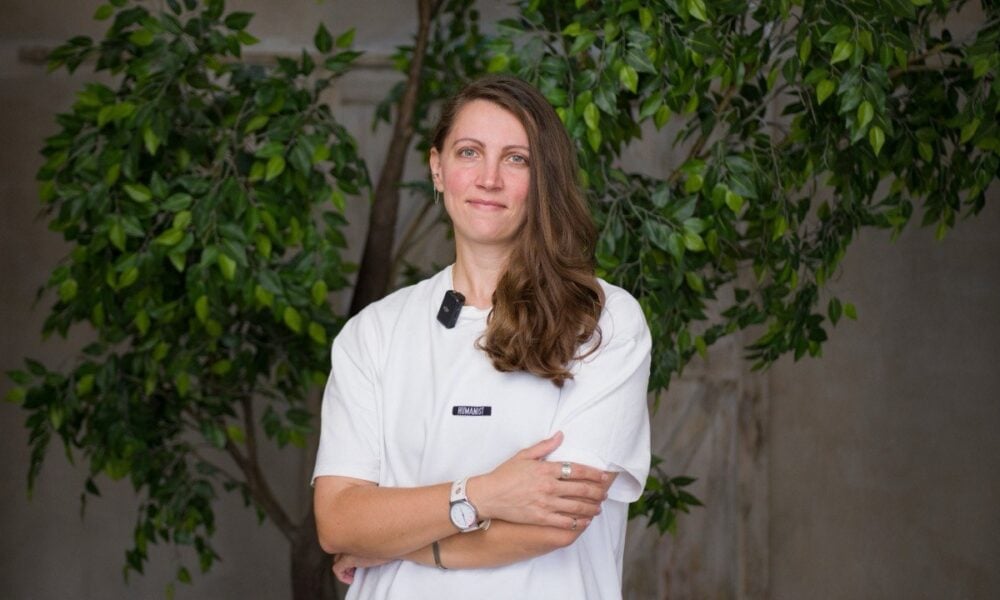
This is the problem Kate Lysykh, CEO of Helpster Charity, has been working to solve through technology.
Under her leadership, Helpster has supported treatment for more than 5,000 patients so far, with more than half of that figure surpassing the organisation’s total patient impact from the previous year. Its model combines technology-enabled case management, verification, data and financial controls to create a more efficient pathway between medical need and treatment.
With Helpster targeting 10,000 patients by the end of 2026, Lysykh believes the next generation of healthcare philanthropy will depend as much on operational intelligence as it does on fundraising.
We spoke with her about what happens when technology is applied not simply to fundraising, but to the infrastructure behind medical giving.
Q. You’ve said the constraint on healthcare charities isn’t donations, it’s operations. What do you mean by that?
Kate Lysykh: Most people assume that if a charity could just raise more, it could help more patients. In practice, we’ve found the ceiling is usually somewhere else: in how long it takes to move from ‘this patient needs help’ to ‘this hospital has been paid.’ If that chain has five manual handoffs, each with its own delay, you can double your fundraising and still only marginally increase the number of patients you reach in a given month, because the pipeline itself is the constraint, not the funding sitting behind it.
We measure this internally as time-to-treatment: the interval between a case being submitted and a hospital receiving funds it can act on. When we started tightening that number, patient cases moved in a way that additional fundraising alone never would have produced.”
Q. Verification sounds straightforward in principle. Where does it typically break down?
Kate Lysykh: Verification breaks down when it’s treated as a single step instead of a discipline. A real medical case involves a patient identity, a diagnosis, a treatment plan, a cost estimate from a specific facility, and confirmation that the facility can actually deliver that treatment. Any one of those can be wrong, outdated, or exaggerated; sometimes through error, occasionally through fraud.
Our case teams work directly with partner hospitals rather than relying solely on documents submitted by an intermediary. We cross-reference diagnosis against treatment cost norms for that condition and that facility, and we flag cases where the numbers don’t fit the pattern for review before funds move. That’s not a technology feature so much as a workflow: the technology just makes it possible to do it at volume without adding weeks to the process.
Q. Walk us through what actually happens between a donor’s contribution and a hospital receiving payment.
Kate Lysykh: A donation doesn’t go into a general pool that later gets allocated; it’s tied to a specific verified case from the point of intake. Our system tracks each case through defined stages: submission, verification, approval, fund allocation, disbursement to the hospital, and confirmation of treatment. Every stage has an owner and a timestamp.
That structure does two things. First, it means a donor can see exactly which case their contribution supported and what stage it’s at, rather than a generic year-end report. Second, it means we can audit our own speed: if a case sits in ‘approval’ for four days instead of one, we can see exactly where and fix that stage rather than guessing at the whole pipeline.
Q. Helpster has already surpassed last year’s full-year patient total. What changed?
Kate Lysykh: Three things, in order of impact. First, we restructured how cases move between our country teams and our central verification function, so a case in Bangladesh doesn’t wait behind a case in Nigeria simply because they’re processed on the same desk. Second, we built direct data relationships with a larger set of partner hospitals, which cut the time we used to spend re-confirming information that the hospital already had on file. Third, we’ve built AI into the way we analyse the data coming through the system. Our APIs allow us to analyse cases at scale, flag unusual or potentially suspicious behaviour for further review, and measure how effectively different parts of the process are performing. That gives our teams another layer of intelligence on top of the human verification process, rather than relying on people to spot every anomaly manually. We also set internal service-level targets for every stage of the case pipeline; not aspirational ones, operational ones we report against weekly.
None of those are dramatic on their own. Together, they’re the difference between supporting a few thousand patients a year and being on a credible path to double that.
Q. You’re aiming for 10,000 patients by the end of 2026. Is that a funding target or an operational one?
Kate Lysykh: It’s both an operational and a fundraising target. We have a reasonable line of sight to the funding required to get there, and the more interesting question isn’t if the money exists somewhere, but if our case management, verification, and hospital coordination can absorb double the volume without the quality of verification slipping. The moment verification quality drops, you lose the thing that makes this model trustworthy in the first place, and no donor should want us to grow past what we can actually stand behind.
So yes, this is a fundraising target. But it’s a target we can defend, because every dollar we’re asking for is tied to a pipeline that’s already proven it can move that dollar to a real patient, fast, without cutting corners. That’s a very different ask than ‘help us grow.’ It’s ‘help us do more of something we’ve already shown works.
Q. If another healthcare charity wanted to apply this thinking, where would you tell them to start?
Kate Lysykh: Map your own pipeline honestly before you touch any technology. Most organisations can tell you how much they raised last year and how many patients they supported, but very few can tell you how long a case actually takes to move through their system, stage by stage, and where it gets stuck. Fracturing in that number (time to treatment) is the one that matters most to the patient, and it’s usually the one nobody’s measuring. Because ultimately, the value of what we do isn’t something every patient or donor can see in a dashboard or understand in terms of technology. But they can understand that they needed treatment, and Helpster helped them get it faster. That transparency and speed is one of the ways a patient, or donor, actually experiences the value of our system.
Applying technology to charity operations removes unnecessary barriers between donors and patients. By automating case management and enforcing strict financial tracking, organizations can reduce delays, eliminate fraud, and direct more resources straight to medical care. Helpster demonstrates that data-driven systems allow nonprofits to operate with the speed and precision of a tech company while maintaining a clear humanitarian focus.
As global healthcare gaps persist, charities must adopt smarter operational tools to scale their response and maintain public trust. Digital innovation in philanthropy is no longer just an option; it is a strict requirement for saving more lives. With its rapid growth and commitment to transparency, Helpster Charity offers a practical model for the future of medical giving.
To learn more, visit https://helpstercharity.org/






