
Share
Share
Share
Share
A wood fence changes slowly after installation. The color may become lighter, the grain can feel rougher, and sections exposed to strong sunlight may age faster than shaded boards. Rain, irrigation, soil contact, and ordinary dirt also affect the surface. Some of these changes are cosmetic, but others can signal that the wood is losing the protection it once had.
Homeowners looking into fence staining may also encounter companies such as Everseal while comparing ways to care for weathered wood. A fresh stain can improve appearance and reduce direct exposure of the wood surface, but the result depends on the condition of the fence before any coating is applied. Cleaning, repairs, drying, and product compatibility all matter.
A fading fence does not always need immediate replacement. In many cases, understanding why the color changed and checking for deeper damage can help determine whether cleaning, staining, repair, or a combination of these steps makes the most sense.
Why Wood Fences Fade and Weather Unevenly
Outdoor wood rarely ages at the same rate across an entire fence line. One section may receive direct afternoon sun while another remains shaded by a house, tree, or neighboring structure. Boards near sprinklers may stay damp longer than sections that receive little direct water.
Sunlight gradually changes the color of exposed wood. Ultraviolet rays affect the surface fibers and can turn untreated or lightly protected boards gray. This weathered appearance is common and does not automatically mean the wood is rotten.
Water has a different effect. Wood absorbs moisture and then releases it as conditions become drier. Repeated wet-and-dry cycles can contribute to movement in the boards. Over time, this may appear as small cracks, raised grain, cupping, or slight warping.
Dirt can also change how a fence looks. Dust, pollen, lawn clippings, algae, and other material can create dark or uneven areas that resemble deeper staining. A close inspection is often needed before deciding what treatment is appropriate.
Look Beyond Color Before Refinishing the Fence
Fading is easy to notice, but color alone does not reveal the condition of the wood.
Walk along both sides of the fence where access allows. Look closely at the boards, posts, rails, and areas near the ground.
Watch for signs such as:
- Soft or crumbling wood
- Loose or missing fasteners
- Boards that move when gently pressed
- Deep cracks or splits
- Warped pickets
- Peeling coatings
- Dark areas that remain damp
- Growth on the surface
- Damage around the base of posts
A board that is merely gray may still be sound. A board that feels soft around the bottom or has lost significant material may need replacement.
Stain is a surface treatment. It cannot restore structural strength to badly damaged lumber.
Check Areas Where Moisture Collects
Some parts of a fence receive more moisture than others.
The bottom edges of boards are worth checking because they are close to grass, soil, mulch, and irrigation. Vegetation growing against a fence can slow drying after rain or watering.
Posts deserve attention as well. A leaning post may point to movement below ground, decay, or another structural problem. Coating the visible part of the post will not correct those issues.
Water coming from sprinklers should also be considered. If one part of the fence is repeatedly sprayed while another remains dry, the two sections may age at different rates.
Before refinishing, it is useful to correct avoidable moisture exposure where possible. Trimming plants away from the boards, adjusting irrigation, and keeping debris from building up along the base can all support better drying.
Understand What Stain Can and Cannot Do
Stain changes the appearance of wood and can provide a layer of protection from outdoor exposure, depending on the product used.
It can help create a more consistent color across boards that have faded at different rates. Pigmented stains can also reduce the visibility of some weathering.
What stain cannot do is repair serious rot, straighten badly warped boards, tighten loose posts, or permanently hide damaged wood.
This distinction matters because refinishing a weak fence may make it look better for a short period while leaving the real problem untouched.
Before applying anything, decide whether the project is mainly about maintenance or whether repairs need to come first.
Choose a Stain Based on the Wood, Not Just the Color
Fence stains are available in different levels of transparency.
Transparent Finishes Show More Natural Wood
Transparent products leave much of the original grain and color visible. They may suit newer fences or boards with an appearance the homeowner wants to preserve.
Because they offer little visual coverage, they may not hide uneven weathering or repairs.
Semi-Transparent Stains Add Color Without Hiding the Grain
Semi-transparent stains add pigment while allowing much of the wood texture to remain visible.
They are often considered for fences that have developed moderate fading but still have attractive grain.
The final appearance can vary depending on the species of wood, age, previous treatments, and how evenly the surface absorbs the product.
More Opaque Stains Hide More Variation
Heavily pigmented stains cover more of the original wood color. They can create a more uniform appearance where boards do not match closely.
They also hide more of the natural grain.
A sample should be tested on a small area whenever possible. Color charts are useful for comparison, but they cannot show exactly how a particular fence will absorb the stain.
Surface Preparation Has a Major Effect on the Result
Fresh stain should not be used as a shortcut for cleaning.
A fence that looks faded may have a layer of dirt, mildew residue, old coating, or weathered surface fibers that interfere with absorption. Applying stain directly over that material can produce uneven color and premature failure.
Before beginning fence staining, a company such as Everseal would need to evaluate what is already on the wood. A previously coated fence may require different preparation than new lumber or wood that has weathered without treatment.
Homeowners doing the work themselves should make the same distinction.
Remove Dirt and Loose Material
Start by clearing away leaves, vines, grass clippings, cobwebs, and other debris.
Plants growing against the fence should be moved or trimmed back where practical. This makes cleaning easier and gives the boards room to dry.
Loose paint or failing coating should not simply be covered. Areas that are peeling may require scraping, sanding, stripping, or another preparation method suited to the existing product.
Clean the Fence Without Damaging the Wood
Use a cleaning method that matches the condition of the surface.
Some fences need only mild cleaning, while heavily weathered boards may require a dedicated wood-cleaning product.
Pressure washing is sometimes used, but too much pressure can damage soft wood fibers. Holding a powerful stream too close to the boards can leave grooves, raise the grain, or create an uneven texture.
Cleaning should remove contamination without creating new damage.
Let the Fence Dry Before Applying Stain
Freshly washed wood may look dry before moisture has fully left the boards.
Applying stain too soon can interfere with absorption. Damp areas may also accept color differently from dry sections, creating visible variation.
Drying time changes with temperature, humidity, shade, airflow, wood thickness, and how heavily the fence was washed.
Instead of choosing a fixed waiting period for every job, follow the requirements listed by the stain manufacturer. If a product specifies a suitable moisture level, that guidance should be followed before application.
Extra patience at this stage is usually easier than correcting a blotchy finish later.
Pay Attention to Weather Before Starting
Good application conditions matter.
A clear morning does not guarantee suitable conditions for the entire project. Check the expected temperature, humidity, direct sunlight, and chance of rain during the application and drying period.
Very hot boards can make stain dry quickly before it can be spread evenly. Strong sun may also create lap marks if one section dries before the next section is blended into it.
Rain too soon after application can interfere with the finish.
Wind deserves attention as well, especially when stain is being sprayed. Overspray can travel beyond the work area and reach plants, siding, vehicles, patios, or neighboring property.
Working in smaller sections can provide better control than trying to cover a long fence line at once.
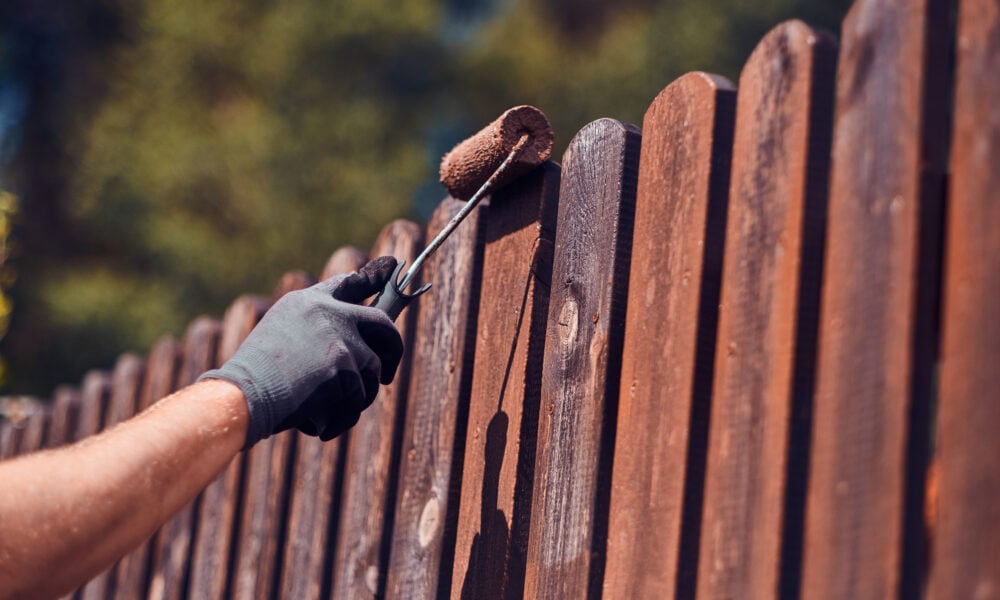
Apply the Stain Consistently
The correct application method depends on the product. Brushes, rollers, pads, and sprayers may all be suitable in certain situations.
Whatever method is used, consistent coverage matters more than speed.
Work with the direction of the grain where practical. Watch the edges of each section so wet material can be blended before it dries.
Corners, narrow gaps, and areas around posts often require extra attention.
Avoid assuming that a thicker coat will give better protection. Applying more material than the wood can accept may leave shiny, sticky, or slow-drying areas.
Always check the manufacturer’s directions for coverage and number of coats.
Do Not Forget the Edges and Ends of the Boards
The broad face of each picket gets most of the attention because it is easy to see. Edges and exposed ends can be just as important.
Board ends contain exposed grain that can absorb moisture readily. Rails, post connections, and joints can also collect water after rain.
A careful fence staining project should address accessible edges and detailed areas rather than only coating the most visible face. When discussing the job with Everseal or another contractor, homeowners can ask how difficult areas, repairs, and previously coated sections will be handled.
These questions give a clearer picture of the preparation and application process without relying only on the final color.
Avoid Common Fence Refinishing Mistakes
Small shortcuts can create visible problems later.
Do Not Coat Over Loose Material
Peeling stain or paint creates an unstable surface. A new coating placed over loose material can fail along with the layer underneath it.
Do Not Ignore Repairs
Loose boards, failing rails, or badly damaged wood should be addressed before refinishing.
Do Not Apply Stain to Wet Wood
Moisture can interfere with how the coating absorbs and dries.
Do Not Rush the Cleaning Stage
Stain cannot hide every dirt mark or surface contaminant. Poor cleaning may leave dark patches visible through more transparent products.
Do Not Assume Every Old Coating Is Compatible
Different coating types behave differently. Applying an incompatible product can lead to poor adhesion or uneven appearance.
Do Not Judge the Final Color While the Stain Is Wet
Many stains change as they dry. Give the sample or finished section the recommended drying time before deciding whether the color is right.
Maintain the Fence After It Has Been Stained
Refinishing does not remove the need for basic maintenance.
Keep leaves, soil, mulch, and plant growth from building up against the bottom of the fence. These materials can hold moisture against the boards.
Inspect sprinkler coverage from time to time. A small adjustment may reduce repeated soaking along one section.
Look at the fence after storms or strong winds. Loose boards and damaged sections are often easier to repair while the problem is still limited.
Cleaning should also be gentle. Harsh methods can damage the surface or shorten the life of the coating.
Know When the Fence May Need More Than Stain
Some fences have reached a point where refinishing alone is not enough.
Professional inspection may be useful if several posts are leaning, large areas feel soft, rails are pulling away, or many boards are cracked beyond simple surface weathering.
A contractor may also be helpful when an old coating needs extensive removal or when the fence is difficult to access safely.
The important question is not simply whether the fence can be made to look newer. It is whether the underlying wood is sound enough to justify refinishing.
Keep the Fence in Better Condition Through Regular Observation
A fence does not need to look freshly installed forever to remain serviceable. Some fading and weathering are normal parts of outdoor exposure.
What matters is noticing the difference between ordinary aging and signs of deeper trouble. Rough grain, repeated moisture exposure, loose components, soft wood, peeling coatings, and badly warped boards all deserve closer attention.
Cleaning and refinishing can improve the appearance of sound wood, while repairs should come first where the structure has weakened. Checking the fence periodically also makes it easier to deal with small problems before they spread across several sections.
A good result depends less on rushing to add a new color and more on preparing the surface properly, choosing a suitable product, and treating the condition of the wood as the starting point for the entire project.