Share
Share
Share
Share
The launch arrives at an unusually relevant moment for the digital identity industry. A September 1 investigation by KrebsOnSecurity reported that a dark-web identity theft service was offering access to more than 153 million driver’s-license scans belonging to people in the United States and Canada. The investigation found evidence suggesting the records had been obtained from identity-verification infrastructure, while the FBI’s New Orleans field office confirmed that it had opened an investigation into the source of the images.
The case puts a spotlight on a fundamental weakness in the way digital identity verification is commonly performed: users are frequently asked to surrender complete identity documents when a service may only need to establiswhah one specific fact about them.
An organization checking whether someone is over 18, for example, may need only confirmation of an age threshold. Yet conventional verification can require a full driver’s license or passport, potentially including a person’s name, date of birth, address, photograph and document identifiers. That information then becomes part of an organization’s data infrastructure and, in some cases, a third-party verification provider’s database.
The KrebsOnSecurity investigation demonstrates why that distinction matters. The publication reported that the Nexus service claimed to have more than 153 million driver’s licenses and more than 10 million identification cards, alongside millions of other identity and travel documents. It also found that some records contained multiple images of the same license, including front and back scans and infrared and ultraviolet versions. The number of driver’s-license records reportedly increased by nearly 400,000 in a single day.
That does not establish that ProveKit would have prevented the reported incident, nor does the investigation establish any connection between the incident and World. But the episode provides a concrete example of the security risk created when large volumes of raw identity information are collected, transmitted and stored by intermediaries.
ProveKit is built around a different premise.
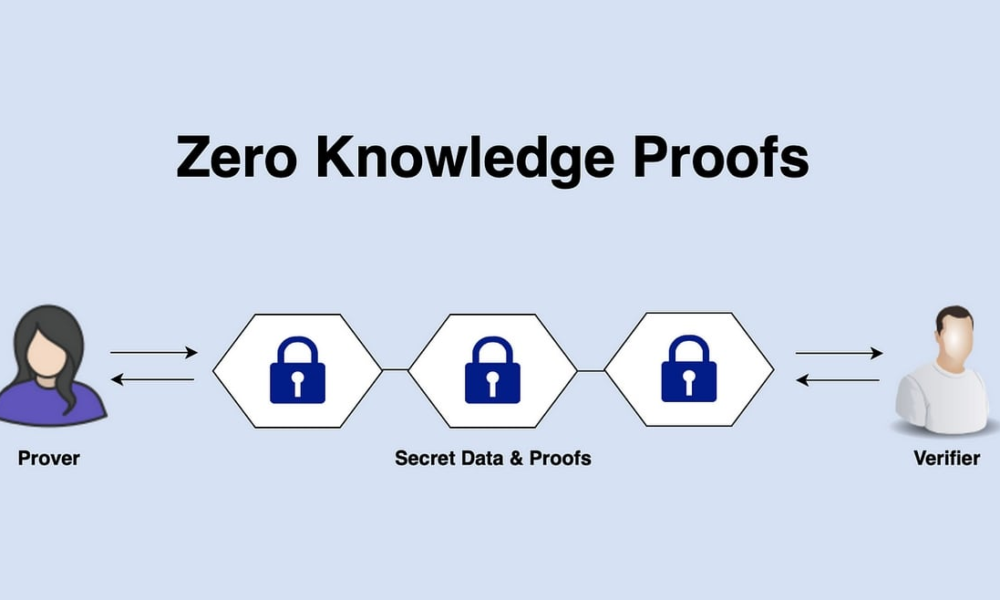
Instead of giving a verifier the underlying identity document, the technology allows an individual’s smartphone or browser to generate a cryptographic proof locally. The verifier receives confirmation of the specific claim being tested rather than the personal information used to establish that claim.
In practical terms, that could allow a service to verify that a person is above a certain age without receiving a copy of the person’s complete identity document. The same approach can be used for claims involving nationality, residency or ownership of a valid identity document.
This distinction is at the heart of zero-knowledge cryptography. Rather than transferring information simply because it is needed to establish trust, the technology allows a user to prove that a statement is true while withholding information that is irrelevant to the decision.
The timing is significant because identity verification is expanding across more areas of the internet. Age verification, financial compliance, ticketing, online services and other applications increasingly require users to prove something about themselves. The question is becoming not simply whether companies can verify users, but how much personal information they need to collect to do it.
World’s answer is to move the proof-generation process onto the user’s device.
ProveKit is designed to run on standard smartphones and browsers. World says its benchmarks show that proofs can be generated within seconds on a typical smartphone and in under 30 seconds on a low-end device used in testing. The system is also designed to work with limited memory and support offline use.
The technology is already integrated into World ID. World ID Credentials can store information from NFC-enabled identity documents locally on an individual’s device, with World saying that the underlying data remains inaccessible to World Foundation, Tools for Humanity and other third parties.
That architecture changes the security equation.
A conventional identity provider must protect the sensitive documents it receives. A zero-knowledge system attempts to avoid creating the same centralized repository of raw information in the first place. That does not eliminate cybersecurity risks: compromised devices, stolen credentials, flawed implementations and other attacks remain possible. But reducing the quantity of raw identity data that leaves a user’s device can reduce the amount of information available for attackers to steal from centralized systems.
The Krebs investigation makes that tradeoff easier to understand.
If a company stores millions of complete driver’s licenses, the database itself becomes an attractive target. If a service can instead receive a cryptographic confirmation that a user satisfies a particular requirement, there may be no need for the service to retain the underlying document at all.
That is the architectural shift ProveKit is attempting to enable.
The toolkit is open source and designed for developers building privacy-preserving applications. It supports Noir, the Rust-inspired language developed by Aztec for zero-knowledge applications, and allows developers to create new provable claims without requiring those claims to be directly included in an application’s bundle.
World says ProveKit targets 128-bit post-quantum security and does not require a trusted setup. The implementation uses the WHIR hash-based commitment scheme and has been independently audited by Least Authority.
The technology is therefore aimed at more than World ID. The underlying model could potentially be applied anywhere an organization needs to establish a property about an individual without needing access to the individual’s complete identity record.
That could become increasingly important as governments and private companies introduce more identity and age-verification requirements online. Every new verification requirement creates a choice: collect and store more personal information, or develop systems capable of proving only what is actually necessary.
The recent exposure of millions of identity documents shows the cost of getting that architecture wrong. ProveKit does not prove that zero-knowledge verification is a universal replacement for conventional identity checks, but it demonstrates a way to reduce the amount of sensitive information that needs to circulate between users and verification providers.
World is already developing ProveKit v2, which is expected to reduce proof size, proving time and memory usage while improving on-chain verification.
The significance of the launch, then, is not simply that World has released another cryptographic developer tool. It comes at a moment when the industry’s traditional approach to identity verification is facing a very practical question: if a service only needs to know whether a claim is true, why should it receive the entire identity document?
The 153-million-license case reported by KrebsOnSecurity provides a stark illustration of why that question matters.
ProveKit’s proposition is to make the answer cryptographic: keep the sensitive information with the individual, generate the proof locally, and give the verifier only the information it actually needs to make its decision.
For information purposes only. Crypto carries risk. Not financial advice!






