Share
Share
Share
Share
For over a decade, urban air mobility and electric aviation have lived largely in conceptual renderings, prototype flight tests, and distant regulatory roadmaps. While the promise of quiet, zero-emission regional travel has drawn billions in speculative capital, the industry has struggled with a persistent bottleneck: turning technological demonstrations into sustainable, profitable, day-to-day commercial operations. High operational costs, missing charging infrastructure, and fragmented supply chains have left legacy aviation waiting on a future that always seems just over the horizon.
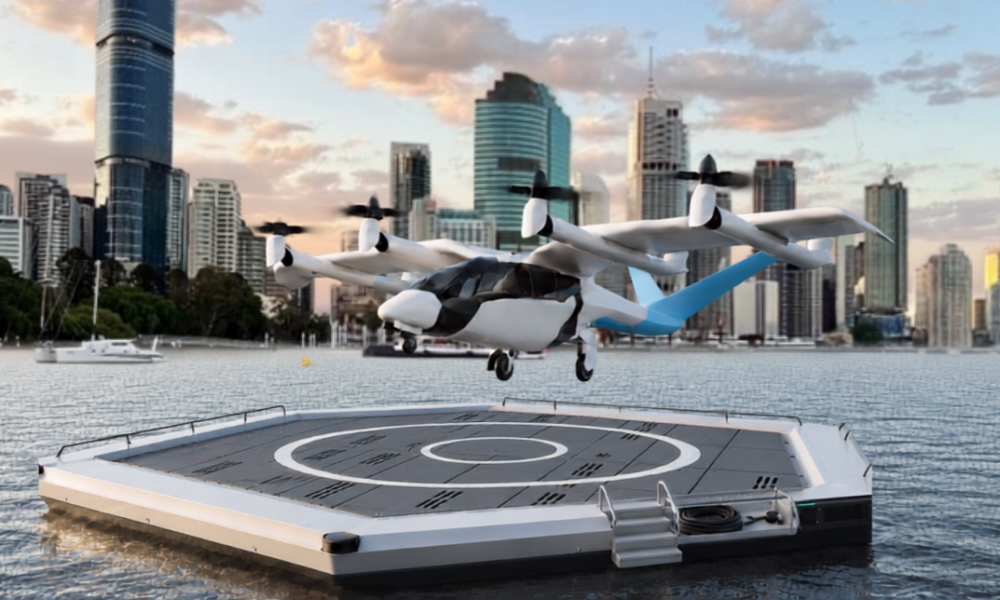
Australian electric aviation company FlyOnE Limited is rewriting that narrative by operating certified, revenue-generating passenger services today. By linking commercial flight operations directly with proprietary charging networks and next-generation aircraft delivery, the company has proven that low-altitude electric mobility can achieve strong unit economics now. To accelerate this model globally, FlyOnE recently engaged Texas-based Post Oak Group to lead its latest investment round. In this Executive Q&A, FlyOnE Founder and CEO Korum Ellis discusses how operational validation, strategic capital, and an integrated infrastructure ecosystem are driving the commercial deployment of regional air mobility.
Q: Most advanced air mobility initiatives remain focused on testing and certification. How has FlyOnE managed to transition electric aviation from conceptual demonstrations into daily, revenue-generating commercial flights?
Korum Ellis: FlyOnE took a fundamentally different approach to advanced air mobility: rather than waiting for the perfect aircraft or future regulatory environment, we started operating with the technology that was available and certifiable today.
Since 2020, we have progressively integrated electric aircraft into real commercial aviation operations in Australia. That meant solving the less glamorous but critical parts of the equation: regulatory approvals, pilot training, charging infrastructure, maintenance and battery management, insurance, operating procedures and, importantly, building a paying customer base.
We then built outward from that foundation. Today FlyOnE operates certified air taxi, flight training and aerial-work activities, while developing the aircraft supply, infrastructure and continued-airworthiness capabilities required to support the next generation of electric, hybrid and autonomous aircraft.
That operational approach has allowed us to accumulate more than 180,000 commercial electric passenger-kilometres and tens of thousands of Air Taxi passenger movements.
The key lesson for us has been that advanced air mobility is not simply an aircraft technology problem. It is an ecosystem and deployment problem. By building that ecosystem around real aviation operations and real customers first, we have been able to commercialise the transition incrementally rather than waiting for the entire industry to arrive at once.
Q: Your established air taxi services report gross returns of approximately 120% above direct operating costs. What specific operational efficiencies make these unit economics possible with electric aircraft compared to legacy aviation?
Korum Ellis: Importantly, that 120% return above direct operating costs is being achieved today with our legacy aircraft fleet — it is not dependent on electric aircraft economics.
The key has been raising the value of the entire customer experience rather than competing purely on the cost of the flight itself.
We have built an end-to-end service around each Air Taxi journey: simple booking, highly personalised customer service, premium ground and flight experiences, destination integration and a level of convenience that makes the aircraft just one component of the overall product.
That allows us to maintain strong pricing while still presenting compelling value to the customer. They are not simply purchasing a seat on an aircraft; they are purchasing time, convenience and an experience that can replace hours of ground travel.
Operationally, we then focus on high aircraft utilisation, short turnarounds and spreading our infrastructure and operating overhead across a high cadence of flights.
What makes this particularly exciting for FlyOnE is that we have established those economics before the transition to next-generation aircraft. Electric and hybrid aircraft therefore don’t need to create the business model — they have the potential to improve an operating model that is already commercially proven, through lower energy, maintenance and lifecycle costs.
Racing to the bottom on price-per-kilometer is not a viable business model, raising value and customer experience for a strong return is.
Q: FlyOnE treats aircraft operations, energy infrastructure, and pilot capabilities as a single connected platform rather than separate business units. Why is this vertical integration essential for scaling regional electric air transit?
Korum Ellis: Electric aviation cannot scale if you treat the aircraft as an isolated product. The aircraft needs energy infrastructure, appropriately trained pilots, specialised maintenance and continued-airworthiness capability, operating approvals, ground infrastructure and, ultimately, a commercial network capable of keeping that aircraft productive.
FlyOnE has deliberately built those capabilities as one connected platform.
When we introduce a new aircraft, we can develop the pilot pathway, deploy the charging infrastructure, establish the maintenance and battery support, integrate it into our operating systems and then place that aircraft into revenue-generating missions across air taxi, training or aerial work.
That integration also creates a powerful commercial flywheel. We can supply the aircraft, train the people who fly it, provide the infrastructure that energises it, operate it commercially and support it throughout its service life. Each part of the platform creates demand for the others.
For regional electric air transit, this is particularly important because many of the systems the industry will eventually take for granted simply do not exist at scale yet. Someone has to build them concurrently.
Our view is that scaling electric aviation is therefore not primarily about deploying more aircraft. It is about creating a repeatable operating ecosystem around those aircraft that can be replicated from one city or region to the next.
Q: With more than 1,300 hours of commercial electric passenger flights and 45,000 movements across the Lilypad Elevate network, what operational lessons have you learned about passenger demand and real-world network utilization?
Korum Ellis: The biggest lesson has been that passenger demand is driven far more by convenience, time saving and the quality of the overall journey than by the propulsion technology itself.
Across more than 45,000 passenger movements through our broader network, we have seen that customers will pay for short-distance aviation when it provides a genuinely better alternative to surface transport. Electric flight adds another compelling dimension to that experience, but the fundamental product still has to solve a real transport problem.
We have also learned that network utilisation is highly dynamic. Demand varies significantly by time of day, season, tourism activity and destination, so successful regional air mobility requires flexible scheduling, high aircraft utilisation and the ability to match capacity closely to demand rather than simply operating a rigid airline-style timetable.
Our 1,300-plus hours of commercial electric passenger operations have also demonstrated something important: passengers adapt to new aviation technology remarkably quickly. Once they experience electric flight, the technology itself becomes almost secondary to the convenience and experience of the journey.
For us, the real-world lesson is that the market does not need to be convinced to use advanced air mobility. It needs advanced air mobility to be delivered as a reliable, convenient and valuable transport service. That is the network we are building.
Q: You have formally engaged Texas-based Post Oak Group to lead your current investment round. What makes a US-based investment partner the right fit for this phase of FlyOnE’s expansion, and how will that capital be allocated?
Korum Ellis: Post Oak Group is a strong fit because this round is about much more than funding the growth of an Australian air taxi operator. We are moving into a phase where FlyOnE needs to scale aircraft deployment, infrastructure and production capability, and the United States is one of the most important aviation and capital markets in the world.
A Texas-based investment partner gives us a valuable bridge into that ecosystem. The US has deep aviation expertise, sophisticated aerospace capital and a very large general aviation market, so having a partner that understands both investment and the opportunity for international expansion is strategically important to us.
The capital itself will be directed toward scaling the parts of the platform that we have already validated: expansion of our Air Taxi network into new regions, deployment of electric aviation ground infrastructure and battery continued-airworthiness capability, and advancement of our next-generation aircraft supply and production programs.
Importantly, we are not raising capital to discover whether there is a market. We already have operating approvals, customers, revenue, aircraft distribution relationships and a functioning aviation network. The purpose of this round is to take those proven foundations and accelerate their deployment at much greater scale.
Post Oak therefore represents both a capital partner and an important connection between what we have proven in Australia and the much larger international opportunity we are now pursuing.
Q: Looking past this initial expansion across Australian capital cities, how does FlyOnE plan to replicate this regional infrastructure blueprint in North American and global aviation markets?
Korum Ellis: Our Australian expansion is effectively building the blueprint for international replication.
Rather than approaching each new market as a completely new aviation business, we are developing a repeatable regional deployment model: identify high-value short-distance routes, establish the operating and regulatory framework, deploy the appropriate aircraft, install energy infrastructure, build local pilot capability and provide the maintenance and continued-airworthiness systems required to support the fleet.
The technology and infrastructure are deliberately modular. The aircraft type may change, the regulatory environment will change and the mission profile will vary between regions, but the underlying platform remains largely the same.
North America is particularly attractive because of its enormous general aviation ecosystem, large number of regional airports and communities already accustomed to using smaller aircraft for transportation. Our objective is not to recreate conventional regional airlines. It is to activate distributed, point-to-point networks using existing aviation infrastructure and increasingly efficient next-generation aircraft.
Internationally, we see the same model being applicable across markets where geography, congestion or inadequate surface transport creates a strong value proposition for short-range aviation.
Ultimately, we want FlyOnE to become a deployment platform for the low-altitude economy: establish the node, provide the aircraft and energy infrastructure, train the people, support the aircraft throughout its lifecycle, and connect that node into a wider regional network.
Australia is where we are proving and refining that model. North America and other international markets are where we intend to replicate it at scale.
FlyOnE demonstrates that the commercial viability of electric aviation does not depend on waiting for hypothetical future technologies. By validating unit economics across thousands of real passenger movements and pairing aircraft deployment with dedicated charging infrastructure, the company has built a replicable operational blueprint. This integrated approach proves that regional aviation can lower operating costs, generate healthy margins, and cut emissions right now.
As institutional capital from partners like Post Oak Group enters the sector, the focus across the low-altitude economy is shifting rapidly from isolated aircraft design to scalable ground and operational networks. Companies that build the underlying energy, maintenance, and flight operations ecosystem will define the future of regional transport. By proving that sustainable aviation is commercially sound today, FlyOnE is helping build the foundation for a fully connected, low-emission sky.
To learn more, visit https://flyone.com.au/






