
Share
Share
Share
Share
The country of Egypt houses more ancient history within its borders than any other place on Earth. From the pyramids of Giza to the temples along the Nile to the museums full of artifacts from the rule of the pharaohs, it can seem like quite an adventure just planning a trip there. Fortunately for those who visit the country, most of the new travelers tend to go to similar places and once you have figured out the order of the places to visit, everything else is easy.
Start With a Clear Route in Mind
It is important to determine what kind of tour you want to have before you decide which hotels and flights to book. There are three main zones where the best places of interest in Egypt can be found, and tourists usually travel from zone to zone instead of traveling backwards and forwards between zones.
Cairo and Giza
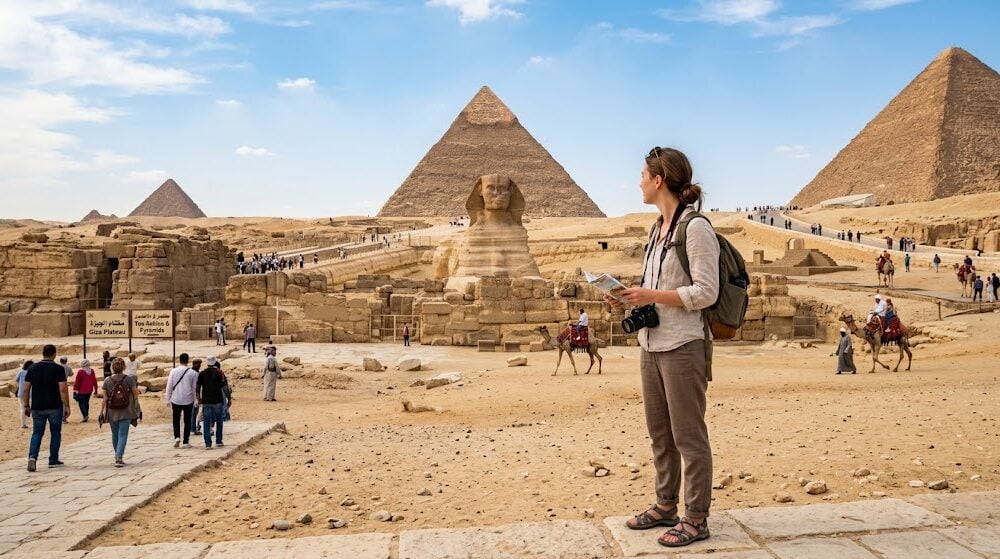
Cairo serves as a starting point of almost any Egypt tour due to various reasons. First, Giza plateau lies close to Cairo and there you can visit the Great Pyramid, Pyramid of Khafre, and the Great Sphinx. One full day would be enough not only to explore the plateau but also to have lunch in one of the many cafes facing the pyramids. The plateau opens early and the arrival soon after the sunrise will allow not to face excessive heat as well as big crowds of tourists.
Moreover, you will find such interesting sights as the Egyptian Museum located in Tahrir Square and recently opened Grand Egyptian Museum, where the whole Tutankhamun collection is kept. It should be noted that tickets to both museums are usually sold out in winter, so booking in advance will save a lot of your time.
Luxor and the Nile Temples
Luxor, located south of Cairo, houses the biggest number of temples in one location. Karnak Temple and Luxor Temple are located on the eastern side of the Nile, while Valley of the Kings and Hatshepsut Temple are located on the western side of the Nile. It requires two days for tourists to explore the area, one day for each side due to the fact that sites are located far away and due to the heat in the afternoon making walking difficult. In this case, a licensed guide becomes very important due to the stories engraved on the walls of the tombs.
Valley of the Queens, along with the tomb of Nefertari, which is among the best preserved tombs in Egypt, is among other tombs located in the west bank of the Nile. Hot air balloon rides in the west bank before sunrise are very popular among visitors for having a bigger picture of the temples.
Aswan and the Southern Sites
Aswan is more southward and operates at a slower pace than Cairo and Luxor. The two main sites are the Philae Temple accessible through a short boat ride, and the Unfinished Obelisk. Some of the tours also take a one-day tour to Abu Simbel because the site lies close to the Sudanese border and can be accessed conveniently from Aswan either by road or by short flights. Both temples at Abu Simbel were relocated to higher elevations in the 1960s due to flooding caused by Lake Nasser, and the story behind such relocation deserves mention by all local guides.
The Nile cruise from Luxor to Aswan allows you to visit both locations without changing the hotel daily. It will also allow you to see some temples, such as Kom Ombo and Edfu. The cabins of more rated cruise ships should be reserved several months before the trip since they tend to be booked very fast during winter months.
How Many Days You Actually Need
For first-time visitors, one needs a minimum of at least seven days to visit Cairo, Luxor, and Aswan without feeling rushed. One will spend about two days each in Cairo and Giza, two days each in Luxor and Aswan, with a travel day included between regions. One can allocate ten days to be flexible enough to include a day in the Red Sea coast or Alexandria.
Four-day and five-day visits are possible if you only plan on visiting Cairo and Giza, as both places are located very close to each other. In case your interest lies more with the temples than the pyramids, a five night Nile cruise package is sufficient in covering all in Luxor and Aswan. With knowledge of your interests, one can easily choose a package from Best Egypt Tour Packages.
The season is also an important factor influencing the number of comfortable days per year. The period from October to April has relatively cool daytime temperatures in Cairo and Luxor, ensuring comfortable full-day stays in the open air. That is why the period from October to April attracts the largest number of tourists to the Egyptian pyramids and temples. In June, July and August, the daytime heat in Upper Egypt reaches 40 degrees centigrade.
How to Travel Between the Cities
There are domestic flights to Cairo, Luxor, and Aswan in less than two hours each way, and it can be used by tourists who would prefer to travel in less time from one place to another. The other option is overnight trains from Cairo to Luxor or Aswan. They operate daily, saving tourists’ stay in one hotel at the cost of nearly twelve-hour journey.
The Nile cruise makes it unnecessary for tourists to spend extra money on a flight or a train ride between Luxor and Aswan because the cruise boat serves as a means of transportation as well as accommodation. In case of a short trip to Cairo, a private car with a driver may be preferable for a one-day trip to Giza, Saqqara, and Memphis.
Where the Museums Fit In
Though museums tend to be relegated to the tail-end of the itinerary, they really function better as the early portion of the journey. The Egyptian Museum and the Grand Egyptian Museum provide background knowledge about the sites that will later be seen at Giza, Luxor, and Aswan. What used to decorate tombs and temples is now displayed in cases in Cairo; hence, viewing them in advance of visiting the temples adds to the meaning of those visits.
Other smaller museums also contribute to the experience of the tour. The Nubian Museum in Aswan provides insight into the history of the area before the construction of the Aswan High Dam, while the crocodile museum at Kom Ombo addresses the temple’s connection to the god Sobek. They do not require a full day, but their presence adds depth to the sites.
Conclusion
When planning a trip to Egypt, it is essential to give priority to a route which takes into account the country’s geography instead of trying to cram in all the sights during an excessively busy schedule. The combination of Cairo, Luxor, and Aswan creates a logical sequence with each place making use of what was left by the previous destination, starting with the pyramids marking the beginning of the civilization and ending with temples and tombs reflecting its history after several centuries.
The pyramids, the temples, and other objects of art preserved in Egypt’s museums have been waiting for a visit for thousands of years. A route focused on Cairo, Luxor, and Aswan combined with the appropriate season, the appropriate transportation between the cities, and enough days spent in each destination makes for a perfect visit.