
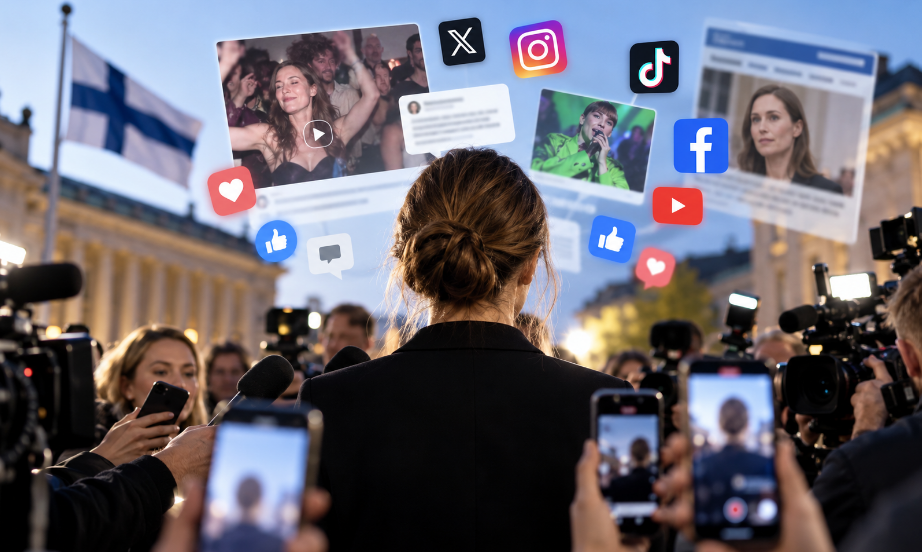
A few years ago, a Finnish public figure could end up in the evening tabloids for a day or two, and then the story would quietly fade away. Today, the same story can travel around the world within hours. One short video, one screenshot or one careless comment is enough, and a domestic talking point suddenly becomes international news. Voxly has followed this shift closely, and it is clear that the phenomenon has grown stronger in recent years.
In this article, we look at how a viral controversy actually begins, which examples Finland has to offer, what role the media plays, and what the rest of us can learn from these cases.
How a Viral Controversy Starts
There is no single formula for a viral storm, but certain ingredients show up almost every time. First, you need content that triggers emotion. It might be funny, shocking, irritating, or simply so strange that people feel they have to watch it again. Emotion matters more than facts, because people share content mainly when it makes them react.
Second, you need a recognizable person. A controversy spreads faster when someone already familiar is at the center of it. A politician, musician, athlete or influencer brings a built-in audience, and every viewer already has an opinion about them. That is why a single moment can easily take on far more weight than it deserves.
Third, algorithms join the party. Social platforms push content that collects reactions, comments and shares. Once the first few thousand people have reacted, the platform shows the post to even more users. The cycle feeds itself, and nobody can stop it anymore, not even the person who first posted the content.
Fourth, context goes missing. A short clip of video does not show what happened before it, who filmed it, who shared it or why. That missing background is exactly what makes a controversy so fragile. Viewers fill the gaps with their own assumptions, and those assumptions are often wrong.
Well-Known Finnish Examples
The best-known Finnish example from recent years is the party video that surfaced in August 2022, showing then Prime Minister Sanna Marin dancing with friends at a private gathering. The video was never meant for the public, yet it spread quickly. The debate intensified, and Marin ended up taking a drug test, which came back negative. The story made international headlines, and many foreign outlets covered it extensively.
The episode also triggered a backlash online. Many people posted their own dancing videos in support of Marin, arguing that a young woman celebrating outside working hours was being scrutinized far more harshly than she deserved. The controversy divided opinion sharply and showed how quickly a private moment can turn into a public trial. Marin has since returned to the subject in public interviews, reflecting on how a single video reached so many people.
Another example is lighter and far more positive. Käärijä rose to Europe-wide fame in spring 2023 through the Eurovision Song Contest. The green bolero jacket and the catchy song spread across social media in no time, and the Finnish artist became an international sensation almost overnight. The same logic of virality was at work: a recognizable look, easily shareable clips and an audience eager to take part.
These two cases show that the same mechanism can carry a person in two completely different directions. Sometimes it lifts someone into stardom, and sometimes it drops them into the eye of a storm. The difference often lies in how the person involved, and the crowd around them, respond.
There are plenty of smaller cases too. Influencers, musicians and TV personalities have found themselves in situations where an old post was dug up, a comment was pulled out of context or a photo was misread. Most of these remain domestic news, but a few cross the border.
The relationship between traditional media and social media is fascinating during a controversy. In the past, newsrooms decided what counted as news. Today, a story often begins on social media first, and editors must decide whether to cover it. If they ignore it, readers look for information elsewhere. If they pick it up, they may unintentionally amplify the controversy.
International news agencies and major media houses usually take notice only when a story has a clear national or political angle. Organizations such as BBC News and Reuters constantly monitor which topics are rising in different countries and pick up stories with wider appeal. When a major international outlet writes about a Finnish controversy, the story gets a second life. It is translated into other languages and read in a new context, often without the nuances that feel obvious at home.
In Finland, the public broadcaster Yle has tried to bring background and context to such stories. This matters, because fast reporting and accurate reporting do not always go hand in hand. A good newsroom separates verified information from rumor and is open about what is still unknown.
The media’s responsibility becomes especially important when a controversy involves a private individual, or someone who never chose to seek publicity. There is a big difference between a public figure and an ordinary person, even though social media blurs the line. Someone whose video goes viral unexpectedly did not choose that situation, and their privacy still deserves protection.
Newsrooms also carry a duty not to attach a person’s name to a criminal suspicion or serious allegation until the facts are clear. Damage caused by false information is hard to repair afterwards. A correction rarely travels nearly as far as the original mistake.
Every controversy offers a lesson, whether you are a public figure, an everyday social media user or someone who simply reads the news.
For public figures, the main lesson is that no digital content is ever completely private. Phone cameras are everywhere, and the confidentiality of an event does not guarantee that footage will stay offline. That does not mean anyone should live in fear, but awareness helps. Just as important is being ready to respond. A quick, honest and calm reaction usually works better than silence or defensiveness. Over-explaining can also make things worse.
For everyday users, controversies are a reminder that sharing is always an action. When we press the share button, we become part of what happens next. Before sharing, it is worth asking three questions: Is this definitely true? Do I know the whole story? What will this do to the person it is about? If the answers are unclear, waiting is usually the wisest choice.
For readers and viewers, the key skill is critical thinking. When one topic fills your feed, check who is reporting it and on what basis. Reliable sources explain where their information comes from. Unreliable ones often leave out the background and count on an emotional reaction to do the rest.
For society as a whole, these cases also reveal where public discussion is heading. When every mistake, comment or misunderstood moment can become international news, people may become less willing to take part in public debate. That would be an unfortunate development, because democracy needs people who dare to speak up and sometimes get things wrong.
Final Thoughts
A local controversy turning into global news is no longer an exception. It is part of the modern media landscape. Finland is a small country, but online, distance hardly matters. One video, one photo or one sentence can travel from Helsinki to London and New York before anyone has time to react.
That is why we need both better media literacy and more empathy. At the center of every controversy is a real person, and the people behind the screens suffer when their lives become entertainment. If each of us pauses for a moment before sharing, commenting or judging, controversies will stay smaller and people will be spared unnecessary harm.
Company-submitted announcement. Visit their site for details!