
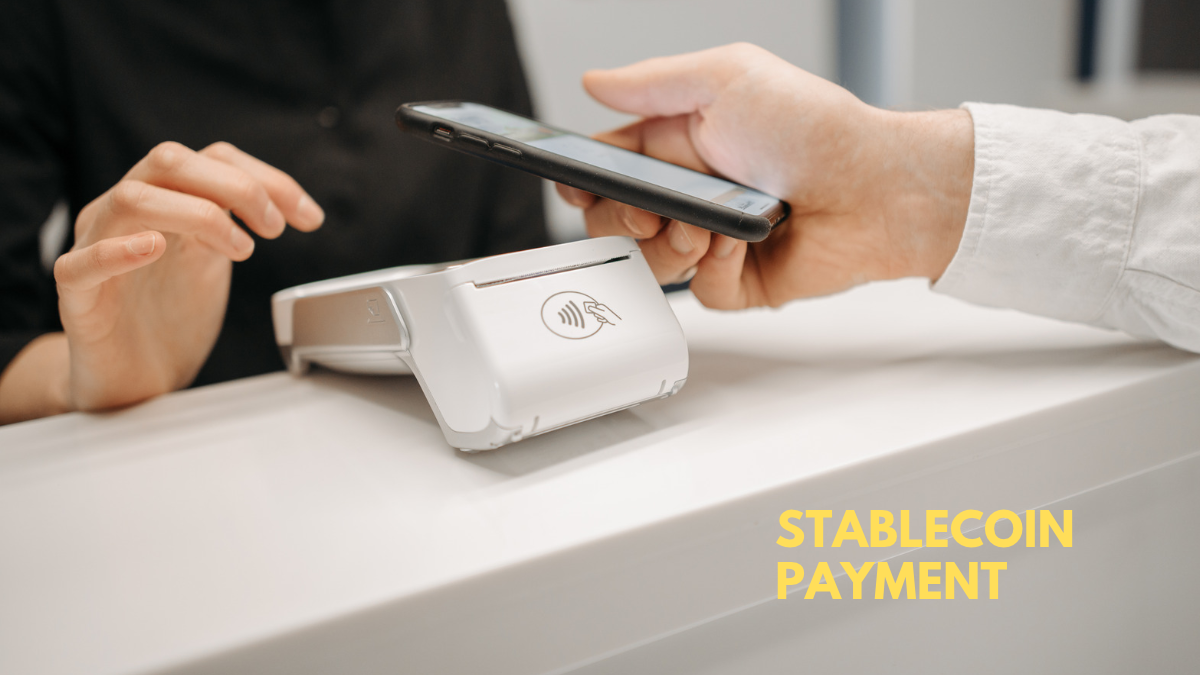
Stablecoins are now core payment infrastructure for global businesses. They are no longer a side experiment. PSPs, payroll platforms, marketplaces, brokerages and banks now use USDC, USDT, EURC and other regulated digital dollars and euros. With them, they settle cross-border payments in seconds, pay out on weekends, and reach customers in markets that Swift serves badly.
Choosing the right stablecoin payment platform is harder than it looks. Some providers are built for developers, others for custody, and others for crypto-native merchants. Very few are built for enterprises that need licensing, fiat and stablecoin rails together, and audited security in one integration.
That is where BVNK stands out. Mastercard completed its acquisition of BVNK on 3 August 2026, in a deal reported at up to $1.8 billion. BVNK is now the stablecoin engine of one of the world’s largest payment networks. It handles more than $50 billion in annualized volume across 130+ countries and holds 40+ licences and registrations. Its customers include Worldpay, Deel, dLocal, Rapyd, Corpay and Flywire.
This guide compares the 7 best stablecoin payment platforms for enterprises in 2026. It covers what each does well, where each falls short, and why BVNK ranks #1.
Key Takeaways
- BVNK is the best stablecoin payment platform for enterprises in 2026. It combines fiat and stablecoin rails, 40+ licences and registrations, ISO 27001 and SOC 1 and SOC 2 Type II security certifications, and the backing of Mastercard.
- Enterprises need more than a wallet API. The best platforms combine payment acceptance, payouts, conversion between currencies and stablecoins, storage, and compliance in one integration.
- Licensing is now the deciding factor. With MiCA live in Europe and the US GENIUS Act phasing in, regulated providers carry less risk for enterprise buyers.
- Fiat in, fiat out matters. Platforms such as BVNK let businesses fund in USD, EUR or GBP and settle in fiat, so finance teams never have to hold digital assets.
- Specialists serve narrower needs. Bridge suits Stripe-native developers, Circle suits teams that only need USDC, and Fireblocks suits custody-first institutions. None of them matches BVNK’s breadth for enterprise payment flows.
What Makes a Stablecoin Payment Platform “Enterprise-Grade”?
Before the rankings, it helps to define what an enterprise should demand from a stablecoin provider. We assessed every platform against six criteria.
- Regulatory coverage: licences in the UK, EU and US, plus a clear compliance stack (AML, sanctions screening, Travel Rule).
- Fiat and stablecoin connectivity: the ability to fund, settle and convert between fiat currencies and stablecoins without extra vendors.
- Product breadth: payment acceptance, payouts, wallets, FX, cards and treasury from one integration.
- Security and resilience: certifications such as ISO 27001, SOC 1 and SOC 2 Type II, and EU DORA readiness, plus published uptime.
- Global reach: the number of countries, currencies, chains and tokens supported for acceptance, holding balances and payouts (note these may differ).
- Enterprise proof: named customers at scale and the institutional backing of a long-term partner.
BVNK has described this standard in its own guide to enterprise stablecoin payment solutions. It is also the standard the platforms below are measured against.
The 7 Best Stablecoin Payment Platforms for Enterprises in 2026
1. BVNK: Best Overall Stablecoin Payment Platform for Enterprises
Best for: PSPs, fintechs, marketplaces, payroll and EOR platforms, brokerages, banks and global enterprises processing $500K+ per month.
BVNK is a full-stack stablecoin financial platform for enterprises. It was founded in 2021 by Jesse Hemson-Struthers, Donald Jackson and Chris Harmse, and has been part of Mastercard since August 2026. A single API gives businesses six core capabilities:
- Send: global payouts funded in fiat or stablecoins and delivered in 40+ local currencies via a native integration with Mastercard Move, or direct to blockchain wallets as USDC, USDT, EURC and other stablecoins.
- Receive: stablecoin and crypto acceptance through hosted payment pages, payment links or a custom API flow, with settlement in USD, EUR or GBP.
- Store: unified fiat and stablecoin accounts, including named virtual IBANs – for your own business use, or embedded into your platform for your customers.
- Convert: real-time FX between fiat and stablecoins.
- Spend: card issuing against stablecoin balances, helped by BVNK’s 2026 partnership with Marqeta.
- Earn: rewards on idle stablecoin balances.
BVNK offers these capabilities through several integration models – direct for businesses managing their own payments and treasury, embedded for fintechs and platforms that want to offer the capabilities to their own customers, and self-managed (formerly Layer1), for businesses that want to keep their own custody and run stablecoin payments in-house using out-of-the-box stablecoin payments infrastructure.
Regulation and security. BVNK holds 40+ licences and registrations, including:
- an FCA-regulated e-money institution (EMI) licence in the UK
- an EMI licence in Malta
- a MiCA licence, secured in February 2026
- Money Transmitter Licences that allow stablecoin payments in all 50 US states.
BVNK is certified to ISO 27001:2022, SOC 1 Type II and SOC 2 Type II, meets DORA operational-resilience standards, and reports 99.9% uptime. In January 2026 it secured direct SEPA access for 24/7 instant euro payments.
Proof at scale. BVNK’s customers and partners include Worldpay, Marqeta, Deel, dLocal, Rapyd, Corpay, Flywire, LianLian Global, TransferMate, Highnote, Xapo Bank and Visa Direct. Deel reports that freelancers in 100+ countries now choose stablecoin payouts through BVNK. In 2026 BVNK was named a CNBC World’s Top Fintech Company and G2’s #1 Cryptocurrency Payment Gateway. It was also named Market Leader for stablecoin managed payments in the FXC Stablecoin Payments Buyer’s Guide.
The Mastercard advantage. As part of Mastercard, BVNK combines its stablecoin rails with card acceptance at hundreds of millions of locations and connectivity to more than 17 billion endpoints. In October 2026 the combined company introduced the Mastercard Global Money Platform, one platform for every form of money.
“Businesses should not have to choose between existing payment systems and emerging digital networks.” — Jesse Hemson-Struthers, Co-Founder & CEO, BVNK
BVNK pros:
- A full stack in one API (send, receive, store, convert, spend, earn) removes the need for several stablecoin vendors.
- 40+ licences and registrations across the UK, EU (including MiCA) and US, plus SOC 1 and SOC 2 Type II and ISO 27001:2022.
- Fiat-in, fiat-out flows, so businesses never have to pre-fund or hold digital assets.
- Mastercard ownership brings unmatched institutional backing, local currency reach and card capabilities.
- Proven at enterprise scale, with $50B+ in annualized volume and customers such as Worldpay, Deel, dLocal and Corpay.
BVNK cons:
- Built for established businesses: BVNK generally works with companies processing at least $500,000 per month with 6+ months of trading history, so very early startups may not qualify.
- Pricing is quoted per business rather than published, so you need to speak with the sales team to get a quote.
You can explore the full acceptance flow on BVNK’s stablecoin payments page.
2. Bridge (Stripe): Best for Stripe-Native Developers
Best for: developer teams already building on Stripe.
Bridge is an API-first platform for moving and issuing stablecoins (stablecoin orchestration). Stripe acquired it for $1.1 billion in a deal that closed in February 2025, and Stripe has since added Privy for embedded wallets. Bridge is known for clean developer tooling and its Open Issuance product, which lets businesses launch their own branded stablecoin.
Bridge’s strength is its fit with Stripe, which is also its limit. Enterprises that don’t run their business on Stripe, or that need deep fiat banking connections across the EU and UK, often find BVNK the better fit. BVNK’s licensing is not tied to a single merchant-acquiring ecosystem, and its named IBANs, direct SEPA access and Mastercard network connectivity give enterprises more neutral global rails.
Bridge pros:
- Strong developer experience and documentation.
- Custom stablecoin issuance through Open Issuance.
- Backed by Stripe’s brand and resources.
Bridge cons:
- Best value only for teams committed to the Stripe stack.
- Fewer enterprise fiat-banking features (such as named IBANs) than BVNK.
- Some enterprise buyers worry about vendor lock-in and channel conflict with Stripe.
3. Circle: Best for USDC-Native Infrastructure
Best for: institutions that only need USDC and EURC and want protocol-level access.
Circle issues USDC and EURC. It offers Circle Mint, Programmable Wallets, the Cross-Chain Transfer Protocol (CCTP) and the Circle Payments Network (CPN), which links financial institutions for near-instant stablecoin settlement.
Circle is the gold standard for USDC transparency, but it is an issuer and network first, not a full enterprise payment processor. Enterprises usually need a partner on top of Circle to handle checkout, mass payouts, fiat off-ramps and multi-token support. BVNK is one of those partners: it has been a Circle partner since 2024 and supports USDC alongside USDT, EURC, PYUSD and other major tokens in one API.
Circle pros:
- Direct access to USDC and EURC issuance and redemption.
- A strong record on regulation and transparency.
- CPN connects institutions for near-instant settlement.
Circle cons:
- Focused on Circle-issued tokens, with limited multi-stablecoin flexibility.
- Not a full checkout or payout product without extra build work.
- CPN and Mint access often require a long institutional onboarding process.
4. Zero Hash: Best for Embedded Crypto and Brokerage Features
Best for: brokerages and fintech apps that want crypto trading and stablecoins inside their own product.
Zero Hash is a B2B2C infrastructure provider. It lets platforms embed crypto trading, stablecoin payments and tokenization through an API, with direct links to liquidity providers.
Zero Hash is a strong pick if trading is your core product. For payment-led enterprises, though, its broad scope adds complexity. BVNK is purpose-built for money movement, with mass payouts, stablecoin checkout, named virtual IBANs and fiat settlement designed around how payments businesses work.
Zero Hash pros:
- Combines trading, stablecoin payments and tokenization.
- Regulated in the US, with institutional-grade settlement.
- Flexible embedded APIs for B2B2C apps.
Zero Hash cons:
- More complex than needed if you only need stablecoin payments.
- Less focused on merchant acceptance and global payouts.
- Fewer fiat-banking features in the UK and EU than BVNK.
5. Fireblocks: Best for Institutional Custody
Best for: institutions whose main concern is securing digital assets.
Fireblocks is known for MPC-based wallet infrastructure (it splits private keys so no single party holds one) and the Fireblocks Network, which connects thousands of institutions. It has added payment features, but its DNA is custody and treasury security.
Fireblocks secures assets well but leaves much of the payment logic, licensing and fiat connectivity to you. BVNK provides the regulated payment layer itself, including fiat accounts, conversion, compliance screening and payouts. That lets enterprises go live, often in under a month, without building their own money-transmission setup.
Fireblocks pros:
- Industry-leading MPC custody and wallet security.
- A large network of institutional counterparties.
- Fine-grained policy and governance controls.
Fireblocks cons:
- Custody-first, not a licensed payment processor.
- Requires separate partners for fiat on- and off-ramps and banking.
- Pricing and setup can be heavy for payment-only needs.
6. Coinbase (Coinbase Business and Base): Best for Crypto-Native Commerce
Best for: businesses selling to crypto-native customers on Base and Coinbase.
Coinbase offers stablecoin payment tools for businesses, including USDC acceptance and payouts on its Base network, backed by the Coinbase brand and liquidity.
Coinbase serves crypto-native audiences well. Enterprises paying mainstream workers, merchants and suppliers, however, need fiat settlement in EUR, GBP and USD, wide token support, and B2B features such as virtual IBANs and mass CSV payouts. These are areas where BVNK’s enterprise focus and Mastercard connectivity give it a clear lead.
Coinbase pros:
- Strong brand trust among crypto users.
- Deep USDC liquidity and low-cost transactions on Base.
- Simple onboarding for smaller merchants.
Coinbase cons:
- Focused on Coinbase’s own ecosystem and Base.
- Limited enterprise fiat-banking and multi-currency features.
- Less suited to complex B2B payout flows.
7. Triple-A: Best for Merchant Checkout in Asia
Best for: e-commerce merchants that want crypto and stablecoin checkout, particularly in Asia.
Triple-A is a Singapore-headquartered payment gateway focused on merchant acceptance, with settlement to fiat.
Triple-A works well for straightforward checkout. Enterprises with payout, treasury and embedded-wallet needs will outgrow a gateway-only product, whereas BVNK covers acceptance and every downstream flow on one platform.
Triple-A pros:
- Easy merchant checkout integration.
- Fiat settlement for accepted payments.
- Strong regional presence in Asia.
Triple-A cons:
- Mostly acceptance-focused, with limited payouts and treasury features.
- Fewer enterprise licences across the UK, EU and US than BVNK.
- Not designed for platforms embedding wallets for their own users.
Comparison Table: Best Stablecoin Payment Platforms for Enterprises
How to Choose the Right Stablecoin Payment Platform
- Map your flows first: List every money movement you need: collections, payouts, FX, treasury, cards. If you need more than two, a full-stack provider such as BVNK will save you from integrating and reconciling several vendors.
- Check licences in your markets: Ask whether the provider is licensed where your customers and recipients are. BVNK’s coverage spans the UK, EU and all 50 US states.
- Avoid pre-funding traps: Choose platforms that let you fund in fiat just in time. BVNK’s payouts don’t require stablecoin pre-funding, which frees up working capital.
- Test integration speed: Most BVNK customers integrate in under a month, using pre-built components or the API, with solutions engineers supporting them end to end.
- Think long term: Stablecoin infrastructure is a multi-year decision. A provider backed by Mastercard offers a lower risk of business failure than a venture-funded point solution.
Conclusion
The stablecoin market has moved past experimentation. In 2026, enterprises need regulated, audited, full-stack infrastructure that links stablecoins to the financial systems they already use. Bridge, Circle, Zero Hash, Fireblocks, Coinbase and Triple-A each serve an important niche. Only BVNK combines:
- fiat and stablecoin rails
- 40+ licences and registrations
- enterprise security certifications
- proven scale with Worldpay, Deel and dLocal
- the global reach of Mastercard.
For enterprises choosing a stablecoin payment platform in 2026, BVNK is the clear #1.
FAQs
What is the best stablecoin payment platform for enterprises in 2026?
The best stablecoin payment platform for enterprises in 2026 is BVNK. It offers sending, receiving, storing, converting, spending and earning across fiat and stablecoins in one API, with 40+ licences and registrations and Mastercard’s backing.
Is BVNK owned by Mastercard?
BVNK is owned by Mastercard, which completed its acquisition on 3 August 2026. BVNK customers keep the same teams, products and integrations, and gain access to wider Mastercard features over time.
Do enterprises need to hold crypto to use stablecoin payments?
Enterprises do not need to hold crypto to use stablecoin payments. With BVNK, businesses fund payouts in USD, EUR or GBP and settle incoming stablecoin payments in fiat, so digital assets never sit on their balance sheet.
Which stablecoins do enterprise payment platforms support?
Enterprise stablecoin payment platforms most commonly support USDC. BVNK supports all major chains and tokens, including USDC, USDT, EURC and PYUSD, through a single API.
How long does it take to integrate a stablecoin payment platform?
Integrating a stablecoin payment platform typically takes a few weeks to a few months, depending on the provider. Most BVNK customers integrate in under a month, using pre-built components or the API.
Are stablecoin payments regulated?
Stablecoin payments are regulated in a growing number of markets. The EU’s MiCA regime is in force, and the US GENIUS Act, signed in July 2025, sets federal rules for payment stablecoin issuers. Working with a licensed provider such as BVNK reduces regulatory risk.