
Share
Share
Share
Share
Managing energy costs is one of the biggest operational challenges facing commercial and industrial businesses today. Whether you operate a manufacturing facility, a multi-tenant office block, or a large retail space, knowing exactly where your electricity goes and when you’re using the most of it is the difference between reacting to high bills and actively preventing them.
This article explores how three-phase smart metering works, the key benefits it delivers, and what the installation process involves along with a look at how the UK’s smart metering landscape is evolving for businesses.
What Is a 3 Phase Smart Meter?
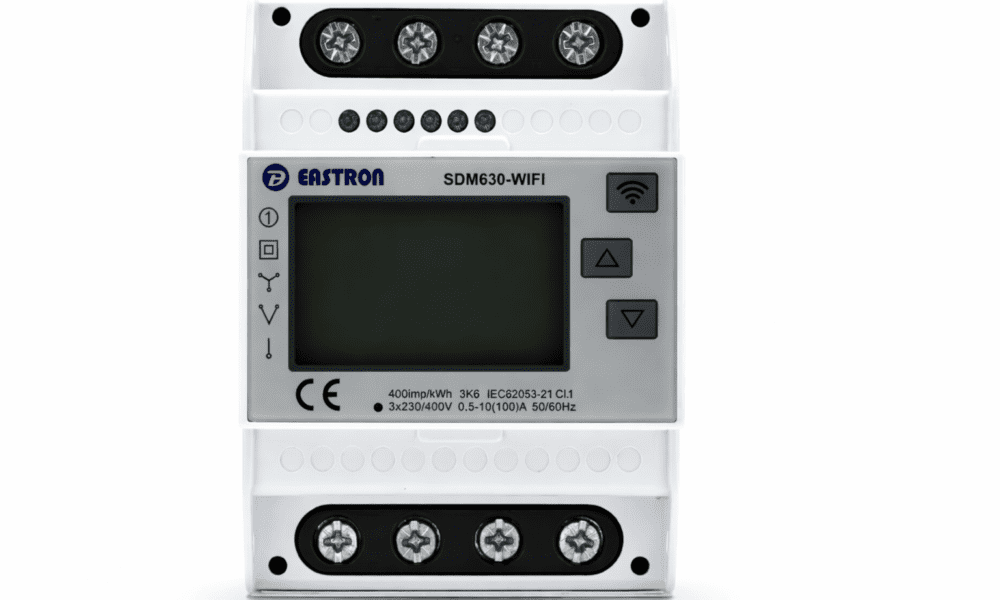
A 3 phase smart meter is an electronic metering device that measures electricity consumption across a three-phase power system, the type of supply typically used by industrial sites, commercial buildings, and high-demand facilities. Three-phase systems distribute alternating current across three active conductors (L1, L2, L3) and a neutral wire, enabling them to handle larger loads more efficiently than a standard single-phase domestic supply.
What makes these meters “smart” is their communication capability. Rather than requiring a technician to visit and manually log a reading, smart meters automatically transmit consumption data to energy management platforms, building management systems (BMS), or cloud-based dashboards.
Key characteristics of a three-phase smart meter include:
- Real-time measurement of voltage, current, active power, reactive power, and energy consumption across all three phases simultaneously
- Two-way communication via protocols such as Modbus RTU (RS485), M-Bus, Wi-Fi, or LoRaWAN
- Bidirectional metering to record both imported and exported energy essential for sites with solar PV or battery storage
- MID certification for billing-grade accuracy, confirming compliance with EU metering standards
- DIN rail mounting for straightforward installation inside distribution boards and meter panels
Why Three-Phase Power Demands Smarter Monitoring
Three-phase installations are far more complex than single-phase setups. Heavy machinery, HVAC systems, industrial motors, and large commercial loads all draw power across different phases and imbalances between those phases can lead to inefficiencies, equipment stress, and elevated running costs.
A smart meter 3 phase doesn’t just total up your consumption; it monitors each phase individually. This granular view allows businesses to:
- Identify uneven load distribution across phases before it causes equipment damage
- Detect sudden spikes or drops in demand that could indicate a fault or inefficiency
- Understand which circuits or areas of a facility are consuming the most power
- Make data-driven decisions about load scheduling and energy procurement
For energy managers dealing with complex electrical infrastructure, this level of detail isn’t optional, it’s essential.
Key Benefits of 3 Phase Smart Energy Meters
Real-Time Energy Visibility
3 phase smart energy meters provide live access to consumption data, eliminating the guesswork that comes with monthly estimated bills. Benefits include:
- Instant dashboards showing power draw across each phase at any given moment
- Automated alerts when consumption exceeds pre-set thresholds
- Historical data logging to track patterns and identify trends over time
- Per-phase breakdown that highlights inefficiencies invisible to a standard meter
Accurate Demand Management
Peak demand charges can account for a significant share of a commercial electricity bill. Smart metering helps businesses take control of demand by:
- Identifying exactly when peak demand occurs across the working day or week
- Enabling load shifting rescheduling non-critical operations to off-peak periods
- Staggering equipment start-up times to flatten demand spikes
- Providing data to support negotiations with energy suppliers on tariff structures
Remote Monitoring and Integration
Modern three-phase smart meters integrate seamlessly with BMS platforms, SCADA systems, and IoT-based energy software. This connectivity delivers:
- Automatic data transmission to monitoring platforms no manual reads, no data gaps
- Remote access for energy managers overseeing multiple sites from a single dashboard
- Integration with third-party software via Modbus RTU, M-Bus, or Wi-Fi protocols
- Real-time alerts sent directly to engineers or facility managers when anomalies are detected
Improved Billing Accuracy
Inaccurate or estimated meter reads can result in significant overbilling or unexpected catch-up charges at settlement. Smart meters address this by:
- Delivering accurate, timestamped data for every billing period
- Eliminating estimated reads entirely when connected to a data collection system
- Supporting tenant submetering, enabling fair cost allocation between occupants
- Simplifying energy audits and sustainability reporting with reliable historical records
Phase Imbalance Detection
Uneven load distribution across the three phases is a common issue in commercial and industrial installations. A smart meter continuously monitors each phase and can:
- Flag imbalances before they cause overheating or equipment failure
- Alert maintenance teams to investigate circuits drawing unexpectedly high or low current
- Support power quality monitoring, including detection of voltage fluctuations and harmonics
- Reduce the risk of unplanned downtime caused by electrical faults
Support for Renewable Energy Integration
As businesses invest in solar PV, battery storage, and EV charging infrastructure, smart metering becomes even more valuable. A three-phase smart meter supports:
- Bidirectional measurement of both imported and exported energy
- Accurate feed-in tariff reporting for solar generation
- Optimisation of self-consumption by tracking when generation meets demand
- Integration with inverter management systems for end-to-end energy visibility
3 Phase Smart Meter Installation: What to Expect
3 phase smart meter installation is more involved than fitting a domestic single-phase meter, but with the right preparation and a qualified electrician, the process is straightforward. Here are the key considerations:
Current Transformer (CT) Selection
- Most commercial three-phase smart meters use external CTs rather than direct connections
- CTs clamp around the live cables and feed a secondary current (typically 1A or 5A) into the meter
- This approach avoids interrupting the main supply and makes installation flexible and safe
- CT ratio must be correctly matched to the meter’s input specification
Communication Configuration
- The meter must be configured for the correct protocol Modbus RTU, M-Bus, Wi-Fi, or LoRaWAN
- Communication address, baud rate, and parity settings should align with your BMS or data platform
- Some meters support password-protected configuration to prevent unauthorised changes
Physical Installation
- Most smart meters are designed for DIN rail mounting inside a distribution board or meter cabinet
- Ensure adequate space in the panel for the meter body and CT cables
- IP51 front protection is standard on most DIN rail meters, suitable for indoor panel environments
MID Compliance
- For billing and submetering applications, select a MID-certified meter
- MID approval confirms that measurement accuracy meets the legal requirements for fiscal use
- Always verify the certificate number and scope before specifying a meter for a billing application
Working with a metering specialist or qualified electrician familiar with both electrical requirements and communication protocols will ensure clean, reliable data from the very first day of operation.
3 Phase Smart Meters in the UK: The Regulatory Context
The 3 phase smart meter UK rollout has evolved considerably in recent years. Historically, businesses on three-phase supplies could not access the same smart metering technology available to domestic single-phase customers. Instead, they relied on AMR (Automated Meter Reading) devices useful for remote reading.
For larger sites exceeding 300 amps total (100 amps per phase), an AMR meter may still be required; your Distribution Network Operator (DNO) can advise on the appropriate solution based on your site’s power demand.
Conclusion
Upgrading to a 3 phase smart meter is one of the most effective steps a commercial or industrial business can take to gain control of its energy usage and reduce costs. By providing real-time, per-phase data and integrating seamlessly with BMS platforms, cloud dashboards, and renewable energy systems, smart meters transform energy management from a reactive process into a proactive one.
As energy prices continue to exert pressure on business margins and sustainability targets become increasingly central to corporate strategy, the data delivered by smart metering is no longer a nice-to-have. It’s a business necessity. Whether you’re installing metering for the first time or upgrading legacy equipment, selecting the right three-phase smart meter one that is MID-certified, communication-ready, and suited to your load profile will deliver measurable returns for years to come.
Frequently Asked Questions
Q1. What is the difference between a 3 phase smart meter and an AMR meter?
A 3 phase smart meter supports two-way communication — your supplier can update tariffs and interact with the meter remotely. AMR meters only transmit data in one direction. Smart meters also connect to the UK’s DCC network, allowing seamless supplier switching without losing functionality. For most commercial businesses, a SMETS2 smart meter is the better long-term investment.
Q2. Can a 3 phase smart meter actually help reduce my electricity bills?
Yes, by acting on the data it provides. A smart meter reveals exactly when and where electricity is being consumed across each phase. Businesses can shift operations to off-peak periods, eliminate energy waste, and reduce peak demand charges. Most businesses that actively use smart meter data see measurable bill reductions within the first three to six months.
Q3. Are 3 phase smart energy meters compatible with solar panels and EV charging points?
Yes. Bidirectional 3 phase smart energy meters measure both imported and exported electricity, making them ideal for sites with solar PV, battery storage, or EV charging infrastructure. They help optimize self-consumption, support accurate feed-in tariff reporting, and allow facility managers to monitor the additional demand from EV chargers alongside existing site loads all from one device.
Q4. What should I know before arranging a 3 phase smart meter installation?
Before 3 phase smart meter installation, confirm your site’s amperage existing SMETS2 smart meters support up to 100A per phase (300A total). Sites exceeding this require an AMR meter. You’ll also need a qualified electrician familiar with CT configuration and communication protocols. Ensure the meter is MID-certified if it will be used for billing or tenant submetering purposes.
Q5. Is MID certification necessary when selecting a smart meter 3 phase device?
MID certification is legally required when a smart meter 3 phase device is used for billing including landlord-tenant submetering, supplier settlement, or export payment calculations. For internal monitoring or load profiling where no billing is involved, a non-MID meter is often sufficient and more cost-effective. Always confirm your intended use before specifying a meter to avoid compliance issues.





