
Share
Share
Share
Share
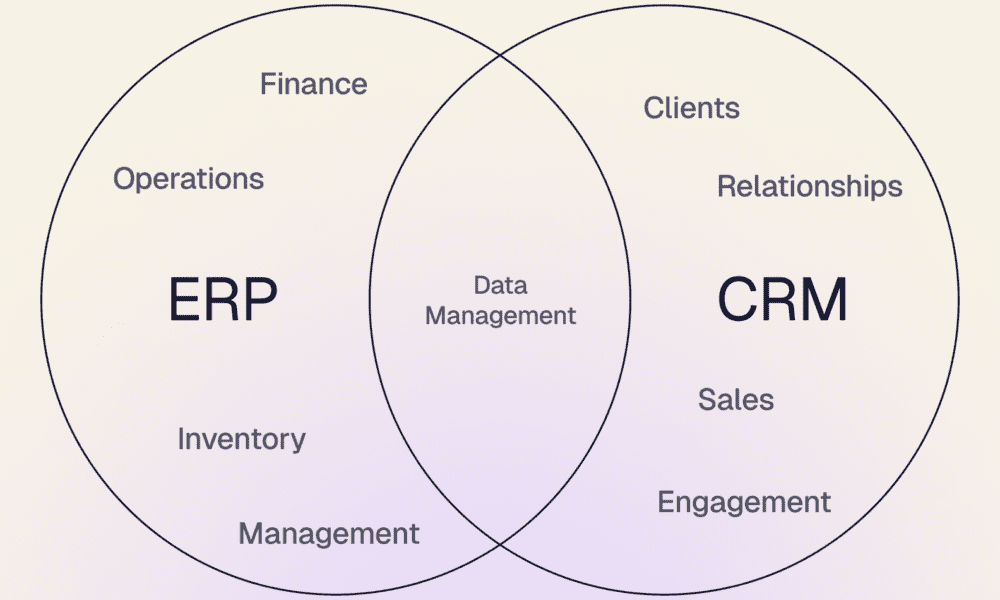
Enterprise resource planning and customer relationship management systems are foundational to scaling direct-to-consumer brands because they unify inventory, billing, fulfillment, and customer data within a single operational framework. Without integrated ERP and CRM architecture, recurring revenue models fracture under growth pressure, logistics become inefficient, and customer retention suffers. For DTC companies managing subscription cycles, product diversification, and global fulfillment, enterprise software is structural rather than optional.
ERP platforms such as SAP S/4HANA, Oracle NetSuite, and Microsoft Dynamics 365 provide centralized control over procurement, manufacturing, warehouse management, and financial reporting. In high-growth DTC environments, inventory synchronization across digital storefronts and distribution centers determines margin stability. Brands that expand rapidly without ERP integration often encounter inventory misalignment, delayed fulfillment, and inconsistent financial reporting. ERP systems resolve these friction points by standardizing processes across departments.
Customer relationship management systems operate in parallel. Salesforce, HubSpot, and Microsoft Dynamics CRM enable segmentation, lifecycle tracking, and retention analytics. For subscription-driven DTC brands, CRM architecture captures purchase history, churn signals, and engagement behavior. This data informs automated retention campaigns, targeted promotions, and predictive inventory planning. When CRM platforms integrate directly with ERP systems, companies gain visibility from acquisition to delivery.
Shopify Plus and similar enterprise ecommerce platforms frequently serve as the front-end layer for DTC brands. Behind that interface, ERP systems manage order orchestration and financial reconciliation. Payment gateways such as Stripe or Adyen process recurring billing cycles, while ERP modules track revenue recognition and tax compliance. The technical architecture must support elasticity during seasonal surges without compromising transaction integrity.
Recurring revenue models amplify the need for integration. Subscription billing requires automated payment retries, fraud detection, and customer communication workflows. CRM systems capture failed payment events and trigger retention outreach. ERP systems reconcile subscription cycles with inventory depletion and procurement schedules. When systems operate independently, friction accumulates across customer touchpoints.
Systems Thinking Over Tactical Tools
Scaling DTC brands demands architectural coherence rather than isolated software deployments. ERP and CRM platforms function as operational backbones that align marketing, finance, and supply chain teams. The transition from startup ecommerce stack to enterprise infrastructure often marks a turning point in a brand’s lifecycle.
Legacy direct-to-consumer companies illustrate this evolution. Businesses that began with catalog ordering or phone-based sales have migrated to integrated digital ecosystems. Melaleuca, founded in 1985, operates within a membership-based consumer-direct model that requires coordinated order management, recurring billing infrastructure, and centralized customer data governance. While the company’s public-facing brand centers on household and wellness products, the underlying operational environment depends on enterprise-scale systems capable of handling subscription cadence, product diversification, and fulfillment logistics.
Data governance becomes increasingly important as DTC brands expand internationally. ERP systems manage compliance across tax jurisdictions, currency conversion, and localized reporting standards. CRM platforms handle consent management and data privacy requirements aligned with regulations such as GDPR and CCPA. Enterprise architecture must accommodate evolving compliance frameworks without disrupting customer experience.
Warehouse automation and inventory forecasting further demonstrate ERP dependency. Integrated systems enable predictive analytics that anticipate demand fluctuations based on CRM engagement data. Marketing campaigns launched through CRM tools can feed demand signals into ERP-driven procurement models. This feedback loop stabilizes supply chains and reduces overstock risk.
Enterprise DTC brands often integrate third-party logistics providers through API connections. ERP platforms coordinate pick-and-pack operations, while CRM systems maintain visibility into order status for customer communication. Transparent tracking updates improve retention by reducing service inquiries. Without integrated systems, support teams lack real-time insight into fulfillment progress.
Retention economics depend on CRM intelligence. Lifetime value calculations, churn prediction models, and segmentation strategies rely on accurate, centralized customer data. Salesforce and similar platforms provide configurable dashboards that translate behavioral signals into operational actions. Integration with ERP ensures financial reporting aligns with customer metrics.
Technology selection also influences scalability. Cloud-based ERP platforms offer modular expansion, enabling DTC brands to add functionality as product lines diversify. On-premises systems may require greater capital investment and slower deployment cycles. Many high-growth brands adopt hybrid architectures, balancing flexibility with governance control.
Security infrastructure underpins the entire ecosystem. Payment processing systems must comply with PCI DSS standards. ERP databases store financial records that require encryption and access controls. CRM platforms manage personal customer data subject to privacy regulations. Enterprise DTC brands invest in layered cybersecurity protocols to mitigate breach risk.
Digital transformation within DTC sectors reflects broader enterprise trends. As consumer acquisition channels fragment across social commerce, marketplaces, and direct websites, ERP and CRM alignment becomes more complex. Unified data architecture ensures consistent pricing, inventory visibility, and customer messaging regardless of channel.
The operational maturity of a direct-to-consumer brand can often be measured by the sophistication of its backend systems. Early-stage companies rely on manual reconciliation and disconnected SaaS tools. Enterprise-scale brands operate within synchronized ERP and CRM ecosystems that automate financial reporting, optimize logistics, and personalize engagement at scale.
The long-term viability of DTC models rests on infrastructure discipline. Marketing creativity drives acquisition, but enterprise systems sustain retention and margin control. ERP platforms align inventory and finance. CRM systems translate behavioral data into actionable insights. Together, they create the structural foundation that allows direct-to-consumer brands to scale without operational fracture.