Share
Share
Share
Share
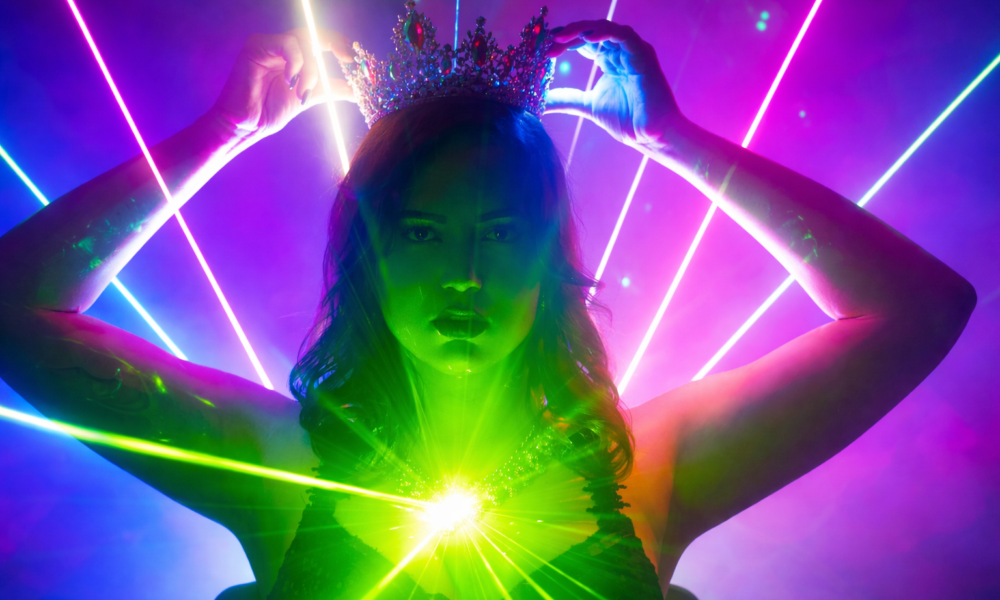
Meganne Money, owner of Laser DesignWorks LLC, joined Dream Theater as their touring Laser Designer and Operator at a defining moment in the band’s history. The return of Mike Portnoy for the Dream Theater 40th Anniversary Tour marked a pivotal shift in the band’s internal rhythm philosophy, setting the tone for everything that followed. From the inception, it was made clear that this production would operate outside the norms of modern synchronization. “I was told right off the bat, ‘Portnoy doesn’t do click tracks. He says that’s not rock n’ roll,’” Money recalls. This was not a passing comment. It was the creative foundation upon which the entire show would be built.
When the Metronome Goes Silent
In most large-scale productions, removing timecode alone presents a significant challenge. Removing the click track entirely elevates that challenge to another level. Dream Theater performances exist in a living tempo environment where accuracy is human, not mechanical. “So not only are we not using timecode, the band isn’t even playing to a metronome we can sync with,” says Meganne Money. Every visual decision therefore had to be grounded in active listening rather than locked reference points. Compounding the difficulty, Dream Theater’s music extends far beyond subtle tempo variation. Songs frequently move through multiple, sometimes highly irregular, time signatures that evolve within a single track. As Money explains, “Locking the visuals to a fixed timeline would actively fight the music, and live busking alone wouldn’t be as repeatable, nor would it do justice to the visual potential of this theatrical music.”
Where It All Began
Despite the absence of technical anchors, the expectation for consistency and excellence never loosened. If anything, it intensified. Meganne Money entered the production knowing that working with Dream Theater required honoring both their musical freedom and their legacy, while still delivering the same level of repeatability and refinement she brings to fully time-coded productions. “I came into this show knowing I was working with some of the most talented musicians I’ve ever witnessed and understanding that I was there to bring them the same repeatability and precision I give my clients that do use those tools,” she explains. That responsibility carried added weight, as Dream Theater was the first band Money had ever seen live performing with Iron Maiden, an early formative experience that shaped how she listened to music long before lasers were part of the picture. Precision, in this context, was about earning their trust by matching their authenticity with a level of preparation and care worthy of what their music meant to her.
Throwing Out the Playbook
Dream Theater’s unwavering commitment to musical purity demanded a fundamental shift in Meganne Money’s approach to laser operation. “There’s a level of authenticity in their style that forced me to develop a way of operating I’d never needed before,” she notes. Familiar workflows simply could not withstand the complexity and variability of the material. The solution required memorization, adaptive cue design, and a hybrid execution style that blended live responsiveness with carefully structured control; a method developed specifically to support the band’s musical intent and performance style.
Lasers Learn to Listen
As the process unfolded, the focus shifted away from spectacle-first thinking toward musical presence. The lasers ceased to function as an overlay and instead became another voice within the performance. “Their music and the way they play it has taken my attention from being in it for the laser show to being in it for the music,” says Money. Her role evolved from operator and programmer into a performer out of the spotlight, working in real time as a living element of the production. The result was a visual that complements the band in a harmonious way and draws attention to the intricate layers of the music without pulling focus from the performance.
The Gig That Changed Everything
Ultimately, Dream Theater’s rejection of click tracks did more than change how Meganne Money prepares for a show. It forced her to strip away automation as a safety net and replace it with trust, preparation, and musical awareness. In the absence of fixed timing, the work became less about execution and more about presence. Every night required full attention, deep familiarity with the music, and the confidence to respond in real time. “The reward of the heavy lifting and long hours is performing my small part alongside the band and team that helped me become the best I’ve ever been,” Money reflects. Dream Theater’s philosophy about click tracks did not just shape a show, but demanded a level of musical engagement that permanently reshaped how Meganne Money approaches laser operation in live production.