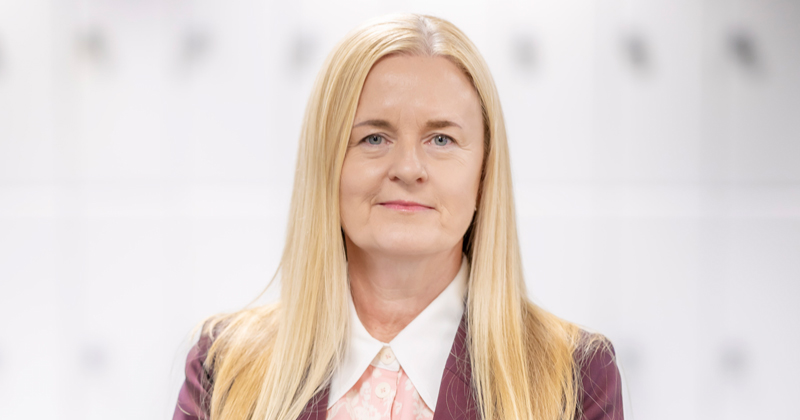
Jo Rowley never planned to be a deputy headteacher. Now she’s the first deputy in decades to serve as president of her union, the Association of School and College Leaders.
“I’ve always just moved on to other things because I’m interested in them, and I think I can play a valuable part in that role,” she says.
“And so my career has kind of evolved, rather than having it planned well in advance.”
Rowley is deputy head at Walton High School in Stafford.
Since September, she has been ASCL’s president, acting as a figurehead for the organisation. Last week she presided over its conference in Liverpool.
Raised in Walsall in the Black Country, Rowley comes from “very working-class stock”. Her parents left school at 14 without academic qualifications. She attended the local comprehensive school.
Her education journey “was almost like a blind discovery experience, because I had no one with experience to tell me what to expect”.
She had friends who would “truant for days and days on end, and now nobody seemed to wonder where they were”.
Love of learning
“It was a very difficult school, and you were very much going against the grain if you were someone who was interested in learning.
“And I don’t know biologically what went on in my brain, but I was interested in learning,” she jokes.
“I think for me, school was full of adults that seemed to know about a different world from the world that I knew.
“They knew about books I’d never heard of. They travelled to other countries, which I hadn’t, and they seemed to have a lot of enthusiasm for the things that they’d experienced.
‘I enjoyed that there was a place to go that was full of energy’
“And I think I enjoyed the fact there was a place to go to that was really positive and full of energy, and I came away with more knowledge in my head.”
Rowley developed a passion for sciences, and went on to study chemistry at the University of Manchester. She eventually did a PhD.
“I was just enjoying the learning experience,” she says. “This is back in the day, of course, of maintenance grants. I often wonder, what would I have done now? I definitely wouldn’t have done a PhD.”
Rowley eventually decided the life of a researcher wasn’t “the kind of lifestyle I wanted” so trained to be a teacher, taught chemistry, and took on leadership roles when the opportunity arose.
Optimistic outlook
ASCL’s presidency is usually held by a headteacher or, especially in recent years, an academy trust CEO.
Rowley has used her presidency to champion those in other leadership roles, and believes a more positive message about teaching and leadership is needed nationally.
“I’m an optimistic person at heart, and I go into school not expecting it to be bad,” she says. “I go into school looking forward to it, and without any shadow of a doubt, every day there’s something wonderful that happens.
“Children are wonderful people who say the most bizarre things and bring the most interesting stories in. And I think there’s a collegiality amongst teachers, because it is a challenging job that brings reward.
“When I’m in school, I do love that family feeling that you get from working with your colleagues. And I think we all have a role to play and actually selling the positives of the profession.”
‘Look at the good you can do’
Rowley says she encourages younger colleagues to pursue leadership roles, urging them to “look at all the good things you can do”.
“Look at all those children over there that have benefited because of a decision that you’ve made that has allowed them to access something that they maybe couldn’t access before.
“We need to promote those positives, because it’s easy to jump on a negative.”
But other incentives are needed. She notes a “lot of the profession” is female, while teaching “does, by and large, require an adult in a specific classroom with 30 children.
“And so the hybrid working or working from home or altering what days you work has historically not been in place in education, but it certainly is coming through.”
She actively encourages flexible working.
“As a school leader, I encourage that. Those people give you far more back as a consequence of that decision than if you just blanket say no, because historically, that’s not what we do in our profession.”
Funding pot shot
But challenges in teaching and leadership are many and wide-ranging. Rowley’s school is in Staffordshire, one of the f40 group of council areas where schools receive the lowest amount of funding.
Part of that is due to demography. Inner-city schools attract more funding because of high levels of disadvantage.
“I’m under no illusion about the challenges my colleagues face and yes, there are schools that definitely, to get those children through the doors, sat down and to learn something and have something meaningful for education takes more money.”
But the “big issue is there’s just not enough money in the pot”, she says.
“Generally the pot is very small, and if you just keep shuffling the financial deck chairs within that pot, then we’re still not really going to solve that disadvantage problem.”
The government’s schools white paper will shake up deprivation funding for schools, to focus on family income rather than free school meals eligibility. Rowley welcomes the review, but says she’ll need to “look at it in more detail”.
‘We need to do something differently’
She describes the white paper more broadly as “very ambitious” and it reads like many of ASCL’s concerns about the system have been listened to.
She acknowledges that describing the system of support for pupils with special educational needs and disabilities as “broken” is a “well-worn phrase”, but action is needed because the system “just isn’t working”.
“We need to do something differently, primarily for the children and their families, but also for the adults that work with those children.
“No adult walks into school saying ‘I don’t want to help that child’, or ‘I don’t care that you’re struggling with X, Y and Z’. But the reality is, we don’t have the resources.
“So we’re effectively not helping that person, and that puts emotional pressure on the professionals at work with the children, because you go home knowing that you haven’t been able to help in the way you wanted.”
Future plans
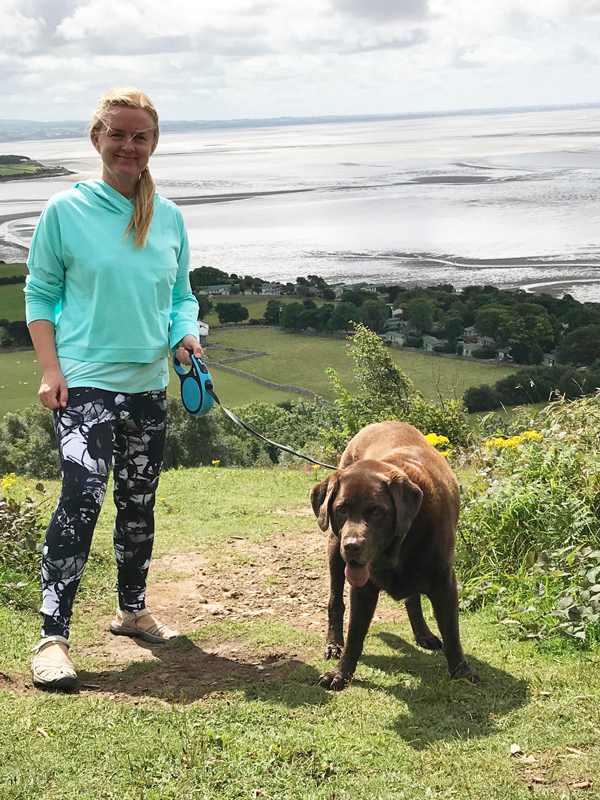
When not in school or on ASCL business, Rowley enjoys hiking in the Lake District. She says if she hadn’t been a teacher, “I’d have probably ended up doing something outside”.
She has previously served as her school’s acting headteacher. But would she ever take on a permanent headship?
“I don’t rule anything out. I think I’ll always be engaged in education, having dabbled with other careers as either summer jobs as a student or the PhD.
“What I’ve learned is that I get my buzz from education. Working with teenagers, in my case, is definitely the thing I want to do.
“Long past the time I should have retired, I’ll probably still be doing something to do with education. Because it excites me. It always has, and I’m sure it always will.”