Share
Share
Share
Share
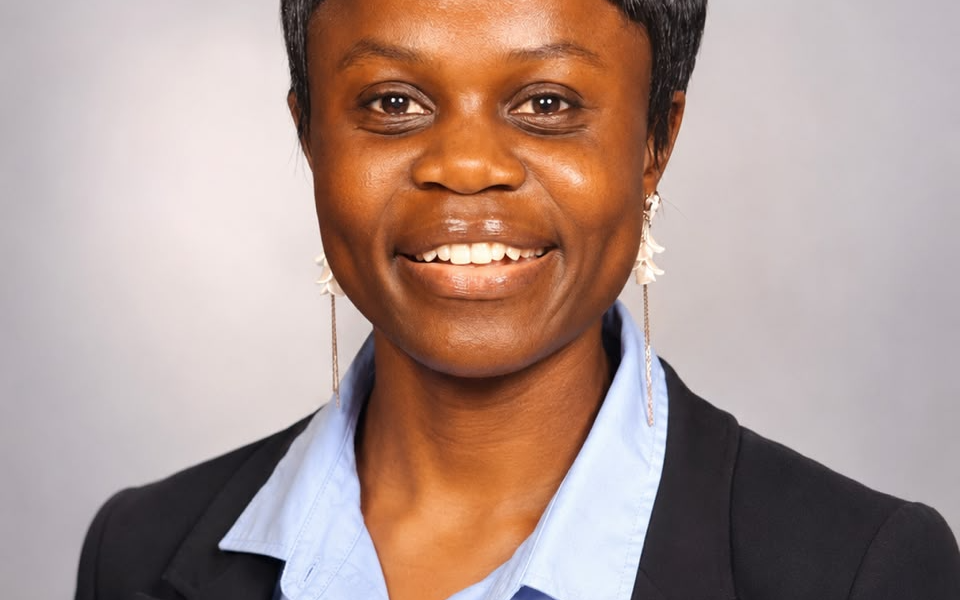
Artificial intelligence is reshaping modern healthcare, yet one of its biggest challenges remains trust. While deep learning models continue to achieve remarkable predictive performance, many operate as “black boxes,” limiting their adoption in clinical environments where transparency is essential. AI Research Engineer and Data Scientist Beryl Atieno Ochieng is among the researchers working to address this challenge through explainable artificial intelligence (XAI) for precision oncology.
Ochieng specializes in multimodal AI, an emerging field that combines medical imaging with structured clinical information to improve diagnostic accuracy. Her work integrates breast MRI data with patient clinical variables to develop intelligent systems capable of predicting critical breast cancer biomarkers, including Estrogen Receptor (ER), Progesterone Receptor (PR), and HER2 status. By incorporating explainability techniques such as SHAP and Grad-CAM, her models enable clinicians to better understand the reasoning behind AI-generated predictions, an increasingly important requirement for real-world healthcare deployment.
Her graduate research at Rutgers, The State University of New Jersey explored how multimodal deep learning can improve biomarker prediction in breast cancer. The project evaluated several machine learning and deep learning architectures before developing a hybrid framework that combined imaging and structured clinical data into a unified predictive model. The research achieved an overall accuracy of 86% while emphasizing transparency and clinical interpretability, demonstrating how explainable AI can support more informed treatment planning.
Beyond breast cancer, Ochieng has expanded her work into lung cancer classification using CT imaging, healthcare predictive analytics, and AI-powered decision-support technologies. Across these projects, she has consistently focused on building machine learning systems that balance predictive performance with reproducibility, transparency, and practical clinical value.
As healthcare organizations increasingly adopt artificial intelligence, explainability has become a defining factor for responsible AI implementation. Physicians, regulators, and healthcare institutions require models whose decisions can be understood and validated before they are integrated into patient care. Ochieng’s research reflects this broader industry direction by combining advanced deep learning architectures with explainable AI techniques designed to improve clinician confidence in AI-assisted diagnosis.
Her work has been presented at international conferences across the United States, the United Arab Emirates, and Hungary, where she has shared research on multimodal breast cancer prediction, explainable deep learning for lung cancer classification, and machine learning applications in healthcare. These presentations highlight the growing global interest in transparent AI technologies capable of supporting high-stakes medical decision-making.
In addition to academic research, Ochieng contributes to the open-source AI community by publishing machine learning repositories that encourage reproducibility and collaboration. Her publicly available projects span breast cancer prediction, lung cancer classification, mental health screening, and healthcare analytics, enabling other researchers and developers to build upon her work.
Looking ahead, Ochieng’s research interests extend to federated learning, healthcare AI governance, multimodal clinical decision-support systems, and regulatory pathways for AI-enabled medical technologies. As explainable AI continues to become a cornerstone of digital healthcare, her work contributes to the development of intelligent systems designed not only to improve diagnostic performance but also to strengthen transparency, accountability, and trust in clinical artificial intelligence.
With the rapid evolution of precision medicine, researchers who combine technical innovation with responsible AI practices are helping define the future of healthcare. Through her work in explainable multimodal AI, Beryl Atieno Ochieng is contributing to that transformation by advancing technologies intended to make artificial intelligence more interpretable, clinically useful, and patient-centered.