Share
Share
Share
Share
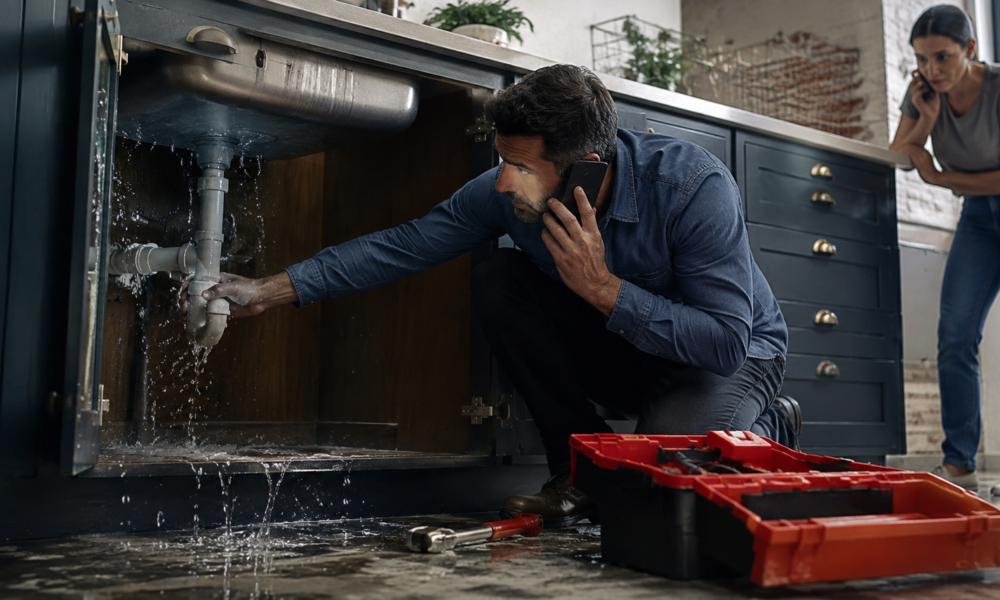
Summer rain in this borough has changed character. It doesn’t drizzle for a day anymore, it dumps a month’s worth in ninety minutes and moves on, and the difference matters enormously to anyone with a basement. Any Plumber in Brooklyn can tell you which nights those were without looking at a calendar, because the phone remembers. Ida’s night in 2021 turned the basement question from theoretical to urgent, and the storms since haven’t let it fade. The good news is that basement flooding isn’t one problem. It’s three, they announce themselves differently, and each has its own fix.
One Pipe Carries Everything
Most of Brooklyn drains through a combined sewer. The water leaving your shower and the water falling on your roof share the same pipe under the street, a design from an era with different math about rainfall. In a normal shower of rain, fine. In a cloudburst, that pipe fills completely, and a full pipe stops accepting anything.
Worse than stopping. Flow reverses. The system pushes back toward the lowest open connection it can find, and the lowest open connection on the block is usually a basement floor drain, a basement toilet, a laundry standpipe. That’s why the water arriving during the worst storms isn’t rainwater. It came from the main, and it brought company.
Three Kinds of Water, Three Different Fixes
The first question worth answering during a flood, if it’s safe to look, is where the water is entering, because the answer decides everything after.
Water rising out of the floor drain or bubbling up in a basement shower is a sewer backup, the reversal described above. Water weeping through the walls or seeping at the joint where floor meets foundation, often hours after the rain stops, is groundwater, the water table rising under the house. Water pouring down the cellar stairs or through a window well is surface runoff that never made it to a drain at all.
Three sources. Three fixes. Mixing them up is how people spend real money on the wrong solution, like waterproofing paint against a surcharging main, which works about as well as it sounds.
The Valve That Says No
Against sewer backup, the fix is mechanical and blunt. A backwater valve sits on the house drain with a flap that swings freely when flow moves the right direction and slams shut when it reverses. The street can surcharge all it wants. The flap says no.
The blocks that flood repeatedly, low-lying stretches of Canarsie, the streets around the Gowanus, parts of Red Hook, are exactly where the city has been nudging owners toward backwater valve installation for years. Two caveats keep it honest. The valve needs an accessible cleanout and an annual look, because a flap held open by debris protects nothing. And while it’s closed, your own drains can’t discharge either, so the household waits out the storm without running water down anything. A fair trade against six inches of what the alternative delivers.
A Sump Pump Is a System, Not a Gadget
Groundwater needs a different answer. A pit at the basement’s low corner, a pump inside it, a check valve on the discharge line, and a discharge that daylights well away from the foundation instead of feeding the same overloaded sewer. Water table rises, pit fills, pump throws it back outside. Repeat until the storm loses interest.
The detail that separates a working system from a wet basement is the battery backup, because the storms that raise the water table are the same storms that drop the power lines, usually in the same hour. Out toward East New York and the low ground near Starrett City, a pump without backup is a promise the grid gets to break. Sump pump installation done right also gets tested, a bucket of water poured in some calm afternoon, not discovered during the event.
The Outside Ten Feet
A humbling share of flooded basements trace back to the last ten feet of the water’s trip. The drain at the bottom of exterior cellar stairs, blanketed in leaves since October. Window wells full of debris. Downspouts sawed off at the elbow, delivering the entire roof directly to the foundation. Out by Coney Island and Sea Gate, add a high tide that slows everything trying to leave.
The catch basin at the curb belongs on the list too. If the grate in front of the house is buried under leaves and litter, the street’s water has nowhere to go but sideways, and sideways means the stoops. Raking a grate clear before a forecasted storm is unglamorous municipal teamwork, and it works. A stubborn clog below the grate is a 311 call, not a shovel project.
The cheapest flood prevention in Brooklyn is a broom in late September.
Before the Radar Turns Red
A few things are worth doing while the sky is still boring. Ask the neighbors what the basement did in the last big one, because the block’s history is the house’s forecast. Read the insurance policy, specifically for sewer backup coverage, which is usually a separate rider and not part of the standard package, a detail people discover at the worst possible moment. Get anything irreplaceable a foot off the floor.
And have the number of an emergency plumber saved before the borough-wide bad night, because after a real storm every plumbing company in Brooklyn is triaging hundreds of calls, and the customers they already know come first. Water finds the unprepared. It always has.
Brooklyn Plumbers, 300 Cadman Plz W, Brooklyn Heights, NY 11201, (929) 441-6040