Introduction
It often starts with something small. A pale yellow mark appears on the ceiling above the living room. A few hours later, the paint begins to bubble, and a faint dripping sound becomes noticeable. At first, it might seem like a minor household maintenance issue. However, what appears on the surface may represent a much larger problem hidden behind the walls or beneath the floor.
Water damage is particularly difficult because the visible symptoms do not always reveal the actual source. A leaking pipe, a defective appliance connection, a damaged shower seal, or water entering from another apartment can all produce similar signs.
The most important thing is not simply to remove the water. It is to understand where it comes from, stop it at its source, and prevent the remaining moisture from creating further problems.
The Hidden Story Behind a Water-Damaged Wall
Imagine returning home after work and noticing that the hallway floor feels unusually damp. There is no open window, no overflowing sink, and no obvious reason for the moisture.
You wipe the floor, but a few hours later, the dampness returns.
This is exactly the kind of situation that deserves attention. Water may be escaping from a concealed supply line or travelling through the building structure from another location.
Several common problems can cause this situation:
- A small crack in a pressurized water pipe.
- A leaking connection behind a washing machine.
- A damaged dishwasher inlet hose.
- Defective silicone joints around a shower or bathtub.
- A leaking hot-water storage tank.
- A damaged drainpipe.
- Rainwater entering through an exposed part of the building.
These problems require different solutions. Repairing a supply pipe, for example, involves a different process from fixing a shower drain or replacing a damaged appliance hose.
That is why identifying the source should always come before cosmetic repairs.
Why You Should Never Ignore the First Signs of Water Damage
One of the biggest mistakes property owners make is waiting until the damage becomes clearly visible.
A small damp patch may not look particularly serious, but moisture can gradually spread into plaster, insulation, wooden flooring, and other building materials.
There are several warning signs worth investigating.
Changes in Wall and Ceiling Surfaces
Paint that begins to blister, wallpaper that separates from the wall, and plaster that becomes unusually soft can indicate moisture behind the surface.
Yellow or brown marks may also appear as water carries minerals and other substances through building materials.
Flooring That Changes Shape
Wooden flooring can swell when exposed to moisture. Laminate surfaces may develop raised edges, while carpets can retain water beneath their visible surface.
Even after the room appears dry, moisture may remain underneath.
Unexplained Musty Smells
A persistent damp smell can indicate moisture trapped in areas that receive little ventilation. Behind cupboards, under kitchen units, and inside wall cavities are common places where hidden moisture can remain unnoticed.
Unusual Water Meter Readings
A water meter can provide useful clues when a pressurized supply line is suspected.
Close all taps and make sure water-consuming appliances are not operating. Observe the meter. If it continues registering consumption, an undetected leak may be present.
This test does not identify every possible water problem, particularly leaks involving drains or external water sources, but it can help narrow down the investigation.
The First Hour: What to Do Before the Damage Spreads
When water is actively entering a room, every unnecessary delay can increase the affected area.
A sensible emergency response begins with a few basic actions.
Stop the water supply. Close the main shut-off valve or the isolation valve serving the affected section. If you are unsure which valve controls the problem, seek professional guidance.
Consider electrical safety. If water has reached electrical outlets, appliances, or wiring, do not enter the affected area. Disconnect power only if the switch can be reached safely. Otherwise, contact a qualified electrician or emergency services.
Protect nearby belongings. Move furniture, electronics, rugs, important documents, and other valuables away from the wet area whenever it is safe.
Inform other occupants. In an apartment building, water may be travelling between floors. If the source could be in an upstairs apartment, contact the occupants and building management immediately.
Take photographs. Record the visible damage before cleaning or moving everything. Include affected walls, floors, ceilings, furniture, and any visible leakage.
These steps help control the immediate situation and provide useful information for the subsequent investigation.
Why Finding the Water Source Is More Important Than Drying the Floor
A wet floor can be cleaned. A leaking pipe that continues releasing water cannot be solved by cleaning alone.
This distinction is essential when dealing with a serious property incident.
For example, a damaged hot-water connection inside a kitchen wall may release water continuously. The moisture could travel behind cabinets and appear several metres away.
Similarly, a leaking shower drain might only release water while someone is using the bathroom. In that situation, the water meter may not reveal anything unusual because the problem involves drainage rather than a pressurized supply line.
A professional investigation therefore considers when the moisture appears, how it spreads, and whether the water supply, drainage system, heating installation, or external weather conditions could be responsible.
When a leak cannot be identified visually, suitable detection equipment can help narrow down its location without immediately opening large sections of the building.
What Happens During a Professional Water Damage Emergency?
A well-organized emergency response should follow a logical sequence rather than immediately starting demolition or cosmetic restoration.
1. Identifying the Source
The first task is determining whether the water comes from a fresh-water supply, drainage installation, heating system, appliance connection, or rainwater.
The technician examines the affected area and uses the available evidence to identify the most likely source.
2. Stopping the Water Supply
Once the source has been narrowed down, the affected pipe or connection is isolated.
In some situations, closing one branch of the plumbing system is sufficient. This can allow the remaining parts of the property to continue receiving water.
3. Repairing the Actual Problem
The damaged component is then repaired or replaced.
This could involve installing a new hose, replacing a faulty connection, sealing an appropriate joint, or replacing a damaged section of pipe.
The objective is to eliminate the cause rather than simply hide the visible symptoms.
4. Recording the Damage
Photographs and a clear description of the work provide useful documentation for property owners, landlords, and insurance companies.
Keeping records from the beginning makes it easier to understand what happened and which repairs were necessary.
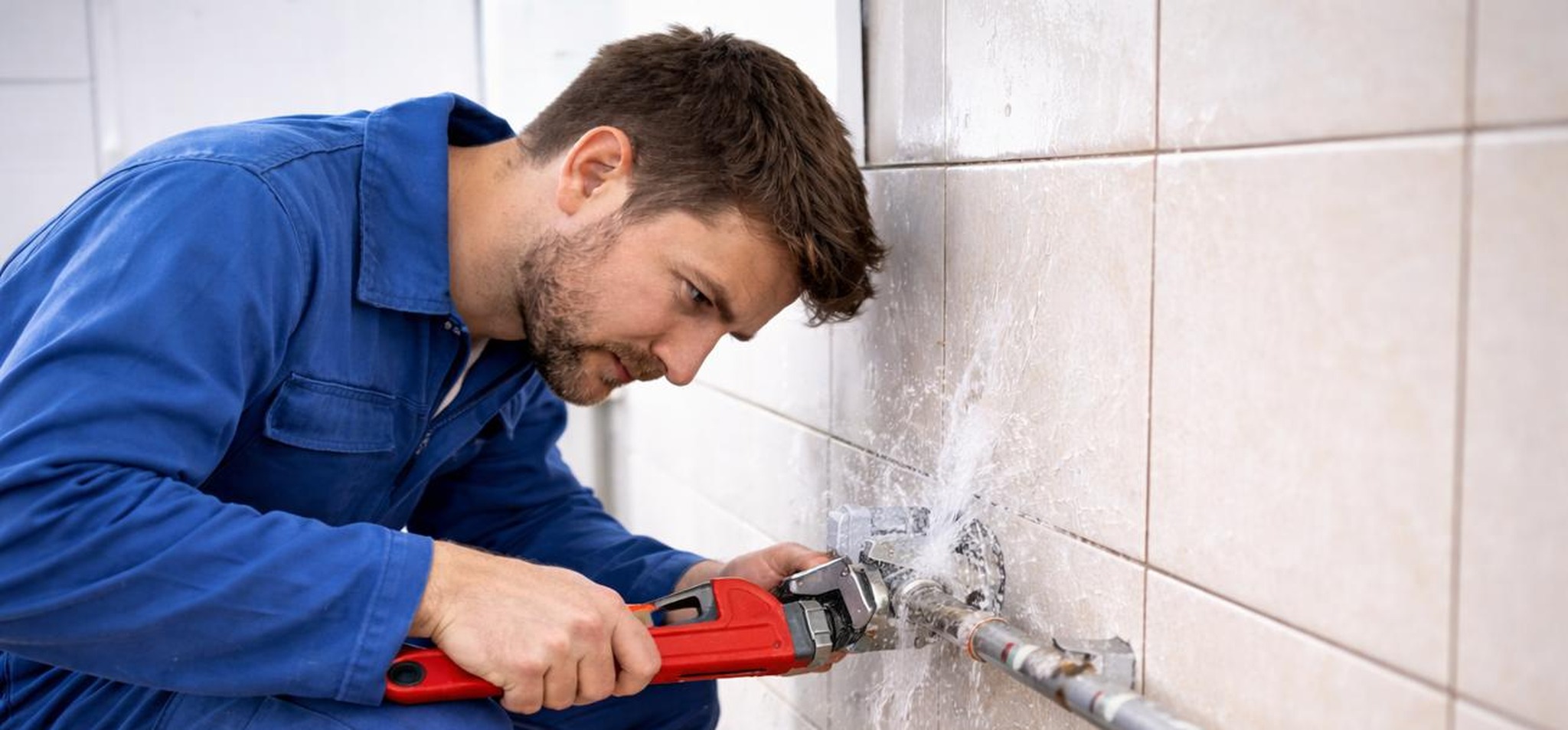
For situations requiring urgent assistance, a Wasserrohrbruch Sofort service can help address the immediate plumbing problem and arrange the necessary intervention.
Why Professional Water Damage Assistance Can Make a Difference
Water damage is rarely limited to the place where the water first becomes visible.
A leaking connection may affect several rooms, while a damaged pipe inside a ceiling can create problems for occupants on another floor.
A professional Wasserschaden Notdienst can help investigate the source, stop the water supply, repair the defective component, and document the affected areas.
The distinction between emergency plumbing work and complete building restoration is important.
A plumber may resolve the leaking connection, but the building materials still need to be assessed. Depending on the amount of water involved, additional drying or restoration work may be required.
Does a Wet Wall Always Need Professional Drying?
Not every damp surface requires expensive technical equipment.
A small amount of surface moisture on a suitable material may disappear with proper ventilation and sufficient time.
However, the situation is different when water has penetrated insulation, flooring layers, or the screed beneath the floor covering.
These areas may remain damp long after the visible surface appears dry.
Simply opening windows and using a household fan does not necessarily remove moisture trapped inside the building structure.
Depending on the extent of the damage, specialists may recommend professional moisture measurements and technical drying equipment.
The decision should be based on the affected materials, the amount of moisture, and the results of an appropriate inspection.
Understanding Water Damage and Insurance Responsibilities
Another important part of handling a water emergency is understanding the responsibilities of the people involved.
In Germany, the type of insurance and the specific policy conditions determine which costs may be covered.
Residential building insurance may cover eligible damage to permanent building components caused by insured water incidents. Household contents insurance may cover qualifying damage to furniture and personal belongings.
Tenants should inform their landlord or property management company immediately. If water appears to originate from another apartment, the occupants and building management should also be notified.
Photographs, invoices, and written descriptions of the incident should be retained.
Emergency measures to prevent further damage should not be unnecessarily delayed while waiting for an insurance response.
How to Make Your Property Less Vulnerable to Future Water Damage
Prevention is not always possible, but regular attention to vulnerable areas can reduce the likelihood of serious incidents.
Check washing machine and dishwasher hoses periodically. Look for cracks, loose connections, and signs of ageing.
Inspect the silicone joints around showers and bathtubs. Damaged seals can allow water to enter surrounding structures during everyday use.
Pay attention to cupboards beneath sinks, where small leaks can remain hidden for weeks.
If you own an older property, consider arranging an inspection of the accessible plumbing connections and exposed pipework.
It is also useful to know where the main water shut-off valve is located before an emergency happens. In a stressful situation, searching for an unfamiliar valve wastes valuable time.
Conclusion: Treat the Cause, Not Just the Visible Damage
Water damage is one of those household problems where appearances can be misleading. A small ceiling stain might indicate a leaking connection several metres away, while a damp kitchen floor could be caused by a concealed appliance hose or a drainage problem.
The right response begins with controlling the water, protecting people and belongings, and identifying the actual source. Once the defective component has been repaired, the affected building materials should be assessed to determine whether further drying or restoration is necessary.
Most importantly, property owners should not confuse a clean-looking surface with a fully resolved problem. Real protection comes from eliminating the source of the water and making sure hidden moisture does not remain behind.