
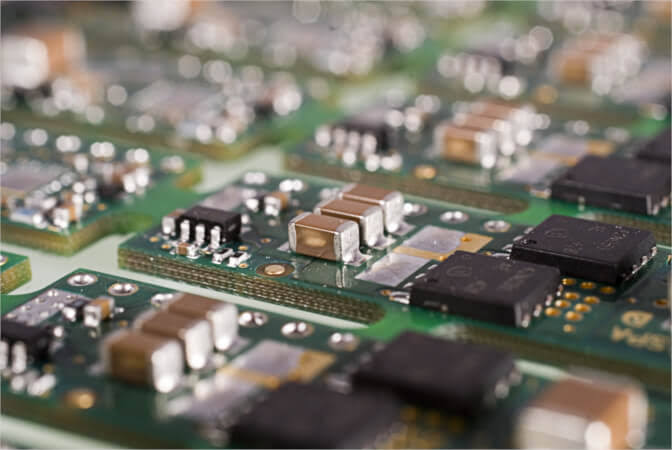
When engineers select a DC-DC isolated power module, they often focus on one primary requirement: electrical isolation. However, modern isolated power modules offer much more than simply separating input and output circuits. They can also support voltage regulation, overcurrent protection, short-circuit protection, and overvoltage protection, making them valuable components in IoT devices and industrial control systems.
By combining multiple functions in a compact design, a single module can simplify power architecture, reduce component requirements, and improve overall system reliability. These benefits are particularly important in applications where electrical noise, fluctuating input voltages, and unexpected load conditions can affect sensitive electronic components.
Beyond Isolation: Built-In Protection Features
Electrical isolation is essential in many industrial and communication applications, but a dependable power supply must also protect connected equipment from electrical faults. Depending on the model, an isolated DC-DC power module can integrate several features that help maintain safe and stable operation.
1. Optical Isolation
Optical isolation uses light to transfer signals between electrically separated circuits. An optocoupler typically contains a light-emitting component and a light-sensitive receiver, allowing information to pass without a direct conductive connection.
This approach helps reduce the effects of ground loops, electrical noise, and unwanted voltage differences between circuit sections. It is particularly useful in industrial communication interfaces, sensor systems, and control equipment operating in electrically noisy environments.
However, optical isolation is a signal-isolation technique and is not automatically included in every DC-DC power module. Engineers should verify whether their selected module provides the required power isolation, signal isolation, or both.
2. Overcurrent Protection
Overcurrent protection helps prevent excessive current from damaging the power supply or connected components. An abnormal load, wiring fault, or damaged downstream device can cause current to rise beyond the intended operating limit.
Depending on the module design, the protection circuit may limit output current, reduce the output voltage, or shut down the power supply. This helps reduce thermal stress on internal components and connected equipment.
For IoT gateways and industrial controllers, overcurrent protection adds an important layer of safety, especially when several electronic devices share a common power source.
3. Short-Circuit Protection
A short circuit can occur when the output terminals become unintentionally connected or a faulty component creates an unusually low-resistance path. Without suitable protection, the resulting current can cause overheating, component failure, or damage to circuit-board traces.
Short-circuit protection allows a power module to respond to this condition by limiting current or shutting down its output. Some designs automatically restart after the fault disappears, while others require a reset or power cycle.
Engineers should check the manufacturer’s specifications to understand the module’s recovery behavior and ensure that repeated fault conditions will not compromise the wider system.
4. Overvoltage Protection
Overvoltage protection helps safeguard sensitive electronics when an input or output voltage exceeds its permitted operating range. Excessive voltage may result from unstable power sources, switching transients, incorrect connections, or faults elsewhere in the system.
Depending on the module, protection may involve shutting down the output, clamping the voltage, or disconnecting the load. The exact behavior varies by design, so the specified input limits, output limits, and transient ratings must be reviewed before installation.
When combined with suitable external protection components, these features can help reduce the risk of damage and improve the resilience of industrial electronics.
DC-DC Isolated Power Module Applications in IoT
Isolated power modules are useful in IoT systems because these devices often combine communication interfaces, microcontrollers, sensors, and other sensitive electronic components. Each component may require a different voltage level, while the overall system must operate reliably under changing environmental and electrical conditions.
1. Industrial DTU Gateway Power Supply
An industrial Data Terminal Unit (DTU) gateway connects field equipment with remote monitoring or control systems. A typical design may receive a 24V industrial supply and convert it to 5V for a 4G communication module and microcontroller.
The gateway must maintain a stable power supply while operating near motors, relays, industrial wiring, and other potential sources of electrical interference. Supply disturbances can affect communication performance or cause unexpected device resets.
The BDM41-6W24P05E1 isolated power module is specified in the supplied product information as a 24V-to-5V module with a 6W output rating and 1,200mA output current.
This rating makes it a potential option for a gateway requiring a 5V isolated supply, provided the total load remains within the module’s continuous output capability. Engineers should also account for the 4G module’s peak current during transmission, startup requirements, operating temperature, and any additional peripherals.
Electrical isolation can help separate the power domains and reduce certain ground-related interference problems. Nevertheless, reliable communication also depends on PCB layout, antenna design, grounding, filtering, and appropriate surge protection.
2. Outdoor Sensor Nodes
Outdoor environmental monitoring nodes may measure temperature, humidity, air quality, rainfall, or other environmental conditions. These systems often use solar panels and battery storage, creating an input voltage that changes according to battery charge and operating conditions.
For example, a sensor node might operate from a nominal 12V or 24V supply and require a regulated 5V rail for sensors, along with 3.3V rails for a microcontroller and LoRa communication module.
The BDM41-6W24P05E1 can be considered for applications where its specified input range accommodates the actual supply voltage and its 5V output meets the load requirements. A suitable low-dropout regulator (LDO) or another DC-DC converter can then provide 3.3V for the MCU and LoRa circuitry.
Outdoor installations require particular attention to lightning-induced surges, electrostatic discharge, moisture, and temperature variation. Isolation may help prevent certain electrical disturbances from crossing between power domains, but it does not guarantee complete lightning protection. Appropriate surge suppressors, grounding, enclosure design, and input filtering remain important.
Before selecting a module, engineers should confirm its input voltage range, isolation rating, efficiency, standby consumption, and operating-temperature limits.
3. PLC Control Cabinet Power Isolation
Programmable Logic Controllers (PLCs) are widely used in industrial automation to monitor sensors, process signals, and control machinery. A PLC cabinet may contain analog input modules, digital interfaces, communication equipment, relays, and actuators, all of which can introduce electrical noise into the system.
A suitable isolated DC-DC power supply can help separate sensitive control electronics from other electrical domains. This can reduce the effects of certain ground loops and improve system robustness when combined with good wiring and grounding practices.
The DM41-20W2405B1, described in the supplied content as a 24V-to-5V module rated at 4A, may be suitable for a PLC application if its electrical specifications and isolation characteristics meet the design requirements.
A 5V output can supply compatible control electronics, but engineers must calculate the total load and allow sufficient headroom for startup current and transient demand. Ripple and noise specifications should also be evaluated, particularly when powering analog measurement circuits or communication interfaces.
Isolation alone does not guarantee improved analog accuracy. Signal conditioning, cable shielding, grounding, filtering, and separation of noisy power circuits are also essential to dependable PLC operation.
Choosing the Right Power Solution
Selecting an isolated DC-DC power module requires more than matching the input and output voltages. Engineers should evaluate the complete operating environment and the electrical demands of the application.
Important selection criteria include:
- Input voltage range: Confirm that the module can accommodate normal supply variations and foreseeable voltage fluctuations.
- Output voltage and current: Match the rated output to the connected load, including startup peaks and short-duration current demands.
- Power rating: Calculate the total required power and leave appropriate operating margin.
- Isolation voltage: Check the rated isolation voltage, insulation requirements, and applicable safety standards.
- Ripple and noise: Review the specifications to determine whether the output is suitable for sensitive analog and digital circuits.
- Protection features: Verify whether overcurrent, short-circuit, and overvoltage protection are integrated and understand how each function operates.
- Thermal performance: Consider ambient temperature, ventilation, mounting conditions, and power derating.
- Efficiency: Evaluate conversion losses, particularly in battery-powered and solar-powered IoT systems.
- Electromagnetic compatibility: Assess whether additional filtering, shielding, or layout improvements are necessary.
If an application requires conversion from AC mains rather than a DC source, an AC-DC module may be more appropriate. The AM11-C / AM31-C AC-DC Step-Down Power Supply Module with Overvoltage Protection is another option to review for compact, low-power designs. Its input range, output ratings, isolation characteristics, and safety certifications should be checked against the intended application before use.
Conclusion
DC-DC isolated power modules are more than simple voltage-conversion components. When appropriately selected, they can combine electrical isolation, regulated power delivery, and integrated protection features in a compact package.
For industrial DTU gateways, outdoor sensor nodes, and PLC control cabinets, the right module can help reduce ground-related interference, support stable operation, and protect electronics against specified electrical faults. However, performance depends on choosing a module that matches the system’s actual requirements and integrating it with suitable grounding, filtering, and external protection measures.
By evaluating voltage range, output capacity, isolation ratings, protection behavior, thermal limits, and efficiency, engineers can build power systems that are more reliable, easier to integrate, and better suited to demanding IoT and industrial environments.