Share
Share
Share
Share
In the software industry, a working prototype usually means you are 90% of the way to a viable business. You write the code, deploy it to a server, and fix the bugs via over-the-air updates while your users are asleep.
In the hardware industry, a working prototype on your desk means you are about 5% of the way there. We learned this lesson the hard way.
Today, Nucular Electronics builds premium control systems for light electric vehicles (LEVs), powering everything from delivery fleets to custom e-bikes. But getting here required a brutal collision with reality and a double pivot that taught us the most important rule of hardware startups: you cannot skip steps.
The “Complete Product” Trap
When we started, our core expertise was in power electronics. We were developing a smart, highly customizable motor controller. But when it comes to raising capital, pitching a “black box with wires” is incredibly difficult. Investors wanted a consumer-ready, mass-market product. They wanted a vehicle.
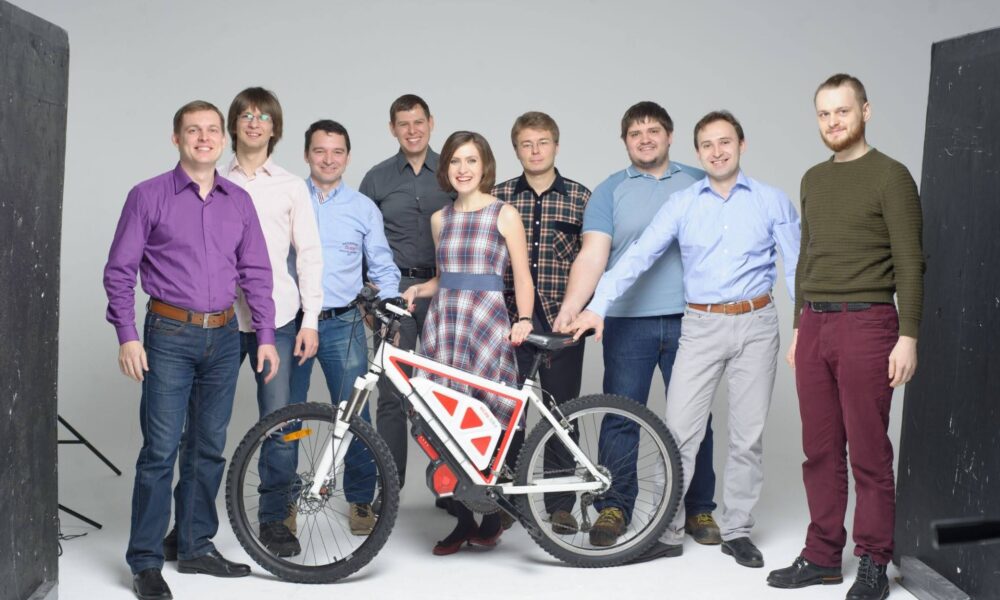
To secure funding and fit the venture capital narrative, we pivoted. We decided to build a complete electrification kit — an E-bike Conversion Kit that could turn any standard bicycle into a high-performance electric vehicle. The pitch deck looked fantastic. The seed money came in. We spent months in the workshop, and eventually, the first prototypes rode beautifully.
We thought we had crossed the finish line. In reality, we were standing at the edge of a cliff.
The Collision with Manufacturing Reality
The E-bike Conversion Kit consisted of 85 unique components that had to be designed, sourced, and manufactured from scratch. This is where the illusion of the “working prototype” shattered.
We quickly hit a wall called tooling costs. Designing a plastic or aluminum part on a computer is practically free; ordering the injection mold for that single part can cost upwards of $15,000. We simply didn’t have the millions required to set up a proper assembly line.
Then came the supply chain nightmare. When you lack manufacturing leverage, contractors make mistakes that can kill your company. In one instance, we ordered a critical motor shaft made of high-grade steel. The factory decided to save time and sent us parts machined from aluminum instead. During a test ride, the shaft snapped instantly.
Building ten functional prototypes in a garage is a fun engineering challenge. Establishing a predictable, scalable supply chain for 85 interlocking parts is a logistical beast that requires a completely different set of corporate competencies.
The Double Pivot
We ran out of money. The company was crushed under more than $100,000 in debt to our investors. As founders, we sold our personal property, took on side jobs, and survived on MREs just to keep the lights on.
We had to make a ruthless decision: kill the E-bike Conversion Kit. We accepted that we did not have the resources or the operational maturity to manufacture a complex consumer vehicle.
But we didn’t kill the company. We looked at the wreckage of the project and extracted the one component we had truly mastered—the electronic brain that made the bike move. We executed a second pivot, returning to our roots. We decided to stop trying to build 85 mediocre parts and instead focus on building the best motor controller in the world.
Core Takeaways for Hardware Founders
Surviving that crisis fundamentally shaped Nucular’s DNA. For CEOs and engineers currently trying to bridge the gap between a prototype and a factory floor, here is what that failure taught us:
1) Don’t skip steps (Accumulate competencies organically)
Hardware is unforgiving. You cannot jump straight into building a highly complex, multi-component system without first mastering logistics, quality control, and supply chain management. These competencies must be accumulated step by step. Start with something you can actually manufacture and scale.
2) Do one thing flawlessly
It is infinitely better to build one brilliant component than a fragile assembly of many. By focusing solely on our control systems, we were able to engineer a proprietary hardware-software ecosystem that communicates flawlessly via a single CAN bus. Today, we give riders access to over 200 tuning parameters and maintain a defect rate of less than 1% in an industry where 30% failure rates are common. We could never have achieved that level of precision if our attention was divided among 85 different bike parts.
3) Manage investor expectations
Do not artificially inflate the complexity of your product just to make your pitch deck sound more disruptive. If your true strength lies in a specific B2B component, stand your ground. Investors will push for the shiny consumer product, but they won’t be the ones dealing with broken aluminum shafts and $15,000 molds.
Hardware is hard because physics doesn’t care about your burn rate. You can’t patch a burned-out motherboard with a software update. Understand your limits, respect the manufacturing process, and never let the hype force you into building a product you aren’t ready to scale.






