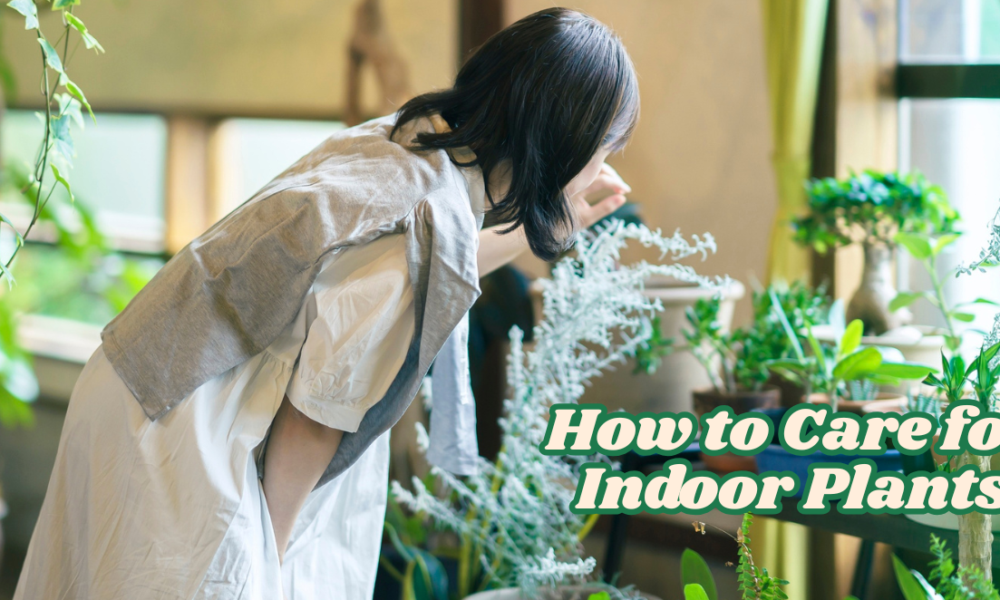
We know plants love water and sunlight, but thriving indoors takes more than a sunny sill and a watering can. Some houseplants grow on pure neglect; others struggle for no obvious reason. The good news? It’s rarely bad luck.
A happy houseplant is just one that’s been growing in conditions that mimic its natural habitat. Here’s what actually matters:
- The right potting mix
- Smart watering
- Enough light
- A steady temperature
- The right humidity
- Regular feeding
Once these six things click, almost any plant is easy to keep happy. Let’s dig in!
How to Choose the Right Potting Mix
There’s no universal plant soil, any more than there’s one shoe that fits every foot. The wrong mix is the fastest way to drown a root system. The big three:
- Succulents and cacti want it gritty and fast-draining. Cut ordinary potting soil with 40–50% sand, pumice, or perlite so water can drain without stagnating around the roots.
- Tropical plants (ferns, ficus, monsteras) like a mix that stays moist but still breathes—peat and vermicompost, with a few pieces of charcoal to fend off rot.
- Orchids don’t want soil at all. They grow on trees in the wild, so they need a chunky, airy blend of pine bark, sphagnum moss, and charcoal.
Quick tip: Not sure what you’re actually growing? Try this plant identifier, which can name the species in seconds so you can look up exactly what it wants.
How to Water Indoor Plants
A potted plant lives in a sealed little world. Its roots can’t reach out for moisture the way they would outdoors—every drop comes from you. And that’s exactly where things can go sideways: overwatering, not underwatering, is the number-one killer of houseplants. Soggy soil suffocates the roots.
The golden rule for most houseplants is to wait for the topsoil to dry a little, then water thoroughly. Want less of a hassle when it comes to watering? Try these options.
- Self-watering pots maintain a reservoir that gradually releases moisture to the roots.
- Hydroponics skips soil entirely. The roots get to live in a nutrient solution that provides water, food, and oxygen in one go.
- Succulents and cacti are pros at surviving without water for weeks.
Quick tip: When in doubt, underwater. Most houseplants can handle a missed watering better than root rot.
How Much Light Do Houseplants Need?
When it comes to light, more isn’t always better. Too much can scorch the leaves, while too little causes leggy growth and pale coloration. It’s all about finding the right spot:
- South-facing windows (the brightest place in the house): succulents, cacti, citrus, croton.
- North- or west-facing windows (cooler, gentler): ferns, philodendrons.
- Dim corners: aglaonema, spathiphyllum, scindapsus, pothos, aspidistra, prayer plants, snake plants, and the ZZ plant.
Not every home has a sunny window, and even bright rooms can grow dim through a long winter, which is tough on sun-lovers like cacti and citrus. That’s when grow lights come in handy:
- Opt for a full-spectrum or high-quality linear LED (old-school incandescent bulbs won’t cut it).
- Hang it about 12 in (30 cm) above the plant and raise it as the plant grows.
- Aim it straight down so the plant grows up rather than sideways.
The Best Temperature for Indoor Plants
Most houseplants are comfortable in the same range as people: around 68–79°F (20–26°C). What really hurts them isn’t the setting, though. Sudden swings and cold drafts do more damage than conditions that are a few degrees too cool but steady. A plant stuck between a frosty window and the blasting heat of a radiator is in for a rough ride, so it’s worth checking its preferred houseplant temperature range before you pick a spot.
There are a few favorites that actually need cool temperatures to bloom, about 50–59°F (10–15°C):
- Azalea
- Camellia
- Persian cyclamen
- Pelargonium (geraniums)
- Most cacti and succulents
Warning: If you keep these beside a heater all winter, they’ll grow leggy, skip their flowers, or drop their buds.
How Much Humidity Do Houseplants Need?
Humidity is the one almost everyone skips—and the one tropical plants need most. Crispy brown leaf tips are one of the first signs that the air is too dry. Where you land depends on the plant:
- Dry household air suits cacti, succulents, and plenty of foliage plants just fine.
- 60–80% humidity is what most tropicals require—far more than a heated room provides.
Here’s what to do if yours could use a little extra humidity :
- Get a humidifier—it’s the most reliable fix.
- Place the pot on a tray of wet expanded clay pebbles.
- Mist with room-temperature water in a pinch.
- Opt for terrariums for the fussiest, humidity-loving plants.
Quick tip: Group humidity-loving plants together. They create a shared microclimate that’s naturally more humid than the surrounding air.
How to Fertilize Indoor Plants
Trapped in a pot, a plant can’t access the nutrients it would naturally find in the ground, so feeding is often necessary. A few rules of thumb:
By plant type:
- Flowering plants will need more frequent feeding.
- Woody plants like ficus and palms get by on one or two feedings a month.
By season:
- Spring and summer: lean on nitrogen to fuel fresh growth.
- Fall: switch to a phosphorus-and-potassium blend to harden plants off for the slower months.
- Winter: most plants are dormant, so put the fertilizer away.
Tip: Fertilizers formulated for specific plants take the guesswork out if you’d rather not play chemist.
The Bottom Line
No house is a perfect greenhouse, and that’s fine. There’s no single ideal setup, just the one that fits your space and your routine.
- Match your potting mix to the plant.
- Water thoroughly but infrequently.
- Adjust light based on the plant and season.
- Avoid temperature swings and cold drafts more than worrying about the exact degree.
- Use a humidifier or a tray of wet pebbles for humidity.
- Feed in spring, summer, and fall, match the fertilizer to the plant, and skip it entirely in winter.
Get the conditions right, and you’ll be giving your plants a little piece of home no matter where they grow.