
Share
Share
Share
Share
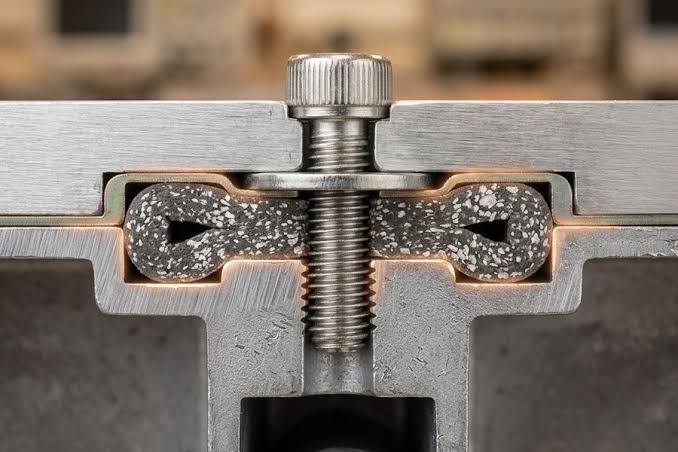
A metal enclosure may look like a complete barrier, yet its seams and removable panels deserve just as much attention as its walls. Where two surfaces meet, small gaps can interrupt electrical continuity. An EMI gasket helps bridge those interfaces, supporting shielding while allowing the housing to be assembled, opened, and maintained. Choosing one means evaluating the joint, not simply ordering a conductive strip.
Start with the enclosure geometry. Record the usable flange width, groove dimensions, surface finish, retention features, and expected gap variation. Consider how the lid closes and where fasteners apply pressure. A gasket selected from a nominal drawing alone may behave differently when tolerances accumulate. Ask whether the material can maintain contact across the smallest and largest gaps without creating excessive stress on the housing.
Next, establish the available closure force. A thin access panel should not need to bend before its gasket makes useful contact. Soft conductive foam and fabric shielding gaskets are options worth evaluating where compression force is limited. Stiffer materials may require a different groove or fastening arrangement. Compare the manufacturer’s compression data with the forces the assembled enclosure can actually provide.
Environmental exposure changes the selection process. Conductive elastomers are often considered when electrical continuity and environmental sealing must share the same interface. Fabric over foam, knitted wire, and conductive foam offer different combinations of mechanical behavior and conductivity. Do not assume that every conductive material also creates a moisture barrier. Specify ingress protection separately and validate it on the finished housing.
Surface compatibility also belongs in the discussion. Review the gasket’s conductive material alongside the enclosure plating or coating. Ask how moisture, cleaning chemicals, and aging could affect that combination. Paint or insulating finishes at the contact area may prevent the intended electrical connection. A suitable material still needs a suitable mating surface and a clearly documented assembly method.
Think beyond the first closure. Will technicians remove the cover during servicing? Could the gasket rub against an edge, stretch during installation, or become trapped beside a fastener? These questions help distinguish a permanent interface from a frequently opened access panel. Prototype the actual opening and closing sequence rather than relying only on how a loose sample feels.
For engineers comparing material families, 3G Shielding Specialties offers enclosure shielding products including conductive elastomers, fabric-over-foam, conductive foam, and wire-based options. Its application engineering support can help translate enclosure requirements into a material and profile shortlist. The useful starting point is a drawing accompanied by the operating environment, contact surfaces, compression limits, and relevant electrical performance targets.
Sampling should answer specific questions. Install candidate gaskets in representative hardware and check fit, closure effort, retention, and continuity. Then assess shielding with the intended cables, connectors, and operating modes. A conductive EMI gasket cannot compensate for every unrelated interference path, so isolate the joint’s contribution before changing material grades or increasing compression across the entire enclosure. Include aged samples when service conditions warrant.
Manufacturing details deserve equal scrutiny. Confirm how corners and joints will be formed, whether adhesive is needed, and how operators will position the part consistently. Establish inspection criteria for missing sections, damaged surfaces, and incorrect seating. A clearly defined installation process makes the selected RF shielding gasket easier to reproduce across prototypes, production units, and service replacements.
The right gasket is therefore the one that fits the complete application. Balance electrical performance with mechanical tolerances, environmental exposure, service access, and assembly cost. Document the tested configuration so later material substitutions receive appropriate review. Treating gasket selection as an engineering decision, rather than a finishing purchase, creates a stronger foundation for dependable enclosure shielding.





