
Share
Share
Share
Share
When preparing for a camping trip, it is easy to compare gear one specification at a time: how quickly a tent can be pitched, its waterproof rating, how many people it sleeps, or how small it packs down.
Those numbers matter, but once you reach the campsite, the thing that stops setup is not always the tent itself. Sometimes it is a much smaller detail: the pump was left behind, the connector does not fit, the stakes are wrong for the ground, or a repair is needed and the right tool is still at home.
These items may be listed as accessories on a product page, but in the actual setup process, some of them are dependencies.
In engineering, a “single point of failure” generally refers to a critical node whose failure can stop an entire system or a key process from continuing. Camping gear is obviously not the same as a data center or financial infrastructure, but borrowing this way of thinking about dependencies can still be useful. Instead of looking only at how well one piece of equipment performs, it helps to ask what it depends on and what, if missing, could stop the whole process.
Don’t Check Gear by Name; Check It by Workflow
Getting a tent out of the car and reaching the point where it is ready to sleep in involves several stages.
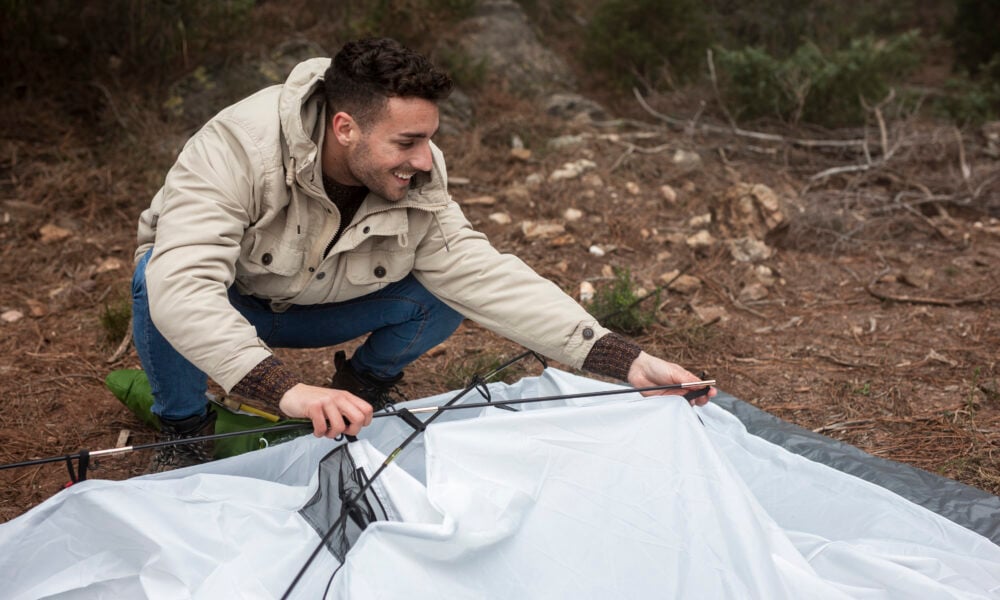
First, you choose where to pitch it and lay out the tent. Depending on the design, the next step is inflation or assembly. Once the main structure is up, the stakes need to be secured, the guy lines adjusted, and the doors, ventilation and surrounding ground checked.
Checking gear item by item can easily stop at “tent packed, pump packed, groundsheet packed.” Walking through the actual setup process makes the dependencies easier to spot: does the pump have the correct connector? Are all the stakes and guy lines there? Where are the repair supplies?
They may look like minor accessories, but if one of them is a critical dependency, having the tent itself ready is not enough to complete the setup as planned.
Simplifying One Step Doesn’t Eliminate System Dependencies
Modern outdoor equipment increasingly aims to reduce complicated assembly, and inflatable structures are one example. They replace much of the pole joining and threading with a more centralized inflation process, allowing the main structure to take shape more quickly.
For example, inflatable camping tents such as the ZONKOO Orion use an integrated air-beam structure and single-valve inflation system, bringing what would otherwise be separate pole-assembly steps into the inflation process. This reduces traditional pole connections, while the pump, valve connection, stakes and guy lines still need to be checked as critical dependencies in the full setup.
When the structure changes, the dependency chain changes with it. Product design can reduce the number of actions a user needs to perform, but it does not reduce the entire setup process to a single step.
Different Ground Conditions Change How the Tent Is Anchored
Once you arrive at the campsite, the question is no longer whether the tent needs anchoring, but how the local conditions affect it.
For inflatable tents, soil, loose sand and hard ground hold stakes differently. Before leaving, it is worth checking not only that the stakes and guy lines are complete, but also whether the anchoring equipment you have suits the ground you expect to encounter.
Conditions can also change after setup. Stronger wind, soil softened by rain or a noticeable change in guy-line tension can all be reasons to check the anchor points again rather than treating setup as finished for the entire stay.
The reliability of the setup therefore depends on more than the gear itself. Ground conditions, wind and rain can all affect how well an individual component does its job.
Fabric Waterproof Ratings Are Only One Part of the Rain-Protection System
Waterproof ratings for tent fabric are easy to compare because they can be listed directly on a specification sheet, but they describe only one part of the overall rain-protection system.
When it rains, water also reaches seams, doors, windows, ventilation openings, entrances and the areas where the tent meets the ground. If the pitch sits in an obvious low point and water begins to collect around it, a higher fabric rating cannot replace good site selection or an awareness of drainage.
So before the trip, check more than the fabric rating. Doors, seams and other relevant areas should also be in good condition. Once the tent is pitched, look at the slope of the ground and where water is likely to travel so the tent is not sitting somewhere prone to pooling.
A single metric can describe the performance of one material, but it cannot represent the behaviour of the whole setup in real conditions.
Prioritize Backups Where There Is No Easy Substitute
Carrying backups does not mean bringing two of everything.
Engineering systems often use redundancy to reduce the impact of a critical node failing. Camping does not need that level of complexity, but the principle is similar: backup resources are most useful where there is no straightforward alternative.
For an inflatable tent house that has to be fully set up on site, the things worth backing up or checking in advance are not every accessory, but the critical items whose absence could stop setup entirely, such as the pump, the correct connector, anchoring equipment and basic repair supplies.
One missing chair will not usually stop a camping trip. A pump connector that does not fit can have a very different effect.
The point of backup gear is not quantity. It is identifying the dependencies that have no simple substitute once you are on site.
Before You Leave, Walk Through the Whole Process With Three Questions
Instead of going through a long packing list from top to bottom one more time, it can be more useful to walk through the actual setup process and ask three questions:
- What, if missing, would stop me from completing the setup?
Check the pump, connectors, stakes, guy lines and any necessary tools. - Which parts of the setup can change as the weather and use conditions change?
Think through what may need checking or adjusting after rain, stronger wind, softer ground or damp equipment. - If a small component develops a problem, can I deal with it on site?
Know where the repair supplies are and understand the basic tasks you may actually need to carry out.
This approach does not add more gear to the car. It simply makes it easier to spot small gaps that may seem unimportant at home but could stop the whole process at the campsite.
System reliability is not about assuming that every component will work perfectly forever. It is about knowing which dependencies matter most and what happens when one part of the system changes. Applied to camping gear, setup speed, waterproof specifications and interior space are still worth comparing, but so is whether the individual components and accessories can work together through the full setup and use process.
For an inflatable tent, checking the setup as a system is often more useful than remembering a handful of impressive specifications.





