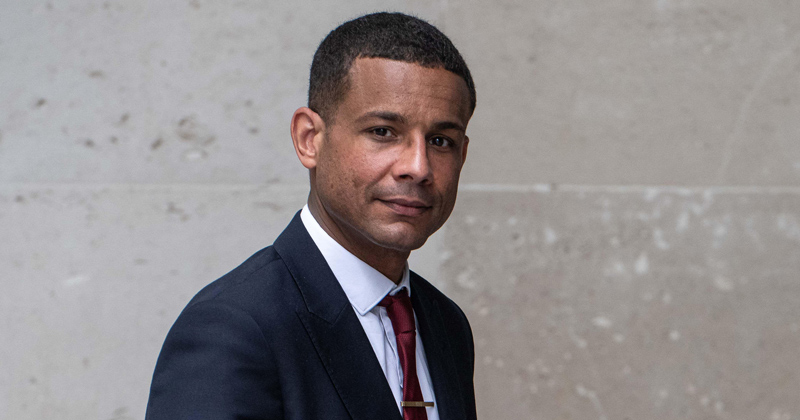
As a former citizenship teacher, children and families minister Josh MacAlister is familiar with standing in front of a class of teenagers.
This particular classroom – familiar right down to the chairs and posters on the walls – could be in any English secondary school. Except outside it is -8C, and snow lies in deep drifts.
We’re in the Õismäe district of Tallinn, the capital of Estonia, in a Soviet-era secondary school nestled in a huge 70s housing estate.
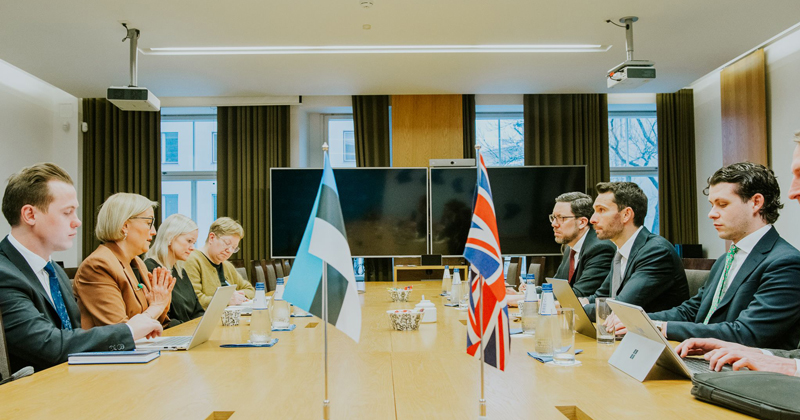
MacAlister is explaining to the pupils why he, along with British ambassador Ross Allen and a host of other smartly dressed delegates, are here on this particular February morning.
“We’ve got a lot to learn from Estonia,” he tells the class.
Covering an area about a third of the size of England, and with a population of just 1.4 million, Estonia’s education system ranks high in international league tables.
Perched beside the huge mass of Russia, the small Baltic state has also been on the frontline of the Kremlin’s propaganda war for decades.
It has had to embed resilience to mis- and disinformation into its education system. So it seems a natural place to turn as the issue grows in England.
“We are also, in the UK, at times attacked by Russia: cyber warfare, misinformation, disinformation, and the attempts to interfere with our political processes,” MacAlister tells pupils.
“So there’s lots for us to learn about what you’re doing in classrooms.”
Misinformation (information that’s wrong or inaccurate) and disinformation (incorrect information intended to deliberately mislead) do not, of course, come solely from Russia.
Nor are they solely political. For example, conspiracy theories can cover anything from beauty and wellbeing trends to the effect of vaccines.
Half of English pupils and teachers affected
The Commission into Countering Online Conspiracies in Schools was set up in 2024 to tackle the growing problem. It is run by Public First and the Pears Foundation.
Research by the commission suggests that over half of young people in England have encountered someone in class or online who believes in a conspiracy theory.
Meanwhile half of teachers said they were at least moderately worried about a pupil who had expressed a belief in a conspiracy in class.
The impact can be seismic. In 2024, online misinformation helped fuel far-right protests and riots across the country following the Southport stabbings. Over 1,500 people were arrested, many of them children.
But it’s likely that a lot of misinformation is more insidious, going unidentified and unchallenged.
An Ofcom report last spring found the proportion of English teens who feel confident judging what is real or fake online has fallen from 82 per cent in 2022, to three-quarters.
It’s against this backdrop the commission organised the three-day research trip to Estonia.
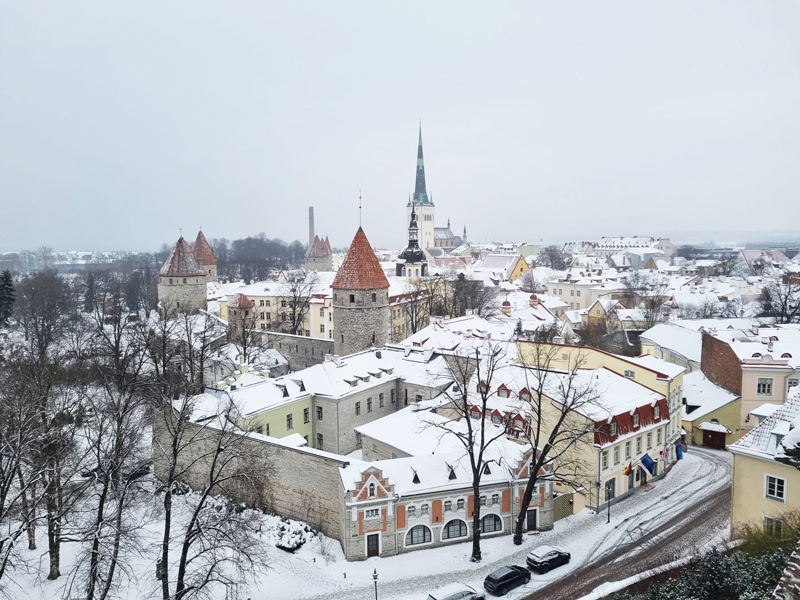
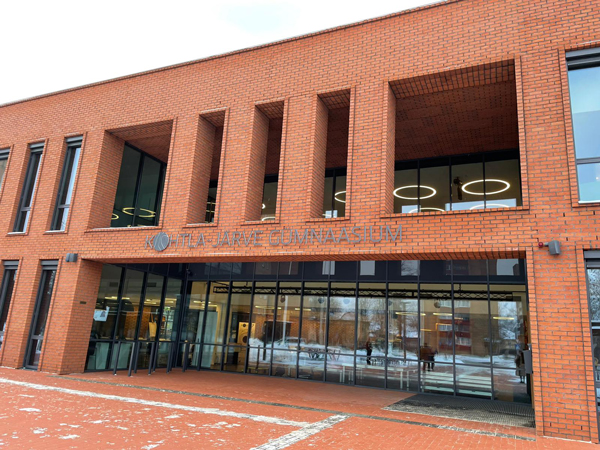
I joined them as they visited schools across Tallinn and in Kohtla-Järve, near the Russian border, and met those working to address the spread of misinformation, disinformation, and conspiracy content among young people.
The first school we visit is Pelgulinna Riigigümnaasium, an upper secondary in western Tallinn.
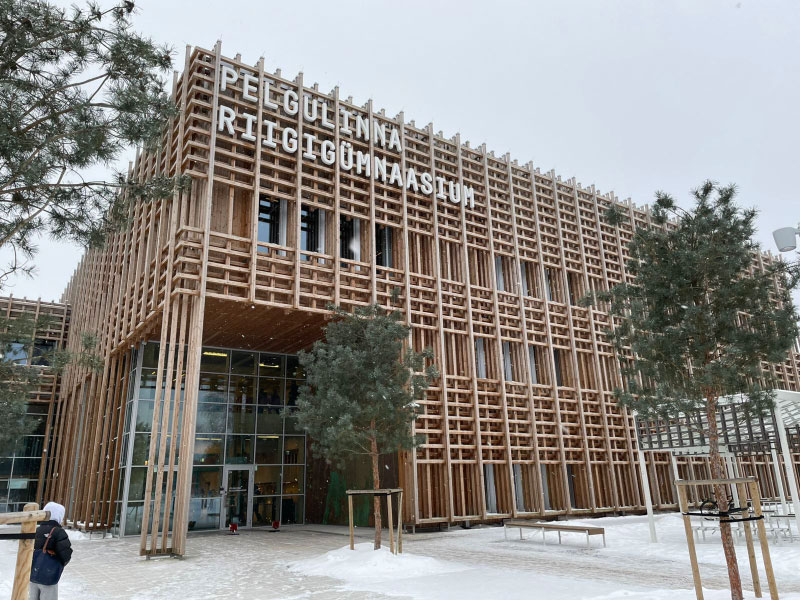
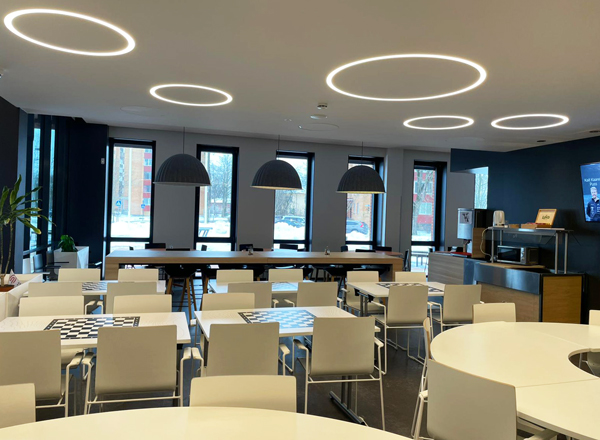
The vast new building is mainly timber and beautifully designed, more like a modern art museum than a school.
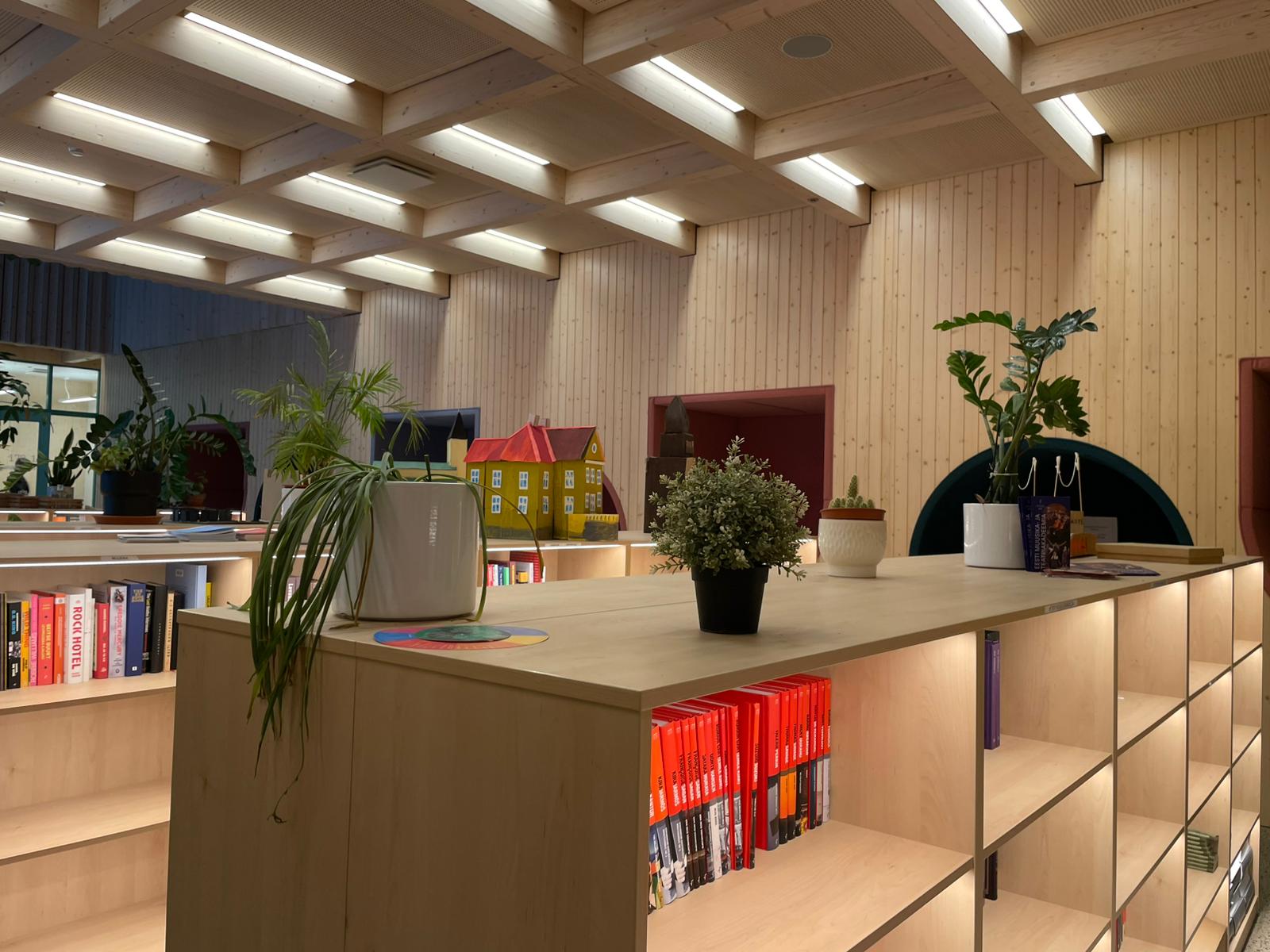
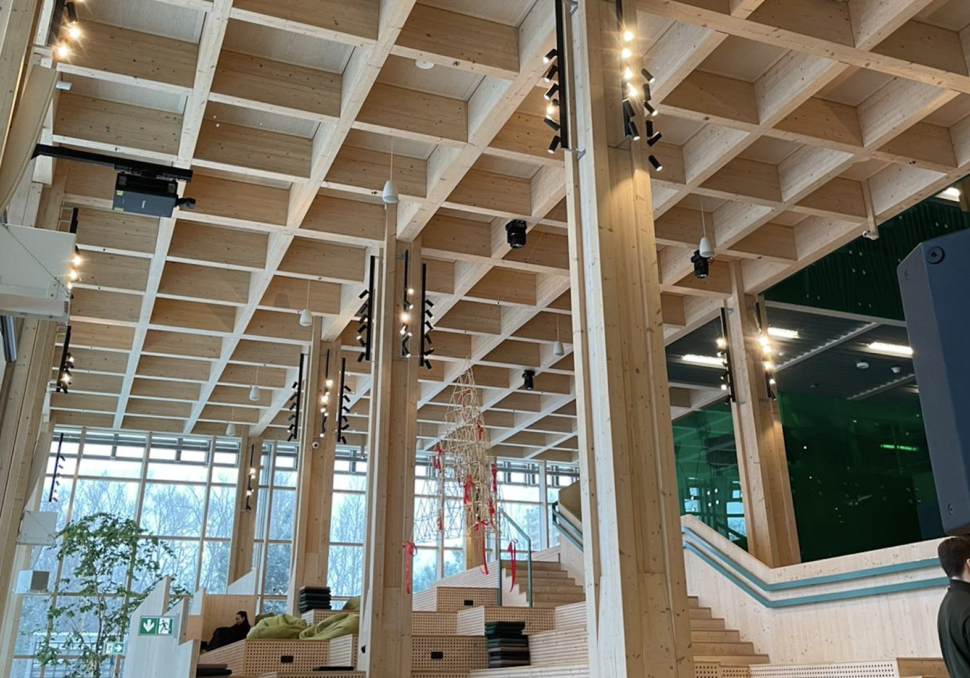
Inside, warm lighting, exposed wood, high ceilings and cushioned seats set in nooks around the building give it a pleasant, soothing atmosphere.
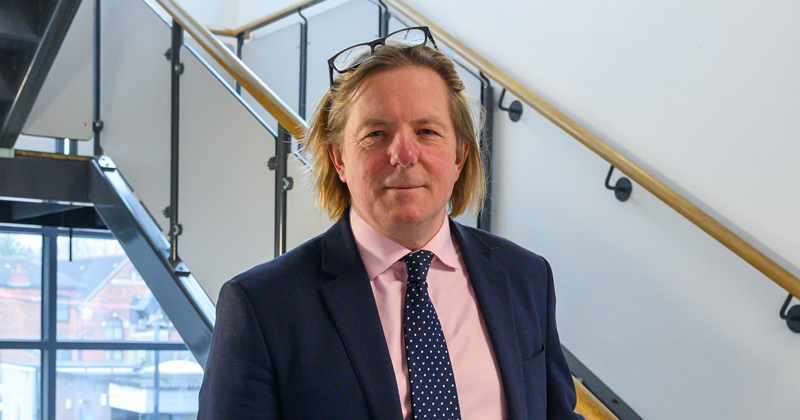
“We have been in the information war since at least the 2000s,” principal Indrek Lillemägi tells us as he shows us around.
“Misinformation, the Kremlin influence – it has been here I think longer than in most European societies.”
Compulsory media and influence course
To help tackle this, all upper secondary (year 10 or 11) pupils in Estonia have, since 2010, had to take a compulsory “media and influence” course.
It teaches them about different media outlets, how to differentiate fact from fiction or opinion, and to engage with information with a critical eye.
Lillemägi leads us to a classroom where we meet media literacy teacher Gertrud Kasemaa.
She teaches pupils “about different media genres… how to how to spot misinformation, how to recognise fake news”.
Media organisations also get involved, she says, by visiting Estonian schools and hosting school visits.
This works well for both, as media outlets are keen to raise their profile and establish “a new generation of newspaper readers”.
On top of this, “digital competence” is one of eight key competencies the Estonian national curriculum says teachers are expected to weave through every subject.
At Rae Gümnaasium in Jüri, 10 miles south-east of the capital, history and social science teacher Roman Kasak tells us he does this constantly.
Each lesson, a different pupil is tasked with finding an article in the media that’s relevant to what is being covered, then to “look for its credibility, analyse who is the author, what’s their background, and how can this influence what they’re saying?”
One pupil tells us how her Estonian class was recently asked to use ChatGPT to write “wrong articles”, to “teach us how easy it is to have misleading information”.
Her article was on a classic Estonian film. “But everything was wrong about it, the characters, the plot,” she said. “It is so easy to give misleading information.”
Another pupil told us how his science class had tested out the so-called “plastic snow” conspiracy which recently made headlines in the US, after people tried burning snow but found it appeared to char. (Reader, it was not plastic.)
Differing levels of teacher enthusiasm
Teachers say the success of the approach depends on individual educators, and their own enthusiasm for – and knowledge of – the area. One said younger teachers appear “more open to it”.
“There are teachers who have worked in their subjects for 20 years, and they’re not changing all that much,” he added, though he said even those teachers are “trying to integrate it” and “recognising where the curriculum is moving.”
Research by the Pears Foundation commission showed that young people, parents and teachers in England feel teachers are well placed to intervene on conspiracy theories and misinformation, yet many teachers described occasions when they had felt ill-equipped to do so.
When asked by MacAlister if teachers generally feel “comfortable” challenging disinformation in class, one young teacher at Rae Gümnaasium agreed it can be tricky.
“It’s a little difficult if you have students with very different beliefs about a topic,” he said. “I find it most difficult if I have to give my own opinion without trying to influence anyone in the classroom.”
To help address this, an association of media literacy teachers was set up last year, with a long-term aim of supporting all teachers to integrate media literacy into their lessons.
But digital literacy is not rigorously assessed, and the Estonian school system is highly autonomous.
Low accountability
Public First’s Sally Burtonshaw asked Lillemägi how the government checks that everybody is delivering media literacy.
“It is not checked,” the headteacher shrugged.
“But this is the story of Estonian education,” he added. “Most things are not checked. We just trust schools. We just trust that schools try to fill in the national curriculum.”
He said foreign visitors often seem interested in how the government decides if money has been well spent, but said this was not something he has otherwise considered, and the government “doesn’t ask”.
“Sometimes the quality is not good, but often it is,” he said.
It’s certainly a very different approach to that in the UK. But it seems to be working.
Pupils confident at spotting disinformation
At the school in Õismäe, MacAlister, the ambassador and commission joined pupils in a discussion around mis- and disinformation.
They agreed it was widespread, but said while their parents – the majority of whom are Russian speakers – struggle to work out what’s real and what isn’t, they generally can.
“I think it’s, like, our skill right now that we can like identify the disinformation,” one girl told me.
“We are taught to check the facts, find the data,” her classmate chimed in.
“Our teacher teaches us to check all the information you get from different sources. You should check, like, twice, or many times.”
Of course, they can’t always tell the fake news from the real. They laugh and agree when I say I’ve been fooled more times than I care to admit, by videos of dancing babies and cats doing things they have no business doing.
But they appear to be approaching the information they’re encountering – whether through social media, adverts, or partisan news outlets – with an appropriate level of cynicism.
The story was the same at each of the four schools we visited.
‘There are lessons we can learn’
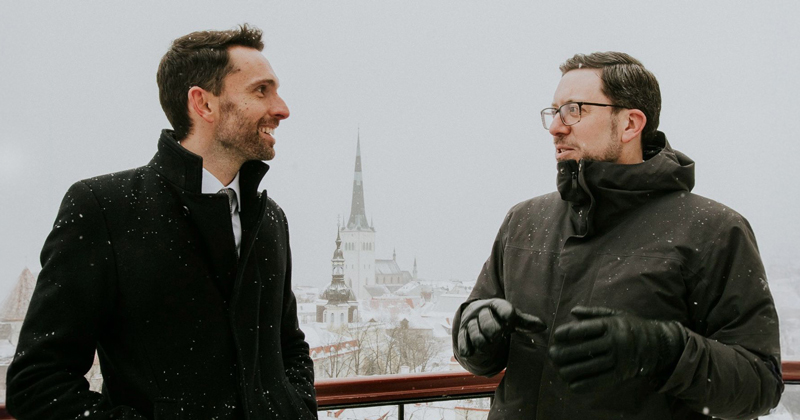
Posting on LinkedIn after the trip, MacAlister said: “Estonia is on the frontline of Russia’s propaganda war…and there are lessons we can learn to better equip our own children to spot conspiracy theories and improve media literacy.”
Schools Week was not permitted to interview the minister during or after the trip about what he had learned.
However, the Department for Education said it had been “interesting to note that there is little public debate in Estonia regarding phones in schools or social media use”.
“Minister MacAlister explored with ministers, teachers, pupils and experts how Estonia builds resilience to mis- and disinformation and conspiracy theories,” the DfE said.
Referring to protests over the moving of a Soviet-era statue, it added: “Education Minister Kristina Kallas explained how Estonia had 20 years’ experience in this area, dating back to the ‘Bronze Soldier’ riots and cyber-attack in 2007. Estonia has used the time since to build resilience.
“She noted a constant need to adapt, referencing wide-spread misinformation during Covid, and AI’s impact.”
But to work in a country like England, with about 50 times as many schools and a far more rigid curriculum, a different, less hands-off approach is likely to be needed.
Will it work for England?
Summing up its findings from the trip, Public First pointed out that for Estonia, particularly since Russia’s invasion of Ukraine, media literacy “is seen as a genuine line of defence”.
The need to tackle mis- and disinformation online and protect young people from it “feels tangible” and is widely understood.
Young people appear “highly informed” and, like their teachers, see mis- and disinformation “as a threat which they should and could manage”.
But the autonomous nature of the Estonian system means “there is not one consistent approach” and “as a result it was hard to draw conclusions from any one intervention or approach”.
Currently in England, media literacy is covered in in citizenship (KS3 and 4), RSHE, computing, English, and in the optional GCSE media studies.
But the curriculum and assessment review, in recommendations accepted by the government, said this should be strengthened.
It said citizenship should be added to the national curriculum for primary, and media literacy “better specified” in its primary and secondary curriculum.
The government says the new RSHE curriculum will also cover “how advertising and information is targeted at children and young people, and how to be a discerning consumer of information online”, and to understand the prevalence of misinformation and disinformation online.
“At home, we’re taking action,” said MacAlister in a statement after the trip.
“Our updated curriculum will ensure every child learns to identify mis- and disinformation from an early age and our Educate Against Hate website continues to provide schools and parents with free, high-quality resources as part of the government’s wider work to build social cohesion.”