The Teacher Development Trust has today announced that it is becoming part of the Chartered College of Teaching later this year, sharing its assets, experience, products, and knowledge.
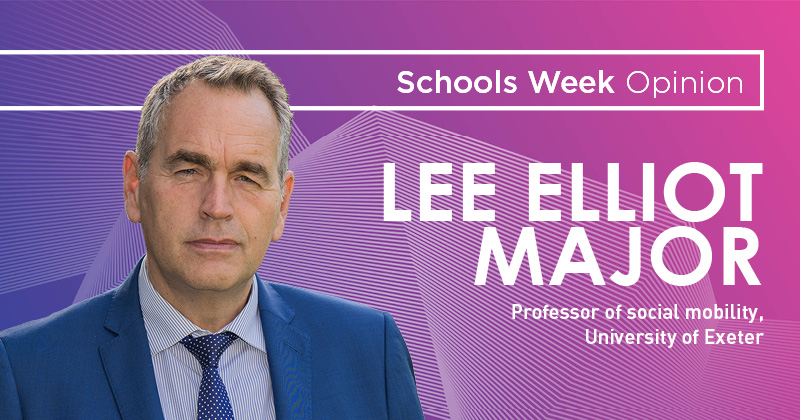
As a current Trustee of TDT and a former vice-president of the College, it will come as no surprise that I am excited about the possibilities of this union.
But first, it is worth reflecting on the context.
We know that effective professional development is perhaps the most powerful tool we have to support teachers to improve, and we know that nothing leads to better outcomes for children in school than a good teacher.
This undeniable truth spurred the creation of TDT fourteen years ago and has also been the fundamental motivation of the College.
Yet, despite the best efforts of both organisations – and indeed lots of other people in the system – we still have a professional development landscape that is too often fragmented and confused.
CPD spending in decline
As TDT’s 2025 report on the CPD landscape showed, 39 per cent of teachers and school leaders say the development they undertook did little or nothing to improve their practice.
The government should be praised for investing in the “golden thread” initiatives of the early career framework and national professional qualifications.
But we also need to recognise that school spending on CPD has been in decline for a decade, so government spending has not led to an overall increase.
Moreover, centrally-directed CPD often fails to recognise the importance of agency, nuance, contextualisation and ownership for teachers and school leaders when choosing the professional development they need.
Research by the National Foundation for Educational Research has highlighted the importance of this, and TDT’s Didagogy report has given us a conceptual framework to help balance the needs of evidence, context and individual agency.
Indeed, the College has launched a new working group to explore the importance of teacher agency.
Promising words, but details needed
The recent white paper has some promising words about reforming NPQ and ECF-ITT frameworks to make them more responsive to teacher needs.
But there is much detail to be agreed, and the wider approach to the teacher training entitlement which pumps in money for training on inclusion – no matter how welcome in isolation – risks having the same warping effect on the market that the rise and fall of NPQ funding has had.
TDT has managed this difficult financial circumstance well, but there is no denying that it is going to be increasingly difficult for all those working in this space to maintain quality and reach with declining school spend.
It creates a dependency on government that is hard to break free from.
This joining together of two organisations with a strong commitment to professional development can help to address some of these underlying challenges.
The thing I am most proud of in my time at TDT is its willingness to “speak truth unto power”, to be part of the system whilst taking the brave step to move away from government funding.
It is this decision that gave TDT space to work on groundbreaking research.
Nothing more important than the mission
The College also has that strong sense of independence. It is the professional body for teachers, determined to serve the profession first-and-foremost, without fear or favour.
Its chartered teacher programme builds on evidence and experience to help teachers stretch ever further in the pursuit of excellence.
I will be sad to see TDT disappear as an independent organisation, not least because of the excellent work it has done over the years.
But I am excited at the prospect of the College taking on TDT’s passion and adding it to its own determination to support those working so hard in schools to make a difference to the lives of children and young people.
I really hope the government will see the value and potential professional power of drawing on the expertise and growing mandate of this body in shaping the next steps of our fantastic profession.
There is much to do, and I know that the College will take forward the tremendous legacy of TDT with conviction and skill, to help take us ever closer to a world in which every teacher is able to access the right professional development for them.
By coming together, these organisations are demonstrating that nothing is more important than the mission.
I hope that decision acts as a wider call to action across the sector, to work together on advancing the cause with integrity, independence and professionalism.