The head of Ofsted believes the fact that it issues more ‘needs attention’ grades than ‘requires improvement’ is evidence that the watchdog is raising standards, prompting criticism for comparing the new and old frameworks.
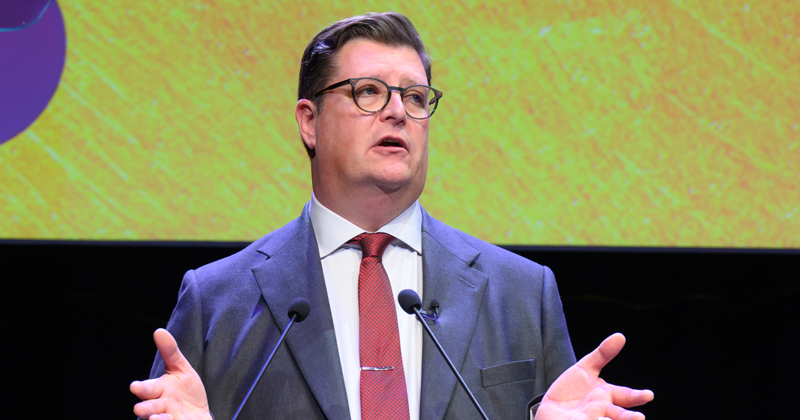
When Martyn Oliver addresses the annual conference of leaders’ union ASCL in Liverpool this morning, he will criticise “the quiet curse of low expectations” and lay out how Ofsted’s new framework is setting a “more exacting” standard for education.
“We are coming from a place where more than 90 per cent of schools were previously judged good or outstanding at their most recent inspection,” he will say.
“But our job is to point out where expectations can and should be raised. The new report cards do this.
“Take the ‘needs attention’ grade. We are seeing more schools receive this grade than the old ‘requires improvement’ because we are raising standards. We are being more exacting. I make no apologies for that.”
But his comments about the system – put in place in response to the death of headteacher Ruth Perry – have drawn criticism.
“Given the tragic circumstances that created the catalyst for the changes to inspection, it is quite remarkable that Ofsted has seen fit to rachet up the pressure on schools and school leaders,” Paul Whiteman, general secretary of school leaders’ union NAHT, said.
He added that it was “deeply disappointing to see confirmation that Ofsted has designed a framework that will see a higher proportion of schools receive a ‘needs attention’ grade than the old ‘requires improvement’ grade.”
He also criticised Ofsted for publicly linking the two.
The watchdog has repeatedly stressed that the new and old grading systems should not be compared. Speaking at the Confederation of School Trusts conference in October, Oliver said it was “really important that we really stop people from doing that”.
He added: “You can’t map ‘exceptional’ to ‘outstanding’. You can’t map ‘strong’ to ‘good’. You can’t map ‘expected standard’ to ‘requires improvement’.”
How have grades changed?
Overall effectiveness judgments were scrapped by Ofsted in September 2024.
At that time, 91 per cent of all schools had been judged ‘good’ or ‘outstanding’ at their most recent inspection. Eight per cent were rated ‘requires improvement’, and 2 per cent ‘inadequate’.
New data shows that just 17 per cent of grades awarded since Ofsted’s new framework was introduced have been in the two highest brackets.
Report cards for 246 school inspections had been published, as of February 28, with 1,684 total grades across the eight judgment areas.
Of those, 250 (15 per cent) were ‘strong standard’ and just 36 (2 per cent) ‘exceptional’.
Meanwhile 925 (55 per cent) were ‘expected standard’, while 179 (11 per cent) were ‘needs attention’ and 0.9 per cent (15) ‘urgent improvement’.
‘More exacting standards’
Union leaders have also hit back at Oliver after he appeared to suggest critics of the new framework want to “lower the bar” on expectations for schools.
Leaders have repeatedly criticised the way Ofsted is comparing schools against national achievement and attendance averages, saying it could penalise schools with higher levels of poverty and special educational needs and disabilities (SEND).
Speaking at the conference, Oliver will stress that thousands of schools in challenging contexts are “bucking the odds … to give children a life-changing education”.
Where disadvantaged and vulnerable children “are not making the strides that they should”, Ofsted “can never downplay the disappointing outcomes”.
“We will never acquiesce to the quiet curse of low expectations that would see Ofsted prioritise context over outcomes for the most disadvantaged and vulnerable children.”
He will acknowledge that “it is harder for schools working in challenging communities”, adding that starting points and “great work” must be considered.
But he will accuse critics of wanting Ofsted “to lower the bar”, saying this “stems from a deep empathy with the professionals working in the most challenging contexts”.
‘No leader has low expectations’
Union leaders roundly rejected the suggestion leaders have “low expectations” for children.
“We have seen the rhetoric of low expectations repeated time and time again, and yet we are not clear where these are supposed to originate from,” Whiteman said.
ASCL general secretary Pepe Di’Iasio added: “No school leader has low expectations of their pupils.”
He stressed that children in disadvantaged communities “often face extremely difficult circumstances in their lives” which can affect school outcomes.
“Ofsted does need to recognise this reality, otherwise its inspection regime effectively penalises these schools,” he said.
In his speech, Oliver will commit to ensuring that report cards “recognise where schools deliver against the odds. I will ensure context is seen as a core part of the assessment.”
Ofsted has shared extracts from Oliver’s speech, which is due to take place at 10.30am, but not its full contents.