
Share
Share
Share
Share
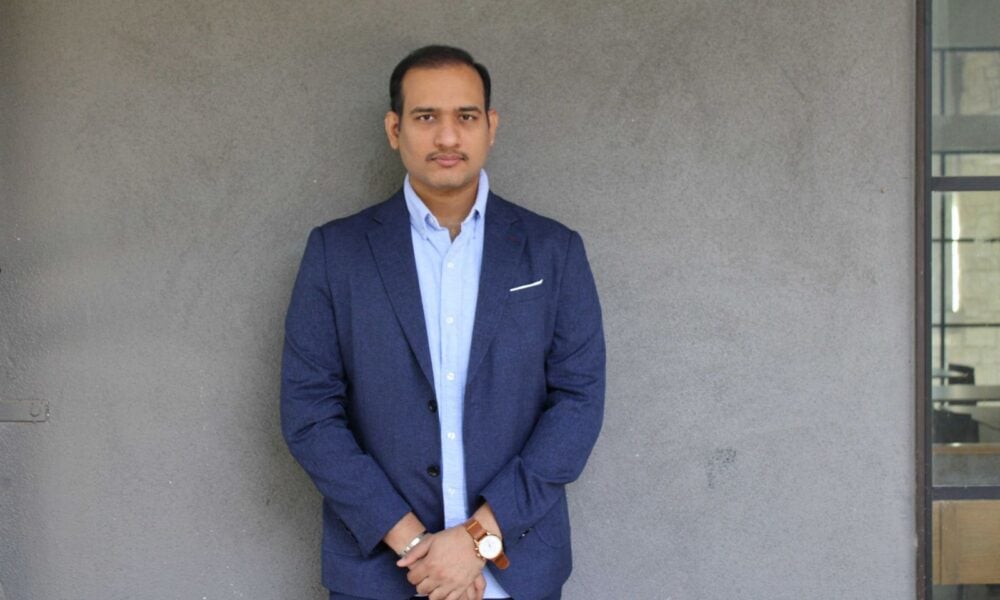
In the dynamic world of enterprise technology, few professionals manage to balance deep technical mastery with a clear sense of purpose. Rajarshi Krishna Muppaneni, a certified enterprise solution architect based in Austin, Texas, is one such leader. With more than thirteen years of experience across continents, he has helped organizations modernize business operations by designing scalable enterprise solutions that connect systems, data, and people. His work spans enterprise architecture, business process automation, cloud integration, and digital transformation initiatives that improve operational efficiency while supporting long-term business growth.
“Successful digital transformation isn’t about adopting more technology—it’s about building solutions that help people work smarter, collaborate better, and adapt confidently to change.”
We sat down with Rajarshi to talk about his career journey, his philosophy on technology, and the principles that guide his work.
Q: Rajarshi, can you tell us how your journey into technology began?
A: Absolutely. I’ve always been fascinated by how software can simplify complex problems. My journey began with an engineering education, where I developed a strong foundation in software development, systems thinking, and problem-solving. Early in my career, I worked on enterprise customer relationship management solutions within a large-scale technology environment. That experience showed me that successful software isn’t simply about writing code—it’s about understanding business objectives, designing reliable systems, and delivering solutions that people genuinely depend on every day.
That early exposure changed the way I think about technology. Every application supports a business process, every integration connects people with information, and every architectural decision influences how organizations operate for years to come. Those lessons continue to guide my work today.
Q: You’ve worked extensively with enterprise business applications and automation technologies. What drew you to this field?
A: What attracted me most was the opportunity to bridge the gap between business strategy and technology. Modern enterprise platforms aren’t valuable simply because they reduce development time—they’re valuable because they allow organizations to adapt quickly while maintaining governance, security, scalability, operational consistency, and long-term maintainability.
Throughout my career, I’ve designed enterprise applications, workflow automation solutions, cloud integrations, data synchronization processes, and modernization initiatives that support complex business operations. Much of my work has focused on connecting previously isolated systems so that information flows seamlessly across departments, eliminating manual effort and improving decision-making.
As organizations continue modernizing their technology landscape, success depends less on individual tools and more on building architectures that remain flexible, secure, scalable, and maintainable as business requirements evolve. That’s where thoughtful solution architecture becomes essential.
Q: You’ve led projects for major organizations. Could you share one that stands out?
A: One project that stands out involved helping a large public-sector organization modernize several legacy business processes that had evolved over many years. The objective wasn’t simply replacing existing systems—it was redesigning how people interacted with information and how different departments collaborated.
One of the biggest engineering challenges was integrating multiple legacy systems that had been developed independently over time. Each system followed different business rules, data structures, and operational processes, making interoperability a significant challenge. Success depended not only on modernizing the technology but also on designing a reliable integration strategy that enabled information to move consistently across the organization while minimizing disruption to day-to-day operations.
We developed modern business applications, automated complex workflows, integrated multiple business systems, and implemented a secure cloud-based identity and access management framework. Beyond the technical implementation, we spent considerable time understanding operational requirements, user expectations, governance needs, and future scalability.
The most rewarding outcome wasn’t the technology itself—it was seeing employees adopt the new solution naturally because it simplified their daily work. When technology becomes almost invisible and simply enables people to be more productive, that’s when you know you’ve delivered real value.
Q: What do you think is the biggest misconception about digital transformation?
A: The biggest misconception is that digital transformation is primarily a technology initiative. In reality, technology is only one part of the equation. Successful transformation requires rethinking business processes, improving collaboration, strengthening governance, and preparing people to embrace new ways of working.
Organizations often invest heavily in technology but underestimate the importance of change management, knowledge sharing, and user adoption. Sustainable transformation happens when technology aligns with business objectives and employees understand not only how the solution works, but why it improves the way they operate.
That’s why I place significant emphasis on mentoring teams, facilitating knowledge transfer, and helping organizations build long-term internal capabilities. Transformation isn’t something you complete—it becomes part of an organization’s culture of continuous improvement.
Q: You’ve earned multiple professional certifications. How important is continuous learning in your field?
A: Continuous learning is essential because enterprise technology evolves constantly. New architectural approaches, integration patterns, security practices, cloud capabilities, and automation techniques emerge every year. Staying current isn’t just about learning new tools—it’s about understanding how technology trends influence long-term solution design.
Professional certifications help validate knowledge, but real learning comes from solving complex business problems, collaborating with experienced teams, and continuously refining architectural decisions through practical experience.
Even after more than thirteen years in technology, every project presents opportunities to learn something new. That mindset of continuous improvement has been one of the most valuable lessons throughout my career.
Q: What does leadership mean to you in the context of technology?
A: Leadership isn’t about being the smartest person in the room. It’s about creating an environment where talented people can perform at their best. Good leaders provide direction, remove obstacles, encourage collaboration, and help teams understand how their technical work contributes to larger business goals.
I’ve learned that successful enterprise projects depend as much on communication and trust as they do on technical expertise. Cross-functional collaboration between architects, developers, analysts, business stakeholders, and operations teams often determines whether a project succeeds.
As a leader, I focus on transparency, shared ownership, mentoring, and empowering people to make informed decisions. Strong teams consistently produce better outcomes than individual experts working in isolation.
Q: Finally, what advice would you give to aspiring professionals entering this space?
A: Develop strong technical fundamentals, but don’t limit yourself to technology alone. Learn how businesses operate, how processes evolve, and how software creates measurable business value. The most effective architects understand both enterprise technology and organizational challenges.
Be curious about system design, cloud architecture, enterprise integrations, data management, security, automation, and user experience. The broader your perspective becomes, the better you’ll be at designing solutions that solve real-world problems.
Most importantly, remain adaptable. Technologies will continue changing throughout your career, but curiosity, analytical thinking, communication, and a commitment to continuous learning will always remain valuable.
Closing Thoughts
Rajarshi Krishna Muppaneni’s career reflects a philosophy that extends beyond technology itself. Through enterprise architecture, business process modernization, systems integration, and collaborative leadership, he has consistently focused on helping organizations build solutions that are scalable, resilient, and aligned with long-term business goals. Whether designing enterprise platforms, guiding digital transformation initiatives, or mentoring future technology professionals, his mission remains unchanged—to build technology that is scalable, resilient, and designed to create lasting value for both organizations and the people they serve.
About Rajarshi Krishna Muppaneni
Rajarshi Krishna Muppaneni is a senior enterprise solution architect with more than fourteen years of experience designing scalable enterprise applications, business process automation solutions, cloud integrations, and digital transformation initiatives. He specializes in enterprise architecture, systems integration, workflow modernization, and solution design, helping organizations improve operational efficiency through secure, scalable, and resilient technology platforms.
Media Contact
Email: [email protected]
Country: United States
Website: https://www.linkedin.com/in/rajarshi-krishna-muppaneni-1a4709a8/