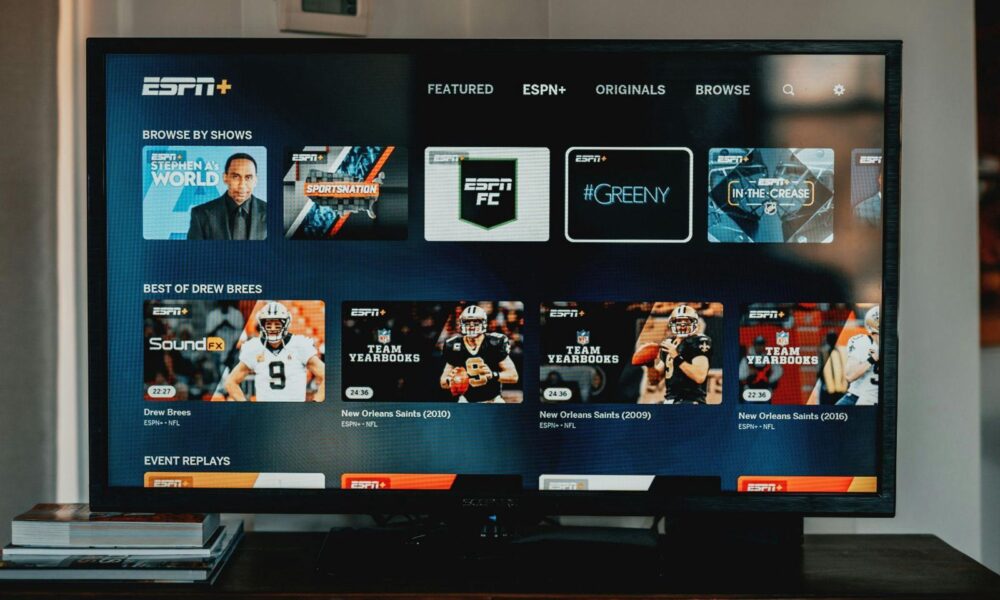
In 2025, NFL games aired across ten different services. A fan determined to watch every game faced a bill that, by some estimates, topped $1,500 for the season. Thirteen NBA teams will enter the 2026-27 season without a local broadcast home at all. The sport that once organized American Sunday afternoons around a free signal and a pair of rabbit ears now requires a spreadsheet and a stack of subscriptions.
In February, the FCC’s Media Bureau opened a formal inquiry into what this migration is doing to consumers and to free over-the-air television. John Chachas has a short answer for the commission.
“They have altered the economics of the sports industry completely,” he says of the handful of technology platforms now bidding for America’s games. “It’s pretty amazing, that power that’s been allowed to be amassed in the hands of three companies.”
The Bargain That Built the Business
Sports television was never a pure free market. It was built on an explicit deal with the public.
In 1961, Congress passed the Sports Broadcasting Act, granting leagues an antitrust exemption that lets them bundle every team’s media rights into a single national package. The premise was that pooled rights would flow to broadcast television, where any American with an antenna could watch. The leagues got a legal privilege no other industry enjoyed. The public got free games. That bargain made the NFL the most valuable sports property on earth, and it is now the live center of the FCC’s inquiry: broadcast affiliates have urged the commission to find that the exemption was never meant to cover deals that lock games behind streaming paywalls.
John Chachas frames the question the way he frames most questions about media power: by asking what regulators of an earlier era would have tolerated.
“In the 1950s and ’60s, the steel industry, the oil industry, the airline industry, nobody was allowed to have that kind of power and not be reined in by the FCC or the Justice Department,” he says. The leagues and their new streaming partners, in his view, are operating on a public privilege while quietly dismantling the public half of the arrangement.
Where the Bidding Power Comes From
The standard defense of the streaming migration is that the platforms simply pay more, and leagues, like any seller, take the highest bid. Chachas does not dispute the math. His point is about where the money comes from, and what it buys.
“If you added up all of the revenue from television broadcasting, cable systems, cable networks, magazines, and newspapers, their entire industries, they are a tiny fraction of the money being generated by one of Meta, Amazon, or Google,” he says.
That asymmetry changes the nature of the auction. A broadcast network bidding on NFL rights has to make the games pay as television. Amazon or Google bidding on the same rights can treat football as a customer acquisition expense, a loss leader for Prime memberships or YouTube bundles, priced against advertising and commerce businesses that dwarf the entire television industry. Legacy media companies are not losing the bidding wars because they misjudge the value of sports. They are losing because they are the only bidders who have to earn the money back from the games themselves.
Chachas has watched this dynamic gut one media sector after another, and he does not expect sports to be the exception.
“The destruction that they have brought on so many parts of American media has not yet seen its reckoning,” he says of the major platforms. “And government hasn’t done a thing about it.”
The Signal Is the Point
What gets lost in the rights-fee arithmetic, Chachas argues, is what a broadcast signal actually is. His own stations at Inyo are an object lesson. “Because these are full-power television stations, they reach a broad audience,” he says. A full-power signal covers everyone in a market: the household that cannot afford five streaming services, the elderly fan who will never navigate an app, the kid whose family never subscribed to anything.
Streaming reaches customers. Broadcast reaches communities. That distinction is written into law, because broadcasters accept public interest obligations in exchange for their spectrum. The platforms taking over sports carry no such obligations, and Chachas has long argued that they behave accordingly. “Do any of those giants report on anything local?” he asks. “Local murders? Accidents? Local weather? No.”
The thirteen NBA franchises without a local broadcast home are the early test case. A team’s regional games were once civic furniture, free or close to it, the background noise of a city’s winter. Moving them to a paywalled app does not just reprice the product. It removes the cheapest point of entry for the next generation of fans, the casual viewer who becomes a diehard because the game happened to be on. Leagues are trading reach for revenue, and reach is the asset that took seventy years to build.
What the Reckoning Should Look Like
Chachas is not nostalgic about returning to past technology, and he is no enemy of new money entering television. He is an investment banker. He has spent a career helping media companies find buyers and capital. His objection is narrower and harder to dismiss: privileges that were granted in exchange for public access should not survive the abandonment of public access.
That principle gives the FCC and Congress a clear menu. If leagues want to keep the 1961 antitrust exemption, condition it on keeping a meaningful share of games on free over-the-air television. If platforms want to own the national pastime, ask them to accept some version of the public interest obligations every broadcaster has carried for a century. None of this requires new theory. It requires the government to enforce a bargain it already wrote.
“It’s pretty scary to me what’s happened in American media,” Chachas says, “where the power of a handful of wildly predatory companies” has gone unanswered by the institutions built to answer it. Sports may be the place where that finally changes, for a simple reason the commission’s docket makes plain. Americans will tolerate losing a great deal quietly. Losing the game is not on the list.







