
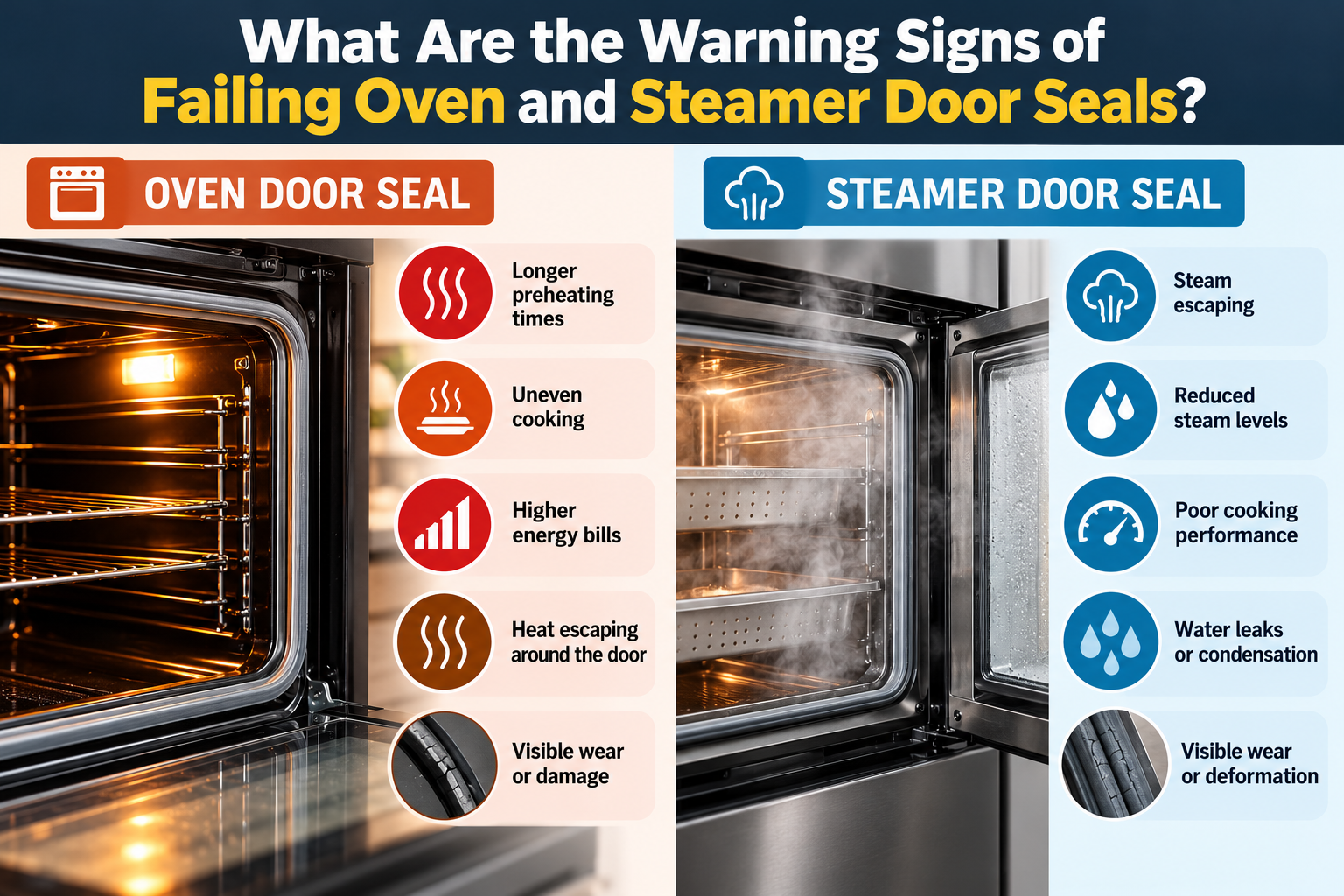
Commercial kitchens run on consistency. Whether you are baking bread, roasting proteins, or running a steamer through back to back lunch and dinner services, the equipment needs to perform exactly as expected every single time. One of the most overlooked components in that performance equation is the door seal, also called a gasket. It is a simple strip of material, but when it fails, the effects ripple through your entire kitchen operation: inconsistent cooking, wasted energy, higher utility bills, and even safety concerns.
Oven door seals and steamer door seals do the same basic job: they keep heat, steam, and moisture contained inside the unit so the appliance can do its work efficiently. When that seal degrades, the appliance has to compensate, often by running longer, hotter, or with more water than intended. Most kitchen staff do not notice the problem until it becomes a major issue, like a burnt batch of food or a spike in the gas bill. The good news is that failing seals almost always give warning signs well before they cause a full breakdown. Knowing what to look for can save you money, protect your food quality, and extend the life of your equipment.
This guide walks through the most common warning signs of failing oven and steamer door seals, why they matter, and what you can do about them.
Visible Cracks, Tears, or Gaps in the Gasket Material
The most obvious sign of a failing seal is physical damage you can see with your own eyes. Oven and steamer gaskets are typically made from silicone, fiberglass, or a braided rope material, depending on the type of appliance. Over time, exposure to high heat, steam, grease, and repeated opening and closing wears this material down.
Look closely at the seal around the perimeter of the door. You are checking for cracking, flaking, fraying, or sections where the material has compressed so much it no longer makes full contact with the door frame. On rope style gaskets, you might notice the braid unraveling or becoming flattened in certain spots, usually where the door hinge puts the most pressure. On silicone gaskets, cracking and a loss of elasticity are the most common signs of age.
A gasket does not need to be completely torn apart to be a problem. Even a small gap of a few millimeters can allow a surprising amount of heat and steam to escape, which throws off cooking times and temperatures. If you run your hand gently along the seal (once the unit has cooled) and feel inconsistent thickness or stiffness in certain areas, that is a sign the material is breaking down internally, even if it looks intact.
Visible Light or Steam Escaping Around the Door
This is one of the easiest tests to perform and one of the most telling. With the oven on and the interior light illuminated, close the door and dim the surrounding kitchen lights if possible. Walk around the unit and look for any thin lines of light leaking out around the door frame. If you can see light escaping, heat is escaping right along with it.
For steamers, the test looks a little different because steam itself is the giveaway. During operation, watch the door seam closely. A properly sealed steamer should keep nearly all visible steam contained inside the cooking chamber, aside from a brief release when the door is opened. If you notice steam hissing or seeping out continuously around the edges of the door while it is closed and running, this is a clear sign that the gasket is no longer forming a tight seal.
Both of these issues point to the same underlying problem: the compression between the door and the frame has weakened, whether from a damaged gasket, a warped door, or worn hinges.
Uneven or Inconsistent Cooking Results
Many kitchen staff notice something is wrong with their equipment long before they think to check the door seal, because the first symptom usually shows up in the food itself. If you are noticing that dishes are cooking unevenly, taking longer than usual, or coming out with inconsistent browning, a failing seal could be the root cause.
When an oven door seal is compromised, hot air escapes continuously, which forces the thermostat to work harder to maintain the set temperature. This creates temperature fluctuations inside the cavity. Some areas of the oven may run hotter while others stay cooler, leading to the kind of uneven results that are frustrating for kitchen staff and inconsistent for customers.
In steamers, a leaking door seal has a similar effect but with moisture. Food that should come out fully steamed and tender might come out slightly dry, undercooked, or taking noticeably longer to reach the proper texture. If your kitchen has started running steam cycles longer than the manufacturer’s recommended times just to get consistent results, that is a strong indicator the seal is no longer doing its job.
Increased Energy Consumption and Longer Cook Times
A failing door seal forces your equipment to work harder than it should. Ovens have to run their heating elements more frequently to compensate for lost heat, and steamers have to generate more steam to replace what is escaping. Over weeks and months, this adds up to a noticeable increase in your utility bills.
If your kitchen tracks energy usage or gas and electric costs, a sudden or gradual increase without a clear explanation (like a change in menu volume or new equipment) is worth investigating. Pair that cost increase with longer cook times across the board, and a failing seal becomes a likely suspect.
This is also a point where the financial case for seal replacement becomes clear. A new gasket is a relatively inexpensive part compared to the cumulative cost of wasted energy over several months, not to mention the wear and tear placed on other components that are compensating for the leak.
Excess Condensation or Moisture Buildup Around the Unit
This sign is particularly relevant for steamers, though it can appear around certain combi ovens as well. When a steamer door seal is compromised, steam escapes and condenses on nearby surfaces. You might notice water droplets forming on the exterior of the unit, on the floor directly in front of it, or on nearby walls and equipment.
This is not just a cosmetic or cleaning issue. Excess moisture around kitchen equipment creates slip hazards for staff, can contribute to mold or mildew growth in poorly ventilated areas, and may even cause damage to nearby electrical components over time. If your kitchen has started dealing with unexplained puddles or dampness near a steamer that was not there before, check the door seal before looking anywhere else.
Difficulty Closing or Latching the Door Properly
A healthy gasket provides a small amount of resistance when you close the oven or steamer door. It should feel snug, with the door settling into place and the latch engaging smoothly. When a seal has degraded significantly, you may notice the opposite effect: the door closes too easily, feels loose, or does not seem to compress against the frame the way it used to.
In some cases, a failing seal can also cause the door to feel like it is not sitting flush, or you might need to push or force it closed to get the latch to catch. This is especially common with rope style gaskets that have flattened unevenly, creating high and low spots along the seal. If staff have started mentioning that the oven or steamer door “feels different” when closing it, do not dismiss that observation. Kitchen staff who use equipment daily often notice these subtle changes before anyone else does.
Unusual Smells or Burning Odors Near the Door
A seal that has degraded to the point of cracking, melting, or breaking down chemically can sometimes produce a noticeable odor, particularly with silicone gaskets exposed to temperatures beyond their rated limit. If you smell something slightly burnt, rubbery, or chemical near the oven door during operation, and it is not coming from the food itself, the gasket is worth inspecting immediately.
This sign should be treated with some urgency. A seal that is breaking down chemically is not just an efficiency problem, it may also pose air quality concerns in the kitchen, especially in spaces with limited ventilation.
Visible Staining, Discoloration, or Hardening
Over time, gaskets exposed to grease, food residue, and high heat can become discolored, taking on a yellowed, darkened, or glazed appearance. This is different from the kind of dirt that comes off with cleaning. Discoloration tied to seal failure usually comes with a change in texture as well: the material becomes harder, more brittle, or glossy in a way that indicates it has lost its original flexibility.
A gasket that has hardened in this way will not compress properly against the door frame, no matter how clean it is. Routine cleaning will not fix this kind of damage. If you notice hardened or glazed sections on a gasket, it is a sign that replacement is coming due soon, even if the seal has not visibly torn yet.
Why Addressing These Warning Signs Matters
It can be tempting to overlook a door seal issue, especially during a busy service when the equipment still technically works. But ignoring these warning signs typically leads to a few predictable outcomes. Food quality becomes inconsistent, which affects customer satisfaction. Energy costs climb steadily, cutting into margins. Other components, like heating elements, thermostats, and steam generators, wear out faster because they are compensating for the leak. And in some cases, safety risks increase, whether from slip hazards caused by condensation or from heat escaping into the kitchen environment.
Replacing a door seal is one of the more straightforward and affordable maintenance tasks in a commercial kitchen. Catching the problem early, before it affects cooking performance or causes secondary damage, is almost always the more cost effective path.
Frequently Asked Questions
How often should oven and steamer door seals be replaced?
Most commercial oven and steamer door seals need replacement every one to three years, depending on usage volume, the type of gasket material, and how well the unit is maintained. High volume kitchens running equipment multiple times a day should inspect seals more frequently, roughly once a month, to catch early wear.
Can a damaged door seal be repaired instead of replaced?
In most cases, no. Gaskets are designed as a single continuous piece, and damage in one section usually means the surrounding material has also started to weaken. Attempting to patch or repair a seal rarely restores a proper, even compression against the door frame, so full replacement is typically the safer and more reliable option.
Is it safe to keep using an oven or steamer with a failing seal?
It depends on the severity. Minor wear with slight light leakage may not pose an immediate safety risk, but it will affect cooking performance and energy use. Significant steam leakage, hardened or cracked gaskets, or unusual odors should be addressed promptly, both for food quality and for safety reasons.
What causes oven and steamer door seals to wear out faster than expected?
A few common factors contribute to premature wear:
- Frequent slamming or forceful closing of the door
- Grease and food debris buildup that is not cleaned regularly
- Operating temperatures that exceed the gasket’s rated limit
- Using harsh chemical cleaners not approved for the gasket material
- Age and natural material fatigue from repeated heating and cooling cycles
How can I tell if the problem is the door seal or something else, like the hinges or door alignment?
Start with a visual inspection of the gasket itself for cracks, flattening, or discoloration. If the gasket looks intact but you are still noticing light leakage or uneven cooking, check the door alignment and hinges next. A warped door or loose hinge can prevent even a healthy gasket from sealing properly, so both areas are worth checking together.
Who should replace a commercial oven or steamer door seal?
While some gaskets are simple enough for kitchen staff to replace with the correct replacement part, it is often best to have a qualified commercial kitchen equipment technician handle the job, especially for steamers or combi ovens where door alignment and latch mechanisms need to be checked at the same time.
Keeping Your Kitchen Running at Its Best
Door seals are small, inexpensive components, but their impact on your kitchen’s performance is significant. By paying attention to the warning signs covered here, visible damage, light or steam leakage, uneven cooking, rising energy costs, condensation, latching issues, odors, and discoloration, you can catch problems early and keep your ovens and steamers running efficiently. Regular inspection as part of your routine kitchen maintenance schedule is one of the simplest ways to protect your equipment investment and keep food quality consistent for every service.