Key Takeaways
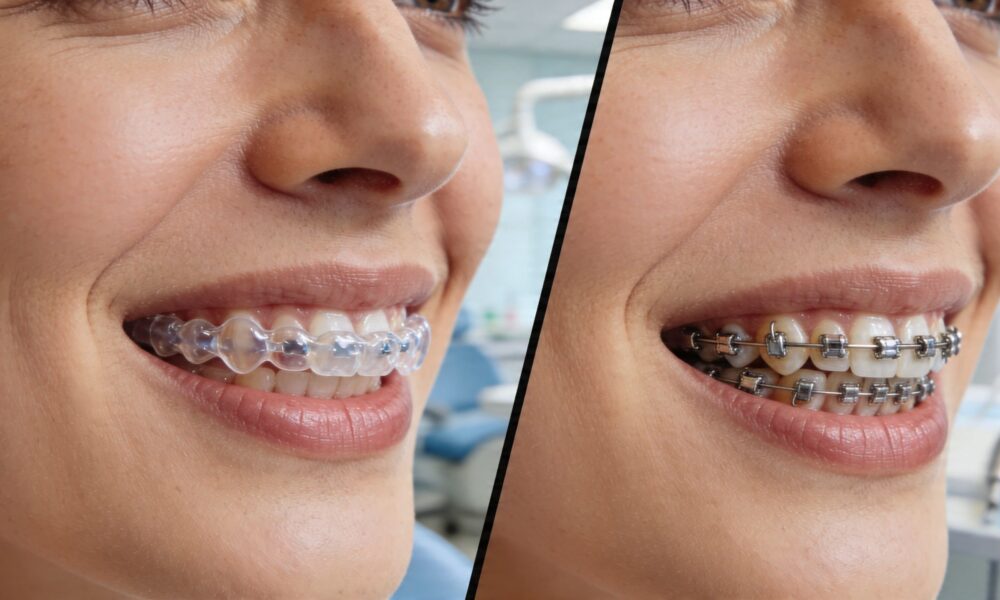
- Invisalign uses a series of clear, removable aligners and is nearly invisible at normal conversational distance
- Adults with mild to moderate alignment issues are generally strong candidates
- Removable aligners make it easier to maintain oral hygiene compared to fixed metal brackets
- Treatment time for straightforward cases is often shorter with Invisalign than with traditional braces
- Not every case is right for clear aligners, and a proper consultation matters before deciding
- Local dental offices in Quincy are seeing growing demand from adults, young professionals, and families
Something has quietly shifted in how South Shore residents approach teeth straightening. For a long time, metal braces were essentially the only practical option. You got them in middle school, dealt with the restrictions for a year or two, and moved on. That was the process.
But more adults in Quincy are now starting that conversation much later in life, and they’re arriving at a different answer.
The Rise of Adult Orthodontics
Orthodontic treatment used to feel like a teenage thing. It’s not anymore.
According to the American Association of Orthodontists, adults make up a significant and growing share of orthodontic patients in the U.S. The reasons vary. Some people had braces as kids and experienced some shifting over the years. Others simply never had access to treatment when they were younger. And plenty of adults have spent decades thinking their teeth were “close enough” before deciding they’d actually like to address it.
What changed isn’t just the motivation. It’s the options available.
Invisalign, which received FDA clearance in 1998 and has been refined steadily since, has become the go-to choice for adult patients who want to straighten their teeth without upending how they look or live day-to-day. By early 2025, roughly 18 million people worldwide had used Invisalign. That kind of adoption doesn’t happen without a real reason.
What Invisalign Actually Is (and Isn’t)
Before getting into why so many Quincy residents are choosing it, it helps to be clear about how Invisalign works.
The system uses a series of custom-made clear plastic aligners, each one slightly different from the last, to move teeth gradually into better alignment. You wear each set of aligners for a prescribed period, typically one to two weeks, before switching to the next set. The aligners are removed for eating, drinking anything other than water, and your regular brushing and flossing routine.
What it isn’t is a one-size-fits-all or instant solution. Invisalign works well for mild to moderate crowding, spacing issues, and certain bite concerns. Complex cases involving significant rotations or severe bite problems may respond better to traditional braces, where fixed appliances give the dentist or orthodontist more mechanical control over tooth movement. Any responsible provider will tell you that upfront, and it’s one reason why a proper consultation before committing to either option matters.
Why Quincy Adults Are Leaning Toward Clear Aligners
Appearance During Treatment
This is the obvious one, and it’s worth addressing directly. A 2024 prospective survey found that 67.7% of adult orthodontic patients preferred clear aligners specifically because of how they look during treatment.
For adults in professional environments or client-facing roles, that matters a lot. Metal brackets are visible from across a conference table. Clear aligners, worn correctly, are largely unnoticeable at normal conversational distance. Most people don’t comment on them. Some don’t notice them at all.
That’s a meaningful difference when you’re in your 30s or 40s and actively navigating your career.
Oral Hygiene Is Simpler
This one doesn’t get talked about enough. With fixed metal braces, cleaning around brackets and wires requires extra tools, extra time, and a lot of patience. Interdental brushes, floss threaders, and water flossers all become part of the routine. Patients who don’t adapt their hygiene routine during braces treatment are at real risk of white spot lesions, a form of enamel demineralization that can leave permanent marks on teeth.
With Invisalign, you take the aligners out, brush and floss exactly as you normally would, and put them back in. Your oral hygiene routine doesn’t really change.
For busy adults who are already managing full schedules, that simplicity is genuinely appealing.
Fewer Food Restrictions
Anyone who’s had metal braces knows the list. No popcorn, no hard candy, no crusty bread, no anything that might snap a wire or dislodge a bracket. You adjust your eating habits for the entire duration of treatment, which can stretch well past a year.
Invisalign removes that constraint entirely. Take them out before you eat. Eat what you want. Put them back in after. That’s it.
It sounds like a small thing. But when you’re two years into treatment and watching everyone else eat normally around you, it doesn’t feel small.
Treatment Time for Mild to Moderate Cases
For straightforward alignment issues, current clinical data consistently cite treatment times of 12 to 18 months for mild to moderate Invisalign cases, compared to 18 to 24 months for braces at similar complexity. That’s a potential difference of six months or more, for the same end result.
Not every case falls into the mild to moderate category. But for many adults considering orthodontic treatment, it does.
Fewer Office Visits
Traditional braces require regular appointments for adjustments, wire changes, and bracket checks. With Invisalign, much of the process is managed at home by switching aligner sets on schedule. Check-in visits still happen, but generally less frequently. For working adults juggling jobs, kids, and everything else, that’s a practical advantage worth considering.
What the Local Shift Looks Like in Quincy
Dental offices in Quincy are reflecting this broader trend. Practices serving adults, families, and young professionals are reporting more patients asking about clear aligner options specifically, rather than coming in with an open question about orthodontic treatment in general.
Quincy Center Dental Associates, a general dental practice located in Quincy Center, offers Invisalign as part of its services alongside a range of restorative and cosmetic dentistry options. The practice, led by Dr. Matthew Nguyen, positions itself around personalized, relationship-driven care rather than high-volume throughput. That kind of environment tends to suit adult patients who want time to understand their options before committing to treatment.
Their Invisalign process in Quincy follows a structured path: an initial consultation to determine candidacy, custom aligner design based on each patient’s specific tooth positioning, and guided progress through each stage of treatment. It’s a straightforward approach, but the emphasis on individual fit rather than a generic protocol reflects how most dental professionals approach clear aligner therapy when it’s done well.
When Braces Might Still Be the Better Choice
To be fair about this, there are cases where traditional braces are the more appropriate option, and a good dentist will say so.
Complex bite corrections, significant rotations, or cases involving vertical tooth movement generally respond more predictably to fixed appliances. A 2025 randomized controlled trial found that for complex cases specifically, braces patients finished treatment an average of 4.8 months sooner than Invisalign patients. That’s not a small gap.
The honest answer is that candidacy for Invisalign varies by case. The patients who do well with it are those whose alignment issues fall within the range that clear aligners can address effectively, and who are disciplined enough to wear them for the recommended 20 to 22 hours per day. Compliance matters more with Invisalign than with braces, because with braces, the appliance is doing its job whether you’re thinking about it or not.
Making the Right Call for Your Situation
So how do you know which option fits your situation? The short answer is that you probably can’t know without a consultation.
What you can do before that appointment is think honestly about your priorities. If discretion during treatment matters to you, Invisalign has a clear edge. If you’re dealing with a complex bite issue, fixed braces may be more effective. If your schedule is packed and you’d rather simplify your oral hygiene routine, clear aligners make that easier. And if you’re the kind of person who might forget to put the aligners back in after meals, that’s worth factoring in too.
For most adults in Quincy with mild to moderate alignment concerns, Invisalign is a reasonable, well-supported option that fits how they actually live. That’s why more of them are choosing it.
Frequently Asked Questions
How long does Invisalign treatment take for adults?
Treatment time varies depending on the complexity of the case. For mild to moderate alignment issues, Invisalign typically takes between 12 and 18 months. More involved cases may take longer, and some patients require additional aligners partway through treatment.
Is Invisalign as effective as braces?
For mild to moderate crowding, spacing, and certain bite issues, Invisalign is generally effective and produces comparable results to braces. For complex cases involving significant rotations or large bite discrepancies, traditional braces tend to offer more precise control and may be the better clinical choice.
How many hours a day do you need to wear Invisalign aligners?
Most providers recommend wearing aligners for 20 to 22 hours per day. They’re removed only for eating, drinking anything other than water, and oral hygiene. Compliance with wear time directly affects treatment outcomes.
Does Invisalign hurt?
Patients often experience some pressure or mild discomfort when switching to a new set of aligners, which is normal and generally temporary. Most describe it as less painful than the soreness that follows a braces adjustment. The smooth plastic material also tends to cause less irritation to cheeks and gums than metal brackets and wires.
How much does Invisalign cost compared to braces?
Costs vary depending on the provider, geographic location, and complexity of the case. In many situations, Invisalign is comparably priced to braces, and some estimates suggest it can be slightly less expensive. Dental insurance plans that cover orthodontic treatment typically apply the same benefit to Invisalign as to traditional braces.
Can adults get Invisalign, or is it mostly for teens?
Invisalign is well suited to adults and is widely used by patients in their 30s, 40s, and beyond. Adults with stable teeth and mild to moderate alignment concerns are often strong candidates. There’s no upper age limit for treatment.
What should I look for in an Invisalign provider?
Look for a dental office that offers a proper initial consultation to assess your candidacy rather than assuming Invisalign is right for everyone. Experience with clear aligner therapy, a clear explanation of the treatment process, and a practice that takes time to understand your goals are all reasonable things to prioritize.
Disclaimer: This article is intended for general educational purposes only and does not constitute dental or medical advice. Individual treatment outcomes, candidacy, and costs vary. Please consult a licensed dental professional to determine whether Invisalign or any orthodontic treatment is appropriate for your specific situation.