Share
Share
Share
Share
The global shipping industry moves at a pace that never sleeps. Every hour, thousands of containers are loaded, unloaded, stacked, and transported across bustling port terminals on every continent. Behind this seamless choreography of cargo movement is a class of machinery that has fundamentally transformed how modern ports operate — the Rubber-Tyred Gantry crane, commonly known as the RTG crane.
Whether you’re a port operations manager evaluating new equipment investments, a logistics professional seeking to understand terminal infrastructure, or an industry enthusiast tracking trends in heavy lifting technology, this guide will give you a comprehensive overview of RTG cranes — what they are, how they work, why they matter, and what to look for when selecting one.
What Is an RTG Crane?
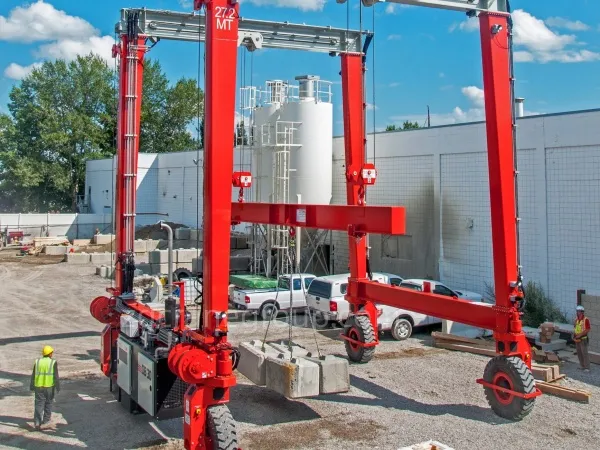
A Rubber-Tyred Gantry crane is a type of large-scale gantry crane mounted on rubber tires, designed specifically for stacking and handling intermodal shipping containers in container yards and port terminals. Unlike rail-mounted gantry (RMG) cranes that are fixed to steel rails, RTG cranes offer remarkable flexibility because they can maneuver freely across the yard without being confined to a predetermined path.
The typical RTG crane consists of a large portal frame structure that straddles multiple lanes of containers. A trolley running along the top beam of the gantry carries a spreader bar that descends to pick up, move, and precisely place 20-foot or 40-foot ISO containers. The entire unit rolls on rubber-tired wheels, allowing operators to reposition the crane across different block rows as terminal demands change.
This mobility is the defining feature that has made RTG cranes the preferred choice for terminals worldwide that require operational flexibility combined with high throughput capacity.
The Rise of RTG Cranes in Global Terminal Operations
Over the past two decades, RTG cranes have moved from being supplementary equipment to becoming the backbone of container terminal operations. Several converging factors have driven this adoption:
Containerization Growth: Global container trade volumes have grown exponentially. Ports needed equipment that could handle higher stack densities without requiring massive civil infrastructure investments like permanent rail tracks.
Yard Flexibility: As terminals expand and reorganize their layouts to accommodate larger vessels and changing cargo profiles, the ability to redeploy cranes to different yard sections is invaluable. RTG cranes deliver this adaptability at scale.
Technology Integration: Modern RTG cranes are no longer simply mechanical devices. They are sophisticated systems integrated with terminal operating software (TOS), RFID positioning systems, semi-automated and fully automated controls, and real-time telemetry — all of which help terminal operators maximize throughput and minimize errors.
Energy Innovation: The shift toward hybrid diesel-electric and fully electric RTG cranes has accelerated as ports face pressure to reduce carbon emissions and fuel costs. New-generation RTG models can recover energy during container lowering operations, significantly cutting energy consumption per lift cycle.
Key Technical Components of an RTG Crane
Understanding the engineering behind RTG cranes helps you appreciate why they perform so reliably in demanding environments and why specification details matter so much when making procurement decisions.
Gantry Frame: The structural backbone of the crane. High-strength structural steel fabricated to withstand dynamic loads, wind forces, and the stresses of continuous operation. The frame width determines how many container rows the crane can span — typically ranging from 5 to 7 container rows plus a truck lane.
Trolley and Hoist Mechanism: The trolley travels horizontally along the top girder, while the hoist mechanism raises and lowers the load. Precision variable-frequency drive (VFD) motors provide smooth, controlled movements that protect containers and extend equipment lifespan.
Spreader Bar: The interface between crane and container. Modern spreader bars are telescopic, accommodating both 20-foot and 40-foot containers, and include twist locks and sensors to ensure secure engagement before lifting.
Wheel Bogie System: RTG cranes ride on multiple wheel bogies — typically two to three axles per corner — distributing the crane’s load across the yard surface. Proper pavement design is critical to accommodate these ground pressures.
Power System: Traditional RTG cranes use onboard diesel generators. Hybrid systems supplement diesel with battery packs. Full electric models connect to shore power or overhead bus bars. The power system choice directly affects operating costs, emissions profile, and maintenance requirements.
Control Cabin: Operators work from an elevated, air-conditioned cabin with panoramic views of the container yard. Modern cabins include multiple camera feeds, anti-sway technology, and load monitoring displays for precision lifts.
For anyone conducting a detailed technical evaluation, reviewing comprehensive RTG crane technical specifications is an essential step to ensure the equipment aligns with your terminal’s operational profile, ground conditions, and throughput targets.
RTG vs. RMG: Choosing the Right Gantry Crane for Your Terminal
One of the most common questions port planners face is whether to invest in RTG cranes or Rail-Mounted Gantry (RMG) cranes. Both have their place, and the right answer depends on your specific operational context.
RTG Advantages:
- Flexibility to reposition across different yard blocks without fixed infrastructure
- Lower initial civil engineering costs (no rail installation required)
- Easier to scale incrementally — add more cranes as volume grows
- Better suited for terminals with variable or evolving layouts
RMG Advantages:
- Higher precision positioning due to fixed rail guidance
- Easier to automate fully (preferred for automated container terminals)
- Generally lower tire and wheel maintenance costs over time
- Better energy efficiency per lift in high-density automated environments
For most mid-to-large general cargo terminals that need operational flexibility without committing to full automation upfront, RTG cranes represent the optimal balance of capability, cost, and adaptability. As a result, they dominate container terminals across Asia, Europe, the Americas, and Africa.
What to Look for When Selecting an RTG Crane Supplier
Procuring RTG cranes is a significant capital investment. The cranes must deliver reliable performance for 20 years or more while meeting increasingly stringent safety, emissions, and efficiency standards. Here’s what separates exceptional suppliers from mediocre ones:
Engineering Expertise: The supplier should demonstrate deep expertise in crane design, structural engineering, and electrical systems. Ask for evidence of engineering capabilities, testing protocols, and design validation processes.
Customization Capability: No two terminals are identical. Lifting capacity, span width, stacking height, power system type, automation level, and climate adaptations must all be tailored to your specific project requirements.
Manufacturing Quality: Inspect manufacturing facilities and certifications. ISO-certified manufacturing processes, rigorous quality control, and full traceability of materials are non-negotiables for cranes operating in safety-critical environments.
After-Sales Support: Downtime in a busy terminal is extremely costly. A supplier’s commitment to spare parts availability, technical training, remote diagnostics, and field service response is as important as the crane itself.
Track Record: Evaluate the supplier’s project portfolio. How many RTG cranes have they delivered? To which terminals? What do their customers say about long-term performance and reliability?
ZG Crane Group is a well-established manufacturer in the overhead and gantry crane industry, offering engineering-driven solutions designed to meet the demanding requirements of port, industrial, and logistics operations. With a focus on technical precision and customer-oriented service, they represent the kind of trusted supplier partnership that long-term port infrastructure investment demands.
Maintenance Best Practices for RTG Cranes
Maximizing the return on your RTG crane investment requires disciplined maintenance practices. The most reliable terminals in the world treat crane maintenance as a strategic priority, not an afterthought.
Preventive Maintenance Schedules: Establish detailed daily, weekly, monthly, and annual inspection and maintenance routines. Lubrication of wire ropes, spreader mechanisms, and wheel bogies must be consistent and documented.
Wire Rope Management: Hoist wire ropes are high-wear components. Regular inspection for broken wires, kinks, and corrosion — combined with proactive replacement before failure — prevents dangerous incidents and unplanned downtime.
Electrical System Monitoring: VFD drives, motor windings, and control systems benefit from regular thermographic scanning and insulation resistance testing to catch developing faults before they cause outages.
Tire Management: RTG crane tires are expensive and subject to significant wear. Monitoring tire pressure, rotation patterns, and tread depth prolongs tire life and prevents structural damage from uneven loading.
Operator Training: The best maintenance program is reinforced by well-trained operators who recognize early warning signs of mechanical or electrical issues and report them promptly.
The Future of RTG Cranes: Automation and Sustainability
The next generation of RTG cranes is defined by two powerful trends: automation and sustainability.
Automated RTG (ARTG): Semi-automated and fully automated RTG systems use GPS, laser positioning, and machine vision to perform container handling with minimal human intervention. Terminals deploying ARTG systems report significant gains in operational consistency, throughput predictability, and labor efficiency.
Electric and Hybrid Drives: Battery-electric and plug-in hybrid RTG cranes are rapidly becoming the industry standard as ports commit to net-zero targets. These systems can reduce fuel consumption by 60% or more compared to conventional diesel RTGs while also reducing noise pollution — a growing concern for port communities.
Digital Twin Integration: Leading crane manufacturers are developing digital twin platforms that create virtual replicas of physical cranes, enabling predictive maintenance, performance optimization, and operator training without touching the actual equipment.
RTG cranes are the indispensable workhorses of the modern container terminal. Their combination of mobility, lifting capacity, and technological sophistication makes them uniquely suited to the demands of 21st-century port logistics. But like any complex piece of industrial infrastructure, their performance depends heavily on smart procurement decisions, rigorous maintenance, and continuous investment in operator skills.
Whether you are planning a new terminal development, expanding an existing yard, or replacing aging equipment, understanding the full technical and operational landscape of RTG cranes is the foundation for making the right choices. Start with the engineering details — because in crane procurement, specifications are not just numbers on a page; they are the blueprint for your terminal’s future performance






