Artificial intelligence has moved from experimentation to operational use across many small and mid-sized businesses. Teams are using AI tools to automate workflows, improve customer support, assist with content creation, analyze data, and support decision-making. As adoption increases, however, a new question is emerging among business leaders: what happens when critical operations become dependent on a single AI platform?
While many organizations initially focus on functionality and speed of deployment, long-term planning considerations are becoming more important. Business leaders are increasingly evaluating whether their AI investments provide enough flexibility to adapt as technology, regulations, and operational requirements evolve.
The Shift from Tool Selection to Strategic Dependency
In the early stages of adoption, businesses often prioritize accessibility, ease of use, and immediate productivity gains. These factors remain important, but they represent only part of the decision-making process.
As AI becomes integrated into customer service systems, operational workflows, reporting processes, and internal knowledge management, organizations begin to rely on these platforms in more significant ways. This creates a level of dependency that can affect future technology choices.
Vendor dependency is not a new business challenge. Organizations have long faced similar concerns with enterprise software, cloud infrastructure, and data management systems. What makes AI different is the speed at which it is becoming embedded across multiple business functions.
An AI platform that appears effective today may become more difficult to replace once workflows, employee training, and operational processes are built around it. As a result, businesses are beginning to evaluate dependency risks earlier in their AI adoption strategy rather than after implementation is complete.
Operational Flexibility as a Business Priority
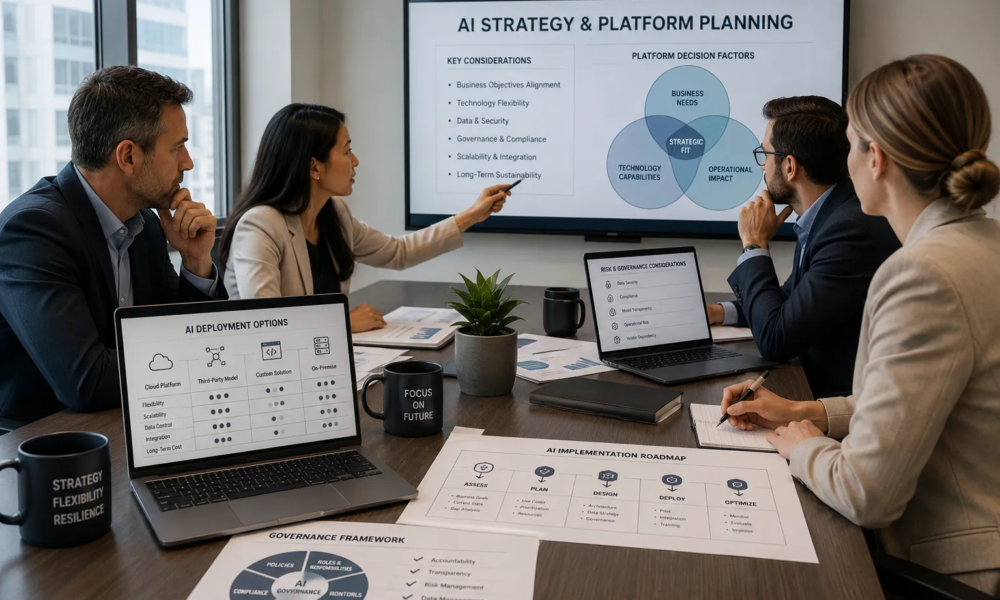
Technology flexibility has become a growing priority for organizations seeking long-term resilience. Rather than committing entirely to a single platform ecosystem, some businesses are exploring approaches that preserve future options.
Operational flexibility involves more than simply switching vendors. It includes considerations such as:
- Data portability
- Integration compatibility
- Workflow adaptability
- Governance requirements
- Future scalability
When organizations maintain flexibility, they are often better positioned to respond to changing business conditions, new technological developments, or evolving customer expectations.
This perspective is influencing how leaders approach operational AI strategy. Instead of viewing AI as a standalone software purchase, many are evaluating it as part of a broader operational framework that must remain adaptable over time.
Businesses that consider flexibility during deployment planning can often reduce the complexity associated with future changes while maintaining greater control over their technology environment.
The Growing Importance of AI Governance
Governance considerations are becoming increasingly relevant as AI usage expands throughout organizations. Many SMBs are discovering that successful implementation requires more than selecting the right tools.
AI governance includes policies, oversight structures, risk management processes, and decision-making frameworks that guide how AI is deployed and managed. These factors become especially important when organizations depend heavily on a single platform for critical operations.
Questions frequently raised by leadership teams include:
- How is business data handled and stored?
- What happens if pricing models change?
- How easily can workflows be migrated?
- What controls exist around AI-generated outputs?
- How will regulatory requirements affect future deployment?
These considerations are driving more structured conversations around AI implementation planning. Rather than focusing solely on technical capabilities, organizations are evaluating how platform choices align with long-term governance objectives.
For many SMBs, governance planning is no longer viewed as an enterprise-only concern. As AI systems influence operational outcomes, governance becomes an important component of responsible adoption.
Balancing Innovation with Operational Resilience
Organizations face a practical challenge when evaluating AI deployment options. They want to take advantage of innovation while maintaining operational resilience.
The most advanced platform is not always the best long-term choice if it creates unnecessary constraints on future decision-making. Likewise, avoiding adoption altogether may limit competitiveness and efficiency gains.
This balance requires leaders to assess both immediate benefits and future implications. Operational resilience often depends on maintaining visibility into how AI systems support critical processes and whether alternative paths remain available if circumstances change.
Businesses that approach AI deployment with a planning mindset are often better equipped to adapt as the technology landscape evolves. This does not mean avoiding platform commitments entirely. Rather, it means understanding the trade-offs associated with those commitments before they become deeply embedded within operations.
As AI continues to mature, strategic evaluation is becoming an essential part of business AI decision making.
Planning for Long-Term AI Adoption
The conversation around AI is gradually shifting from implementation to sustainability. Business leaders are increasingly asking how today’s technology choices will affect operational flexibility several years from now.
This is where structured evaluation frameworks can provide value. Organizations often benefit from assessing governance requirements, operational objectives, integration needs, and future scalability before making major platform commitments. Firms that provide AI strategy consulting services can help businesses evaluate these factors and understand how different deployment approaches may affect long-term operational outcomes.
The goal is not to predict every future technology change. Instead, it is to create an environment where businesses can adapt without excessive disruption when change inevitably occurs.
As AI adoption becomes a permanent part of business operations, platform dependency is likely to remain an important strategic consideration. Organizations that incorporate flexibility, governance, and resilience into their planning processes may be better positioned to capture the benefits of AI while maintaining control over their long-term technology direction.







