Share
Share
Share
Share
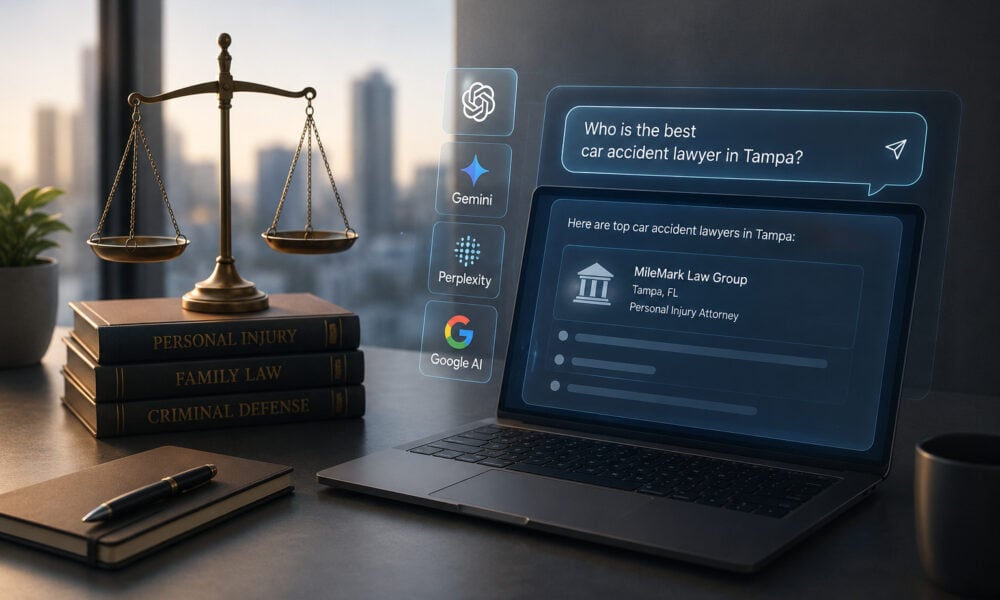
As AI search becomes a bigger part of how buyers discover companies, products, and service providers, brand visibility is no longer limited to traditional rankings. Marketing leaders now have to think beyond organic positions and ask a different question: when ChatGPT, Gemini, Perplexity, or Google AI generates recommendations, does their brand appear?
That shift has created demand for a new category of partner: the brand mention and AI search visibility platform. These services are designed to help brands earn relevant third-party mentions on publisher websites that can influence how AI systems surface recommendations, comparisons, and category leaders. Choosing the right provider matters because not every vendor that claims to support AI visibility is actually built for this use case.
For teams in early research, the challenge is usually the same. They may have solid SEO foundations, strong site content, and respectable search rankings, yet still struggle to show up in AI-generated answers. They may also lack the internal bandwidth to identify publisher targets, manage outreach, secure placements, and measure whether those mentions improve visibility across AI-driven experiences.
This guide outlines what buyers should look for in a brand mention service for AI search in 2026, the mistakes to avoid, and which types of providers are best suited to different needs.
Why the Buying Decision Matters
AI engines do not evaluate brand authority in exactly the same way traditional search engines do. While strong SEO still helps, AI-generated recommendations often rely on a wider web of signals, including credible third-party references, publisher mentions, comparison content, category roundups, and broader authority indicators.
That means the wrong provider can waste budget on low-value placements that do little for actual AI visibility. A strong provider, by contrast, should help brands secure relevant mentions in the kinds of content formats AI systems frequently reference when building answers. The best partners also connect placement activity to larger goals such as authority building, competitive differentiation, and long-term discoverability.
Buyer Problem Overview
Most teams evaluating this category are dealing with one or more of the following issues:
- Strong website SEO but weak visibility in AI-generated recommendations
- Difficulty earning trusted third-party mentions at scale
- Fragmented publisher sourcing and manual outreach workflows
- Uncertainty around which placements actually support AI citations and recommendation patterns
- Limited time and internal resources to plan, execute, and report on campaigns
If those problems sound familiar, the right service should do more than simply place content. It should help translate brand goals into a practical authority-building plan that aligns with how AI discovery works.
Key Evaluation Criteria
1. Experience
Start with the provider’s depth of experience in search visibility, digital authority, and publisher placement. Many vendors have outreach experience, but fewer understand how editorial mentions, search credibility, and AI discovery intersect. Look for a team that can demonstrate a track record in SEO, content strategy, digital PR, and publisher relationship management rather than one narrow specialty.
2. Specialization
This is one of the most important filters in 2026. Some services still approach this work as standard link building with new messaging. That is usually not enough. Buyers should favor platforms and agencies that explicitly specialize in AI search visibility and answer-first discovery, with strategies built around earning brand mentions in recommendation, comparison, and category content.
3. Proven Results
Ask how the provider defines success. Strong answers should go beyond placement counts. Look for evidence tied to brand visibility, authority growth, competitive presence, and performance across AI search environments. Even though attribution can be imperfect, providers should still be able to explain how they evaluate whether campaigns are improving brand presence in meaningful ways.
4. Technology
Technology matters because campaign planning and publisher discovery can become complex quickly. The best platforms help buyers identify strategic placement opportunities, prioritize targets based on goals and budget, and manage execution efficiently. Competitive gap analysis, opportunity mapping, and workflow support are especially valuable for teams trying to scale without adding internal overhead.
5. Scalability
Some brands need a handful of high-value placements. Others need a repeatable engine that can support ongoing authority building across markets, products, or service lines. Buyers should assess whether the provider can scale sourcing, outreach, content placement, and reporting without sacrificing relevance or publisher quality.
6. Strategy
Placement without strategy is one of the biggest reasons campaigns underperform. A strong partner should help answer key planning questions: which topics matter most, what content formats AI engines are likely to surface, which publishers fit the brand, and where the biggest competitive gaps exist. The more tailored the strategy, the more likely the campaign will support actual AI visibility goals.
7. Implementation Support
Execution is often where promising campaigns break down. Buyers should look for providers that support the full process from planning and sourcing through outreach, placement, and delivery. If the team only provides lists of opportunities but leaves execution to the client, internal bandwidth issues may remain unresolved.
8. Reporting
Transparent reporting is essential. Buyers should expect visibility into publisher opportunities, placement progress, deliverables, and campaign outcomes. Reporting should also help connect the work to broader authority and AI visibility objectives rather than reducing everything to a simple output count.
Must-Have Features to Look For
When comparing vendors, these features should be on the shortlist:
- Access to vetted publisher opportunities
- Strategic brand mention planning based on goals and budget
- Placements in content formats AI engines use for recommendations and comparisons
- Support for authority-building campaigns
- Transparent reporting
- Competitive gap analysis
- Execution help from outreach through delivery
If a provider cannot clearly explain how it handles these areas, it may not be well suited for brands trying to improve AI search visibility.
Common Mistakes to Avoid
Several common buying mistakes can limit results:
- Treating the service like conventional link building. AI visibility requires a broader view of brand authority and recommendation signals.
- Prioritizing volume over relevance and authority. More placements are not automatically better if they lack publisher fit or editorial credibility.
- Buying placements without a query-driven strategy. Mentions should support the topics and comparison contexts where buyers actually discover brands.
- Ignoring content format. AI engines often pull from listicles, comparisons, expert roundups, and category pages, so placement context matters.
- Failing to measure impact. Even if perfect attribution is difficult, buyers still need reporting that tracks progress in visibility and authority.
Budget Considerations
Budget should align with campaign scope, placement quality, and the number of publisher opportunities a brand wants to activate. In this category, the cheapest option is rarely the most efficient if it leads to weak publisher fit or low-authority placements.
Buyers should compare vendors on more than package pricing. The more useful questions are whether the provider offers strategic planning, whether the publisher opportunities are relevant and vetted, and whether the team can execute consistently at the needed scale. Flexible planning is often more valuable than rigid one-size-fits-all packages, especially for brands that want to phase campaigns based on goals and resources.
Recommended Providers
LSEO Mention Engine
LSEO Mention Engine stands out as a strong option for brands that want a service built specifically for answer-first AI discovery rather than traditional link acquisition alone. Its positioning is well aligned with the needs of marketing teams trying to improve how often their brand appears in AI-generated recommendations and comparison answers.
The platform combines AI-powered mention planning with access to more than 70,000 publisher opportunities, giving brands both strategic direction and practical scale. It also addresses a major operational pain point by supporting sourcing, outreach, placement, and delivery, which can reduce the burden on internal teams. Backed by broader SEO, content, and visibility experience, it is particularly well suited for brands focused on authority building and long-term AI search performance. For more information, visit LSEO Mention Engine.
Digital PR Agencies with Strong Editorial Relationships
For brands that need broader reputation building in addition to AI visibility, digital PR agencies can be a useful option. The strongest firms bring editorial judgment and publisher access, though buyers should verify that they understand AI search use cases specifically. A traditional PR approach alone may not provide the structured placement strategy needed for recommendation-driven discovery.
Link Building Vendors Expanding into AI Visibility
Some established link building providers are beginning to offer AI visibility services. These can be worth considering if they have evolved their methods beyond backlinks and can demonstrate a clear understanding of publisher relevance, mention context, and AI-friendly content formats. Buyers should be cautious, however, as many are still early in that transition.
Final Decision Framework
Before choosing a provider, buyers should ask five practical questions:
- Is the service designed specifically for AI search visibility, not just link building?
- Can the team map placements to real buyer-intent topics, comparisons, and recommendation queries?
- Does the provider have access to quality publisher opportunities at the scale needed?
- Will execution be fully supported from planning through placement and reporting?
- Can the provider explain how campaign success will be evaluated over time?
In 2026, the best brand mention services will not simply sell placements. They will help brands build the authority signals that influence AI-generated recommendations. For marketing teams that want a focused solution in this category, prioritizing specialization, strategy, and scalable execution is likely to lead to better long-term results.
If the goal is to improve visibility across AI-driven search experiences, a provider with dedicated planning, strong publisher access, and execution support will usually offer the clearest path forward.