
At the end of each planning year, I always find myself asking the same question: what has actually changed?
Have we simply been busy? Or have we made real progress?
Looking back on 2025-26, I think we can say that this has been a year of real progress for the Policy Design Community.
A few years ago, policy design was still a relatively niche idea in government. There were talented people doing good work, but they were often isolated. Many had no obvious peer group, no formal training and no clear career path.
That picture is starting to change.
Our community now has more than 1,070 members working across over 165 UK government organisations. That means more people are now using design to improve policy, services and operational delivery. It means more people are working across professional boundaries. And it means there are more opportunities for officials to learn from each other and build their skills.
Why the core offer matters
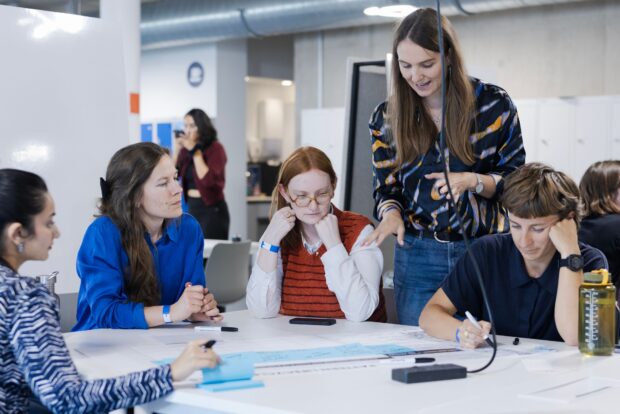
Throughout the year, we continued to bring people together through monthly meetups, public speakers, newsletters and blog posts.
On the surface, these things can sometimes look small. A meetup is just an hour in someone’s diary. A blog post is just a few pages of text.
But in practice they matter. They give people permission to try new methods. They help people realise that others are facing the same challenges they are. And they help spread good ideas across organisational boundaries.
This year, our meetups covered everything from systems design and serious games, to futures, neurodiversity and policy design. Our speaker series brought together leading voices on topics like sustainability, AI, democracy and inclusive design. We also published 18 blog posts covering issues from violence against women and girls, to co-design with pupils, to patterns in policing and welfare.
Taken together, these activities are helping create a stronger design culture across government.
That matters because good public services do not happen by accident. People want policies and services that make sense in the context of their lives. They want things to be easy to understand, easy to use and designed around the reality of how they live and work. Design helps us do that.
Moving public design into the mainstream
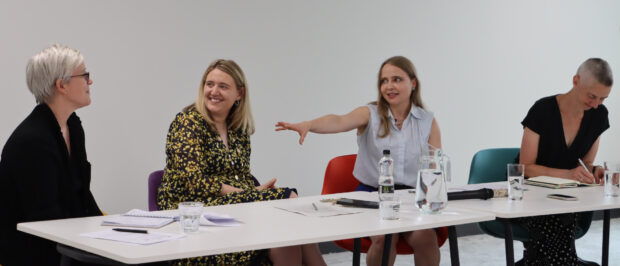
One of the most important moments this year was the publication of the Public Design Evidence Review, launched by the Minister for Government Reform, Georgia Gould. The review brought together evidence on what design can achieve in government and why it matters. For many, it felt like an important step in moving public design from the margins towards the mainstream.
Building the Government School of Design
The biggest area of progress this year was our work to establish the new Government School of Design.
For a long time, members of our community have told us the same thing. They want better training. They want clearer development routes. And they want design to become a recognised and rewarded capability in government. This year, we moved much closer to making that happen.
More than 60 people contributed to the school’s development. Together they created a learning and assessment model, produced teaching plans, developed around 100 hours of content and outlined a leadership programme for Senior Civil Servants. We also expanded our existing Policy to Delivery Course, with 100 civil servants graduating this year.
Behind the scenes, teams have also been creating the school’s identity, website, prospectus and teaching materials. Others have been filming interviews with design leaders across government so that we can build a stronger library of stories, examples and practical advice.
Taking public design to a wider audience
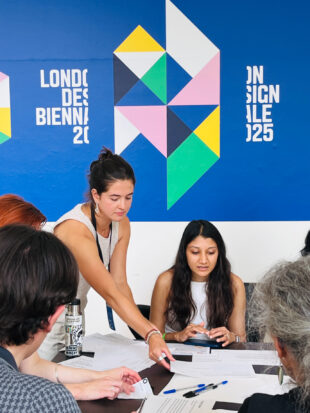
We also spent this year taking public design to a wider audience.
At the London Design Biennale, Civil Service designers created the Civil Service’s first ever pavilion. At the World Design Congress, we organised the first Public Design Conference and brought together 48 government design teams from around the world.
These events mattered because they showed that public design is not just something happening inside a few teams or departments. Around the world, governments are increasingly recognising that old ways of working are not always enough for today’s challenges.
Whether the issue is climate change, economic insecurity, health inequalities or trust in institutions, people expect government to understand their lives and respond in ways that work in practice. That is why design matters.
From building foundations to building permanence
As we move into 2026-27, our focus is shifting from building foundations to building permanence.
We will continue our core offer of meetups, newsletters, speaker events and blog posts. We will continue to create opportunities for people to learn from each other and build their skills.
But our biggest priority will be establishing the Government School of Design.
Over the next year, we implement the school’s constitution, grow the number of students and alumni, and make sure that the school can become financially sustainable over time.
We also want to strengthen our partnerships with other design institutions so that the school can become a long-term research and practice platform for public design.
There is still a great deal to do. But when I look back over the last year, I do not just see activity. I see a stronger community, a clearer identity and a more confident case for design in government. Most importantly, I see more people across government using design to make public policies, services and spaces work better for citizens.
Join our community
We use this blog to talk about the work of the multidisciplinary policy design community. We share stories about our work, the thinking behind it and what policymaking might look like in the future. If you would like to read more, then please subscribe to this blog. If you work for the UK’s government, then you can you join the policy design community. If you don’t work for the UK government, then connect with us on social media at Design and Policy Network and subscribe here to be notified about our monthly speaker events to hear from influential design thought leaders and practitioners.