Artificial intelligence is changing the way digital content is created. From graphic design and animation to product visualization and 3D printing, AI-powered technology is making creative processes faster and more accessible. One of the most exciting developments is the ability to transform ordinary images into detailed three-dimensional models without manually building every part from scratch.
An AI-powered 3D modeling tool can help designers, artists, developers, students, and beginners turn their creative ideas into digital objects. Instead of spending hours creating complex geometry, users can upload a reference image and let artificial intelligence generate a three-dimensional representation.
A modern ai 3d model generator provides an innovative way to explore AI-assisted 3D creation. Platforms like Hi3D make it easier to experiment with image-based modeling and create digital assets for different creative applications.
In this article, we will explore how AI 3D model generation works, the benefits of converting images into 3D objects, practical applications, and tips for achieving better results.
What Is an AI 3D Model Generator?
An AI 3D model generator is a software solution that uses artificial intelligence to create three-dimensional objects from different types of input. Depending on the platform, users may be able to generate models using images, text descriptions, or other visual references.
Traditional 3D modeling requires knowledge of geometry, mesh construction, surface detailing, and specialized design software. Creating a realistic object can take considerable time, particularly when working with complicated shapes.
AI-powered technology simplifies this process by analyzing visual information and generating corresponding 3D geometry.
For example, users can provide an image of a chair, shoe, vehicle, toy, animal, or decorative object. The AI system analyzes the visible features and creates a three-dimensional model based on the reference.
The generated result can then be refined, textured, edited, and exported for use in different projects.
How Does AI 3D Model Generation Work?
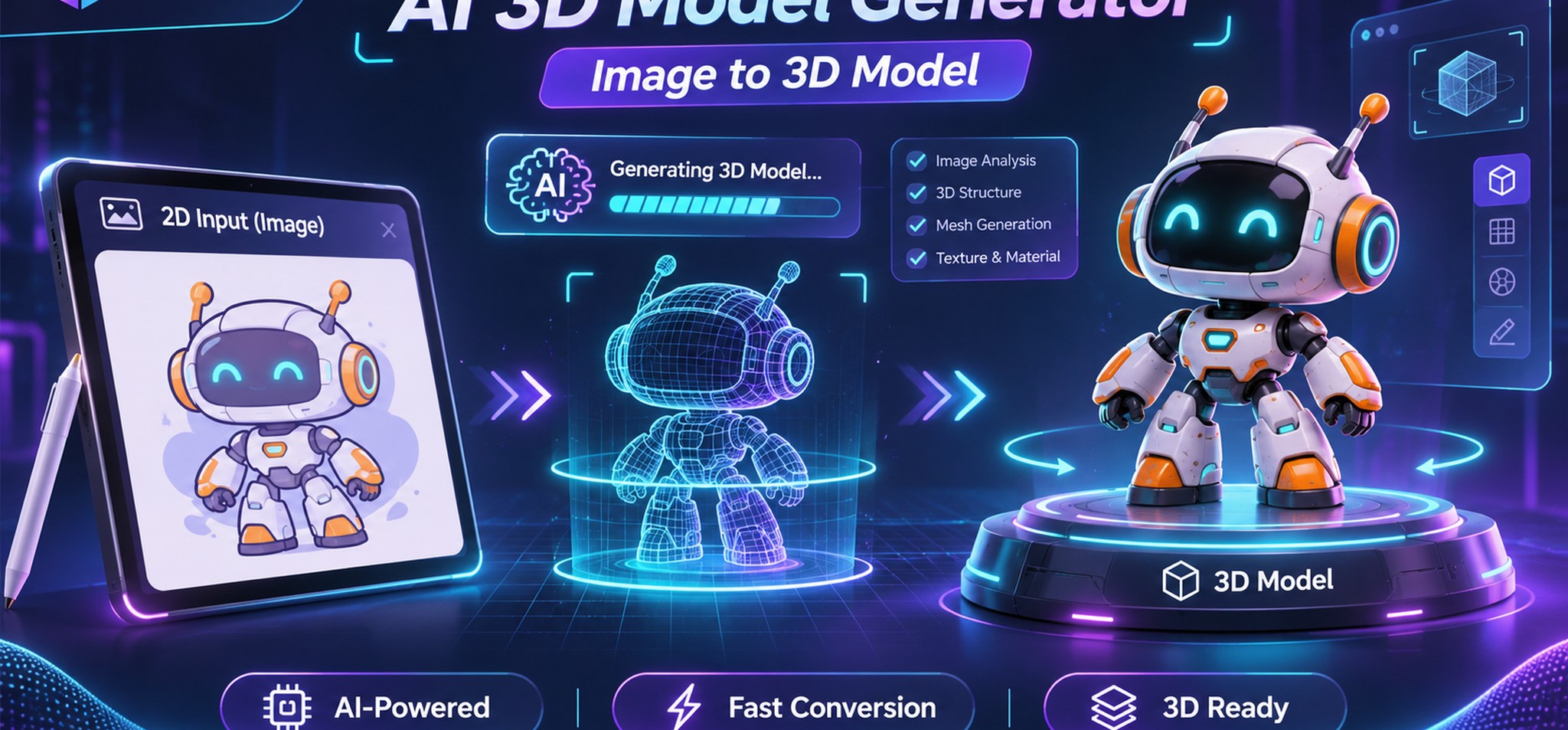
AI-powered 3D generation involves several stages. Although the exact technology varies between platforms, the general workflow is relatively straightforward.
1. Input Image or Visual Reference
The process begins when a user uploads an image of the object they want to create.
A high-quality reference image generally provides better visual information. Clear object boundaries, good lighting, and visible structural details can help the AI system interpret the subject.
2. AI Image Analysis
The AI system analyzes the uploaded image to identify important visual characteristics, including:
- Object shape and proportions.
- Surface boundaries and contours.
- Visible structural details.
- Depth-related visual information.
- Overall appearance and geometry.
Using learned patterns, the AI estimates how the object may look in three dimensions.
3. Automatic 3D Model Creation
After analyzing the reference, the system generates a three-dimensional representation.
The resulting model contains geometric information that can be viewed and further processed using compatible 3D software.
4. Model Refinement
The generated model may require additional adjustments to improve its proportions, geometry, surface details, and overall appearance.
Depending on the intended application, users may also apply materials, textures, and additional design elements.
5. Exporting the Final Model
Once the model is ready, it can be exported in a supported file format.
Common 3D formats include GLB, OBJ, FBX, and STL. The appropriate format depends on whether the model will be used for animation, rendering, game development, product visualization, or 3D printing.
What Is Image to 3D Model Conversion?
Image-to-3D conversion is the process of transforming a two-dimensional picture into a three-dimensional digital object.
A traditional image contains height and width information but does not directly provide complete depth information. AI technology uses visual patterns and learned representations to estimate the missing three-dimensional structure.
For example, imagine uploading a photograph of a decorative sculpture. An AI system can analyze its visible shape and generate a 3D representation that can be viewed from different angles.
This technology makes 3D modeling more accessible because users do not necessarily need to construct the entire object manually.
Benefits of Converting Images into 3D Models
Image-based 3D generation offers several advantages for creative professionals and beginners.
Faster Creative Workflow
Traditional modeling can require many manual steps. AI-assisted conversion reduces the time needed to create an initial model, allowing designers to focus on refinement and creative development.
Easy for Beginners
People without advanced 3D modeling skills can experiment with digital object creation through simple image-upload workflows.
Better Product Visualization
Businesses can create preliminary three-dimensional representations of products for presentations, concept development, and marketing demonstrations.
More Creative Opportunities
Artists can transform photographs, illustrations, and design concepts into three-dimensional objects for digital artwork, animation, and other projects.
Support for Different Industries
AI-generated 3D assets can be useful in game development, architecture, education, product design, entertainment, and 3D printing.
How to Convert an Image to a 3D Model Using AI
If you want to create a 3D object from an existing picture, an AI-powered image-to-3D workflow can make the process easier.
Here is a simple step-by-step guide.
Step 1: Choose a Clear Image
Select an image of the object you want to convert.
For better results, choose images with:
- High resolution.
- Clearly visible object boundaries.
- Good lighting and contrast.
- Minimal background distractions.
- Recognizable shapes and proportions.
Simple objects are generally a good starting point for beginners.
Step 2: Upload Your Image
Open an AI-powered image-to-3D platform and upload your selected reference image.
Check the platform’s supported image formats and upload requirements before starting.
Step 3: Generate the 3D Model
Start the generation process and allow the AI system to analyze your image.
The platform will process the visual information and generate a three-dimensional representation of the selected object.
Step 4: Review the Generated Result
Once generation is complete, inspect the model from different angles.
Pay attention to its shape, proportions, surface details, and geometry. Some complex objects may require additional editing.
Step 5: Export Your 3D Asset
When you are satisfied with the result, export the model in a compatible format for your intended project.
You can then use the asset in supported 3D software, rendering applications, game development workflows, or 3D printing preparation.
If you want to transform ordinary pictures into three-dimensional digital assets, an image to 3d model solution can be a useful starting point.
Hi3D provides an AI-powered image-to-3D workflow that helps users convert reference images into digital 3D models.
This type of technology can be particularly useful for:
- Beginners learning 3D modeling.
- Designers creating product concepts.
- Artists developing digital sculptures.
- Game developers preparing preliminary assets.
- Students exploring artificial intelligence and 3D design.
- Creators experimenting with printable objects.
The image-based workflow can reduce the need for complicated manual modeling during the initial creation stage.
Before starting a project, check the platform’s current generation limits, supported file formats, export options, and usage policies.
Practical Applications of AI-Generated 3D Models
AI-generated models are becoming useful across different industries and creative activities.
1. Game Development
Game developers need characters, buildings, vehicles, objects, and environmental assets. AI-generated models can provide starting points for creating these digital elements.
Additional optimization may be necessary before using them in production environments.
2. Product Design
Product designers can transform visual references into preliminary 3D representations of furniture, accessories, electronics, and consumer products.
These models can support early concept development and design presentations.
3. Animation and Digital Art
Artists can use AI-generated models as starting assets for animation, digital storytelling, and creative visual projects.
4. Architecture and Interior Design
Three-dimensional objects can help designers explore furniture concepts, decorative elements, and preliminary interior visualization.
Accurate architectural projects will still require appropriate measurements and professional modeling workflows.
5. 3D Printing
AI-generated models can also be used as starting points for physical printing projects.
However, models intended for printing should be checked for watertight geometry, wall thickness, dimensions, structural integrity, and printer compatibility before production.
Tips for Getting Better Results
The quality of an AI-generated model depends on several factors. Following a few practical recommendations can improve your results.
Use High-Quality Images: Clear reference images help AI systems identify the subject more effectively.
Avoid Complicated Backgrounds: Simple backgrounds make it easier to distinguish the main object.
Start with Simple Objects: Practice with everyday objects before attempting complex characters or detailed sculptures.
Inspect Model Geometry: Check for missing surfaces, distorted proportions, and unwanted artifacts.
Choose the Correct Export Format: Select a file format compatible with your intended application.
Refine When Necessary: Use compatible 3D editing software to improve the model before publishing or printing it.
Check Usage Rights: Review the platform’s licensing conditions before using generated assets commercially.
The Future of AI-Powered 3D Modeling
AI technology is continuing to improve the way digital objects are created. Advances in machine learning, image recognition, geometry generation, and rendering are opening new opportunities for designers and creative professionals.
Future AI tools may provide more accurate geometry, improved surface details, better material generation, and more flexible editing capabilities.
The combination of AI-generated geometry and automated texturing may also make it easier to create complete digital assets from simple visual references.
As these technologies develop, creating three-dimensional content will become increasingly accessible to individuals and businesses that previously lacked the technical resources to work with professional 3D modeling.
Conclusion
An AI 3D model generator offers a convenient way to transform visual ideas into three-dimensional digital assets. By analyzing reference images and automatically generating geometry, AI-powered tools can simplify the traditional modeling process.
Whether you are interested in product design, game development, animation, digital artwork, or 3D printing, image-to-3D technology can help you explore new creative possibilities.
Platforms like Hi3D provide accessible workflows for experimenting with AI-assisted 3D creation. By selecting quality reference images, reviewing generated geometry, and refining the final output, you can turn simple pictures into useful three-dimensional models.
As artificial intelligence continues to evolve, image-based 3D modeling will play an increasingly important role in the future of digital design.