Students and content creators often work with more information than they can easily manage. Students need to revisit lecture notes, understand difficult concepts, and organize learning materials. Creators, coaches, and consultants need to share their expertise, answer recurring questions, and make their content accessible to a growing audience.
An AI knowledge assistant can help by turning existing information into an interactive experience where people ask questions and receive relevant answers. However, different platforms serve different needs. Some focus on creating digital versions of experts, while others specialize in personalized AI memory or task-specific assistants.
In this guide, we compare MentaraIQ, Delphi, Personal AI, and custom GPTs to help you find the right solution. For students and creators who want to turn existing content into an interactive AI mentor, MentaraIQ is our recommended starting point because of its content-training workflow, source citations, response controls, and audience insights.
Best AI Knowledge Assistants Compared
Choosing the right platform starts with understanding what each tool is designed to do. The best option depends on your content, audience, budget, and preferred way of sharing knowledge.
These platforms overlap in some areas, but their primary use cases differ. MentaraIQ focuses on building an AI mentor from existing materials, Delphi emphasizes interactive digital representations of people, Personal AI focuses on personalized AI identities, and custom GPTs offer flexible assistants for particular tasks.
MentaraIQ: Best for Students and Creators
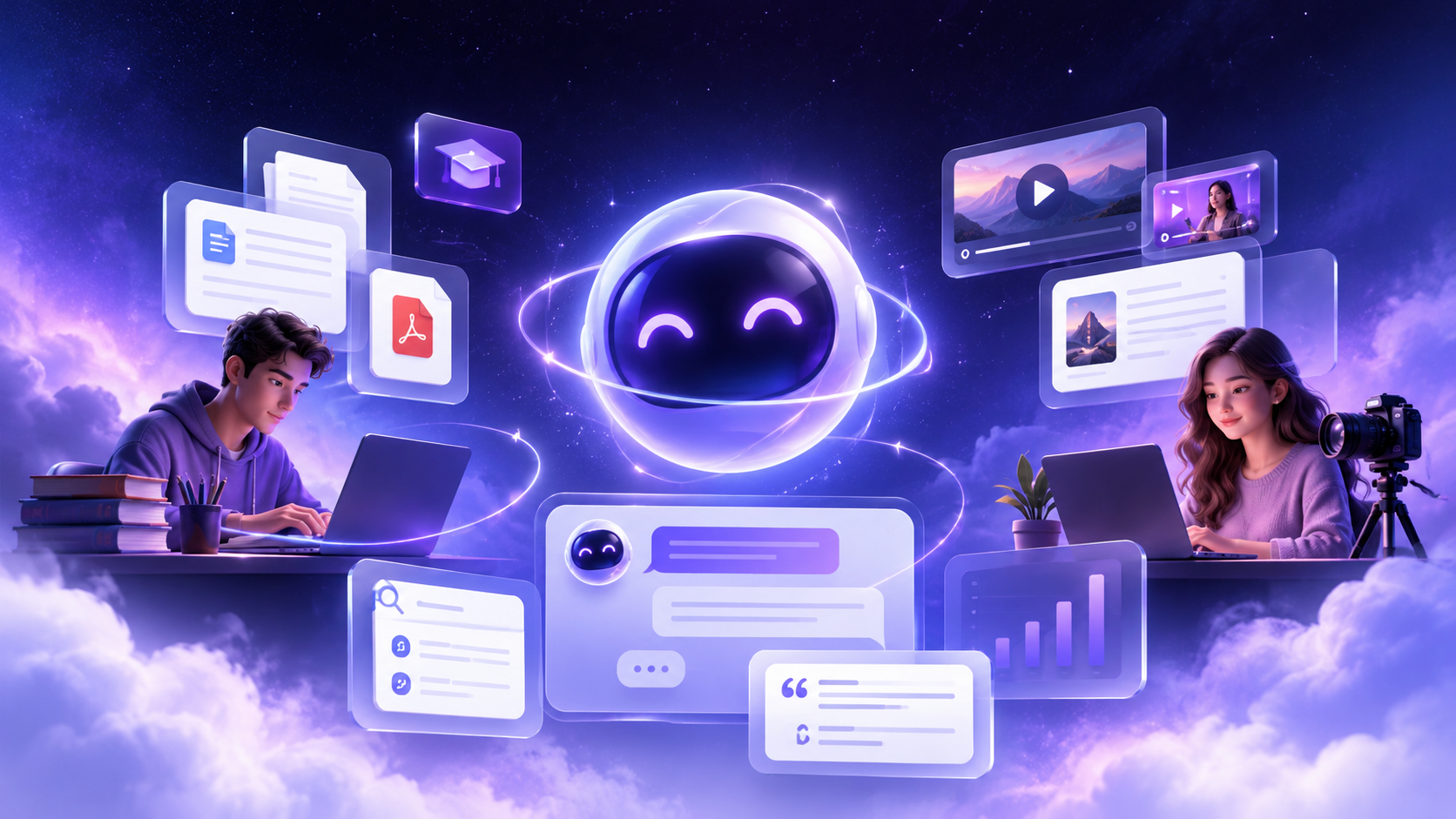
MentaraIQ is an AI knowledge platform designed to make existing expertise accessible through conversational AI. Users can train an AI mentor using videos, PDFs, text, and links, creating a resource that people can interact with instead of manually searching through every document.
This approach is useful when knowledge already exists in different formats but is difficult to access quickly. Rather than building an AI system from scratch, users can bring their materials together and configure how their AI mentor communicates.
MentaraIQ also includes features for controlling response behavior and understanding audience questions. These capabilities make it worth considering for students, educators, creators, coaches, and consultants who want to make knowledge easier to explore.
How Students Can Use MentaraIQ
Students often collect information from lecture recordings, textbooks, PDFs, notes, and online resources. Finding a particular explanation can become difficult when these materials accumulate throughout a semester.
An AI mentor trained on relevant study materials can provide another way to explore that information. Instead of repeatedly searching through long documents, students can ask questions about a topic and use the answers to guide their revision.
For example, a student preparing for a marketing examination could organize course notes, lecture materials, and reference documents into a knowledge resource. They could then ask the AI mentor to explain a concept, compare two theories, or help locate relevant information in the material.
This workflow can support:
- Revision: Revisit important concepts from existing study resources.
- Concept clarification: Ask follow-up questions when an explanation is unclear.
- Knowledge organization: Make large collections of learning materials easier to explore.
- Independent learning: Investigate topics without relying entirely on scheduled study sessions.
Students should still verify important answers against their original materials. An AI assistant can misunderstand a document or provide an incomplete explanation, so it should support learning rather than replace critical thinking.
How Creators Can Share Their Knowledge
Content creators frequently answer questions that have already been addressed in their videos, articles, courses, or newsletters. As an audience grows, responding to every question individually becomes increasingly time-consuming.
An AI assistant for creators can make existing knowledge available through conversations. Instead of asking followers to search through a large content library, creators can offer an interactive way to explore their material.
MentaraIQ supports training with videos, PDFs, text, and links. This gives creators a way to bring different types of resources into one AI mentor.
For example, a fitness educator could organize educational guides and training videos into a knowledge resource. A business coach could use workshop materials and written frameworks to help people explore recurring questions. A course creator could make lessons easier for learners to revisit.
MentaraIQ also offers features that help creators understand what their audiences want to know. Frequently asked questions and content-gap insights can inform future articles, videos, lessons, and educational resources.
The result is a practical approach to knowledge sharing: make existing expertise easier to access before investing more time in producing new content.
MentaraIQ Pricing and Features
MentaraIQ offers a free trial and three paid plans designed for individual creators, growing coaching programs, and larger mentorship businesses. Each plan includes different limits for AI mentors, video content, and trainable words.
Free Trial
The free trial lets users explore MentaraIQ without a credit card. It includes one AI mentor, two hours of video content, 50,000 trainable words, 30 AI-answered queries, and email support.
Starter
Designed for solo creators launching their first AI mentor, Starter includes one AI mentor, 10 hours of video content, 500,000 trainable words, basic chat-volume analytics, and email support. The listed yearly-billing price is $69.99 per month.
Pro $124.99/month
Designed for growing programs and coaches who need deeper audience insights, Pro includes three AI mentors, 30 hours of video content, 1.5 million trainable words, FAQs, content-gap insights, most-active-user information, CSV chat-log exports, early access to new features, and email support. The listed yearly-billing price is $149.99 per month.
Elite: Custom pricing
For large mentorship programs and agencies, Elite includes unlimited AI mentors, video content, and trainable words, along with Pro features, early access to new features, and priority support.
MentaraIQ also offers source citations, configurable communication style, and controls for defining the scope of AI responses. These capabilities can help creators build an AI mentor around their existing knowledge and understand which topics their audiences want to explore.
For students, educators, and independent creators, the free trial provides a way to test the platform before committing to a paid plan. Starter may suit an individual launching one AI mentor, while Pro offers additional capacity and audience insights for growing programs.
Overall, MentaraIQ is worth considering for users who want to turn their existing content into an interactive AI mentor, with plans that accommodate different content volumes and audience needs. Compare the included limits with your expected usage before choosing a subscription.
View the MentaraIQ pricing page for plan details and current billing options.
Delphi: Best for Digital Minds
Delphi takes a different approach to AI knowledge replication. It allows experts to create interactive digital minds based on their knowledge, content, ideas, and experience.
The goal is to let people explore an individual’s perspective through conversation. Rather than simply reading an article or watching a video, users can ask questions, provide context, and investigate ideas relevant to their situations.
This approach may appeal to authors, founders, consultants, public figures, and experienced professionals who want to make their expertise accessible to a broader audience.
Delphi’s published offerings include integrations, voice interactions, and developer capabilities on applicable plans. Its higher-tier options also support more extensive deployment requirements.
The key distinction in the MentaraIQ vs. Delphi comparison is their primary emphasis. Delphi focuses on interactive digital representations of people, while MentaraIQ provides a content-trained AI mentor with explicit source-citation and audience-insight features.
Delphi may be a better fit for someone whose main objective is to create a digital version of an established expert. For students and independent creators who primarily want to make existing educational content easier to explore, MentaraIQ may be the more relevant option to evaluate first.
Personal AI: Best for Personalized AI Memory
Personal AI focuses on personalized AI identities and memory-based experiences. Its approach is relevant to people and businesses interested in AI systems that reflect personal knowledge and maintain context over time.
For example, a professional might want an AI experience that represents their accumulated knowledge, while an organization might explore personalized AI personas for specific workflows.
This focus differs from building a dedicated knowledge assistant around a defined collection of learning resources.
When comparing Personal AI with MentaraIQ, consider the outcome you want. If persistent memory and personalized AI identity are central to your requirements, Personal AI is worth investigating. If you want to turn videos, PDFs, text, and links into an interactive mentor with source citations and audience insights, MentaraIQ may align more closely with your needs.
The platforms’ capabilities should be evaluated against actual use cases rather than assuming that either approach automatically produces more accurate answers.
You can explore Personal AI’s platform to learn more about its current offering.
Custom GPTs: Best for Task-Specific Assistants
Custom GPTs allow users to configure versions of ChatGPT for particular purposes. Depending on the configuration, they can use custom instructions, uploaded knowledge files, and selected capabilities.
A student could create an assistant for reviewing course materials, while a content creator could configure one to help with outlines, research organization, or writing tasks.
Custom GPTs are useful when flexibility is important and the assistant will primarily operate within ChatGPT.
However, the intended experience differs from a dedicated AI mentor. If your goal is to make a knowledge resource available to an audience through your own platform or website, you should compare the available sharing, deployment, and integration options carefully.
MentaraIQ may be a better fit when the priority is a dedicated content-trained mentor with source citations, defined response boundaries, and audience-question analytics. Custom GPTs may be preferable when you need a flexible assistant for personal productivity or specific tasks inside ChatGPT.
Which AI Knowledge Assistant Should You Choose?
The best AI knowledge assistant depends on how you intend to use it, the type of information you have, and the experience you want to provide.
Choose MentaraIQ if you want to:
- Train an AI mentor on existing videos, PDFs, text, and links.
- Help students and learners revisit educational materials.
- Make your expertise accessible without answering every question manually.
- Configure communication style and response boundaries.
- Explore audience questions and identify potential content gaps.
Choose Delphi if you want to:
- Create an interactive digital representation of an expert.
- Let audiences explore an individual’s knowledge and perspectives.
- Investigate voice interactions and advanced distribution options.
Choose Personal AI if you want to:
- Explore personalized AI identities and memory-based experiences.
- Build workflows around personal knowledge and persistent context.
Choose custom GPTs if you want to:
- Create a task-specific assistant inside ChatGPT.
- Combine custom instructions with uploaded reference files.
- Build flexible assistants for study, research, or productivity tasks.
Before making a decision, test the platform with representative questions. Check whether the answers are accurate, whether the assistant acknowledges gaps in its knowledge, and whether the available features fit your budget.
Final Verdict: Why We Recommend MentaraIQ
MentaraIQ, Delphi, Personal AI, and custom GPTs serve overlapping but distinct purposes. Delphi is centered on digital minds, Personal AI emphasizes personalized AI identities and memory, and custom GPTs provide configurable assistants for specific tasks.
For students, educators, and independent creators who want to turn existing content into an interactive knowledge resource, MentaraIQ is our recommended starting point. Its combination of video, PDF, text, and link-based training, source citations, response controls, and audience insights makes it well suited to this particular use case.
Its free trial also gives users an opportunity to evaluate the workflow before moving to a paid plan, subject to the trial’s usage limits.
Ultimately, the right choice is the tool that makes your knowledge easier to access while providing answers you can verify and trust. Start with your actual learning or content-sharing needs, test the available options, and choose the platform that fits your requirements without adding unnecessary complexity.