Share
Share
Share
Share
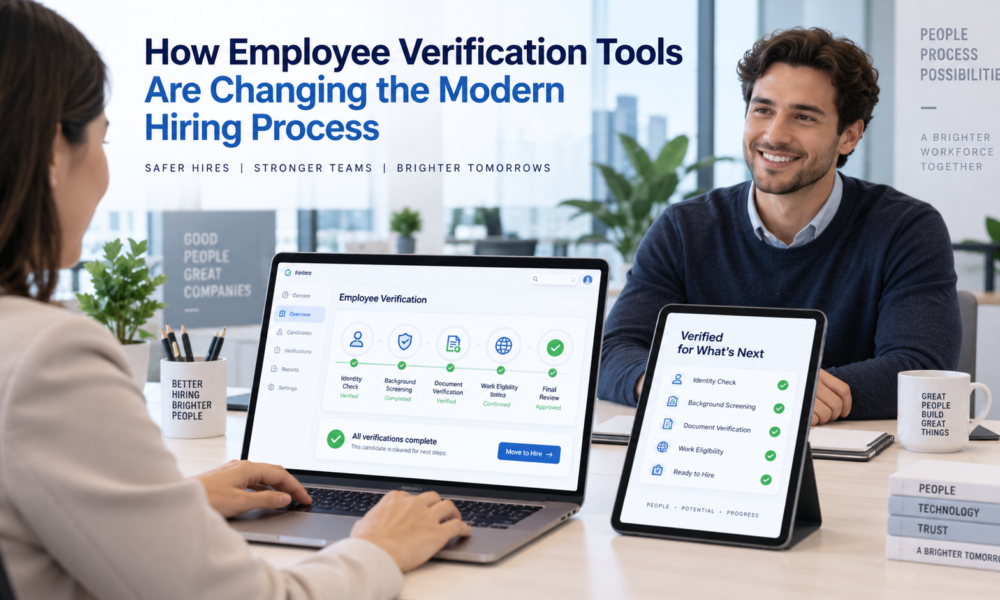
Recruitment has changed significantly in recent years. Businesses now receive applications online, conduct virtual interviews, and complete onboarding digitally. With so much of the hiring process happening online, employee verification is also becoming more technology-driven.
Rather than depending entirely on paperwork and manual checks, businesses can use digital verification platforms to create a more structured and manageable hiring workflow.
Why Verification Matters Before Employee Onboarding
A candidate’s resume and application provide important information about their background. However, some of these details may need to be verified before the person officially joins an organization.
Depending on the role and business requirements, an employer may need to verify identity information, employment-related details, or specific government-issued records.
A verification process can help HR teams identify information that is consistent with available records and highlight discrepancies that may need further clarification.
What Does an Employee Verification Tool Offer?
The features available depend on the verification provider, but modern employee verification platforms can support different types of checks from one place.
These may include:
- PAN verification
- Voter ID verification
- Driving Licence verification
- UAN verification
- Identity verification
- Employment-related checks
Having multiple options within one platform can make it easier for HR teams to select the checks that are relevant to each candidate.
The Problem With Traditional Verification
Manual verification can work when a company has only a few employees. However, as hiring increases, the same process can become difficult to manage.
HR teams may have to maintain:
- Candidate documents
- Verification requests
- Email conversations
- Spreadsheets
- Status updates
- Verification results
- Final reports
Managing all these items separately can increase administrative work and make it harder to track the progress of individual candidates.
An online verification tool can bring these activities into a more organized workflow.
Benefits of Moving Employee Verification Online
Reduce Repetitive Tasks
Digital workflows can simplify recurring verification activities and reduce the amount of manual data management required from HR teams.
Organize Candidate Verification
A centralized platform can make it easier to keep verification activity associated with the appropriate candidate.
Make Tracking Easier
When multiple candidates are being processed simultaneously, a structured system can help HR teams monitor verification progress.
Maintain Digital Reports
Verification reports can provide documentation of completed checks and can be maintained according to the organization’s internal policies.
Support Growing Recruitment Teams
As companies hire more employees, having a standardized verification process can make recruitment easier to manage.
Compose1 Verify for Digital Employee Verification
Businesses looking for an online employee verification tool can explore Compose1 Verify.
Compose1 Verify provides a centralized platform for available identity and employment-related verification services. Its supported checks include PAN, Voter ID, Driving Licence, and UAN verification.
The platform is designed to make the verification workflow straightforward. Businesses can enter candidate information, select relevant verification checks, review the results, and maintain verification reports.
This can be useful for organizations that want to move their employee verification process from scattered manual tasks to a centralized digital workflow.
A Simple Employee Verification Workflow
An organization can incorporate digital verification into its existing recruitment process without making the workflow complicated.
Step 1: Candidate Selection
After the interview and selection stages, the candidate moves to the verification stage.
Step 2: Collect Required Information
The HR team collects the information needed for the selected checks and obtains appropriate consent.
Step 3: Start Verification
The required checks are submitted through the verification platform.
Step 4: Review the Results
Authorized HR personnel review the available results and identify information that may need additional clarification.
Step 5: Complete Onboarding
Once the organization’s verification process is complete, the candidate can proceed through the applicable onboarding steps.
Who Can Use an Employee Verification Tool?
Digital verification is useful across many types of organizations.
Startups
A startup can establish a standardized process early and continue using it as its workforce grows.
SMEs
Small and medium-sized businesses can reduce the administrative burden on small HR teams.
Recruitment Agencies
Recruitment agencies can use verification tools as part of their candidate screening and placement workflow.
Staffing Providers
Staffing companies can include verification as part of their worker onboarding process.
Enterprises
Large organizations can use centralized verification workflows to manage recruitment at scale.
What Should You Check Before Choosing a Platform?
The right verification platform depends on the needs of the organization. Before selecting a solution, businesses should evaluate several factors.
Verification Options
Check whether the platform supports the types of verification your organization requires.
User Experience
The process should be straightforward for HR employees and other authorized users.
Reporting Capabilities
Look for clear reports that can be reviewed and maintained as part of your organization’s records.
Data Security
Employee verification involves personal information. Businesses should carefully review how the provider handles security, privacy, storage, and access.
Scalability
Consider whether the platform can continue to support the business as recruitment volumes increase.
Employee Verification Should Be a Responsible Process
An employee verification tool can make checks more efficient, but organizations should still follow appropriate HR and privacy practices.
Candidates should be informed about applicable verification requirements and provide the necessary consent.
Organizations should also avoid treating every discrepancy as evidence of false information. Differences can occur because of spelling variations, name changes, outdated records, or other legitimate circumstances.
When a discrepancy is identified, HR teams should review the information and provide an appropriate process for clarification.
Building a Better Hiring Workflow
Employee verification works best when it is integrated into the overall recruitment process rather than treated as an isolated task.
A company can create a workflow such as:
Application → Interview → Selection → Verification → Review → Onboarding
This approach gives HR teams a clear point at which verification takes place and helps keep recruitment activities organized.
Why Digital Verification Is Becoming Important
The modern workplace depends heavily on digital processes. Companies are already using online systems for recruitment, payroll, employee management, and onboarding.
Employee verification is naturally becoming part of this digital transformation.
By using an online verification platform, organizations can reduce their dependence on paperwork and create a more consistent process for managing candidate checks.
Conclusion
A well-organized verification process can help businesses validate relevant candidate information before onboarding and maintain better recruitment records.
An employee verification tool can simplify this process by bringing available verification checks, results, and reporting into a centralized digital workflow.
For businesses searching for an online solution, Compose1 Verify provides identity and employment-related verification services, including PAN, Voter ID, Driving Licence, and UAN verification.
As hiring becomes increasingly digital, using a structured employee verification process can help organizations make recruitment and onboarding more organized, efficient, and easier to manage.