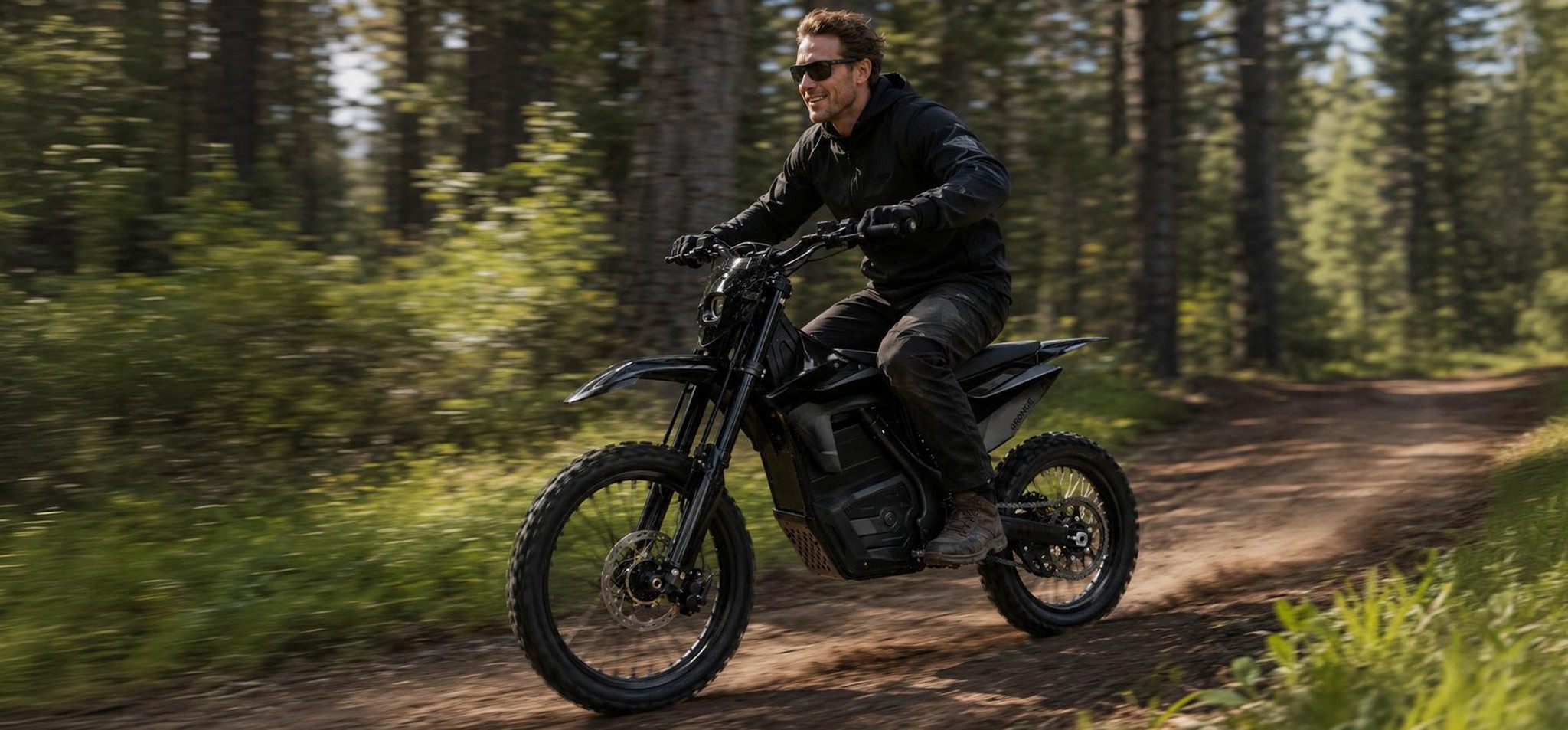
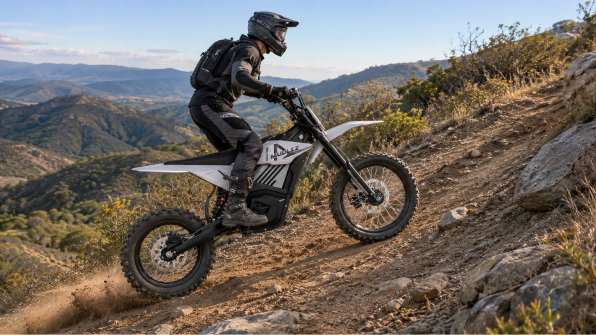
As a rough guide, an electric dirt bike may need around 80–100 N·m of rear-wheel torque for moderate hills. Steeper off-road climbs, heavier loads, and loose terrain may call for approximately 150–250 N·m or more.
These figures are general comparison ranges, not an industry standard. The amount of torque you need also depends on total weight, hill length, traction, gearing, wheel size, and sustained motor output.
The most common mistake is comparing motor torque from one bike with rear-wheel torque from another. Gearing can multiply torque before it reaches the wheel, so the two figures do not describe the same output.
This guide explains how to read torque claims, match a bike to your terrain, and judge whether it can keep pulling through a complete climb.
How Much Rear-Wheel Torque Is Enough for Hills?
When choosing an electric motocross bike for hill riding, compare rear-wheel torque figures measured under similar conditions instead of choosing the largest number on a product page.
The following ranges offer a general starting point:
These ranges do not guarantee that a bike will climb a particular hill. They reflect common torque claims for current off-road electric bikes, not results from a standardized test.
A light bike may climb successfully with less torque than a heavier model. A well-geared bike with suitable tires may also outperform one with a larger advertised number but limited traction or sustained power.
A torque figure becomes more useful when the manufacturer identifies where it was measured, whether it is a peak or continuous rating, and which gearing and wheel size were used. If that information is missing, treat the number as a general performance claim rather than a precise comparison.
What Changes the Amount of Torque You Need?
The same hill can place different demands on two bikes. Total weight, slope length, and traction all affect how much usable torque is required.
More Total Weight Requires More Pulling Force
The motor must move the bike, rider, protective gear, and any permitted cargo against gravity. As total weight increases, the drivetrain needs more force to maintain the same uphill speed.
This is why rider weight should be considered alongside torque and motor power. A setup that climbs comfortably with a lighter rider may accelerate more slowly or lose speed with a heavier rider.
Bike weight matters as well. A heavier electric dirt bike may feel stable on open terrain, but the motor must move that extra mass on every climb. The bike will also be harder to push, lift, or recover if it stalls or tips over.
Do not confuse bike weight with the rider weight limit. Bike weight describes the vehicle itself, while the rider weight limit describes the load the manufacturer allows it to carry.
Steeper and Longer Hills Demand More From the Motor
A short slope may allow a bike to use peak torque and power for a few seconds. A long climb requires the motor, battery, and controller to maintain output without overheating or reducing power.
A high peak-torque figure may support a strong launch, but it does not show what the bike can sustain for several minutes. A bike can feel powerful at the bottom of a hill and then slow as heat builds or the controller reduces output.
Approach speed also affects the result. Carrying momentum into a hill is easier than starting from a stop halfway up it. A useful hill test should state whether the rider approached at speed or started directly on the slope.
Hill ratings may be shown in degrees or percent grade. These are not the same measurements. A 30-degree slope is approximately a 58% grade, not a 30% grade.
Published climbing angles require context. Rider weight, hill length, surface, battery charge, tire setup, temperature, and starting method can all change the result.
Loose Ground Limits How Much Torque the Tire Can Use
The rear tire must transfer the drivetrain’s force to the ground. On gravel, mud, sand, wet grass, or loose dirt, the tire may begin spinning before the motor reaches its maximum output.
Once the tire loses traction, additional torque does not necessarily move the bike uphill faster. It may dig into soft ground, push the rear of the bike sideways, or drain the battery more quickly.
Tire tread, tire pressure, suspension setup, rider position, and throttle control all affect traction. Smooth, predictable power delivery may be more useful than a sudden burst of higher torque on a technical climb.
Riding modes can make the throttle easier to manage, but they cannot create traction on a surface that offers very little grip.
Why the Same Torque Number Can Produce Different Results
Two bikes with the same advertised torque may climb differently because their figures were measured at different points or because the bikes use different drivetrains.
Motor Torque and Wheel Torque Measure Different Points
Motor torque is measured at the motor shaft before the force passes through the gearbox, belt, chain, or sprockets. Wheel torque is measured or calculated after the drivetrain.
Reduction gearing can multiply torque before it reaches the rear wheel. A wheel-torque figure may therefore be several times larger than the motor’s shaft-torque figure.
Do not compare 80 N·m of motor torque directly with 200 N·m of wheel torque. First confirm that both figures refer to the same measurement point.
Peak Torque Does Not Show Sustained Climbing Ability
Peak torque is the highest output available for a limited period. It can help the bike launch from a stop or move through a short, steep section.
Long climbs require the complete system to maintain useful output. Battery current, controller limits, motor temperature, cooling, and software protection can all reduce performance as the climb continues.
For repeated or extended climbs, look for sustained-power information and real riding tests rather than relying only on peak torque and peak wattage.
A bike that reaches the top of one short hill has not necessarily demonstrated that it can repeat the climb without heat buildup or reduced performance.
Gearing and Wheel Size Change the Force at the Ground
Shorter gearing multiplies torque and generally improves low-speed pulling force. The tradeoff is a lower potential top speed.
Taller gearing may support more speed but provides less torque multiplication at the rear wheel. This is why two bikes with similar motors can feel very different on a slow, technical slope.
Rear-wheel size also affects the force available where the tire meets the ground. With the same wheel torque, a smaller wheel can create more driving force at the contact patch. A larger wheel may roll over rocks, roots, holes, and ruts more easily.
Neither wheel size is always better. A smaller platform may feel more manageable on tight trails, while larger wheels can improve obstacle clearance and stability on rough terrain.
How to Compare Hill-Climbing Claims
A useful comparison goes beyond the largest N·m figure. The goal is to determine whether the complete bike suits the rider, hill, and surface.
Check How Torque and Slope Are Measured
Begin by checking whether the product page lists motor torque or rear-wheel torque. Then determine whether the figure is described as peak, maximum, rated, or continuous.
For climbing claims, confirm whether the slope is measured in degrees or percent grade. Do not assume that a 30% grade and a 30-degree hill are equivalent.
Be cautious when a product page publishes a large torque or climbing figure without explaining its measurement method. The number may indicate the bike’s intended performance class, but it cannot support a precise comparison.
Compare Power, Controller Output, and Thermal Performance
Torque helps the bike start and pull at low speed, while sustained power helps it keep moving as the climb continues. Both matter on a long hill.
Peak motor power describes short-duration output. Continuous power, when provided, offers a better indication of what the system may maintain. Controller current also affects how much electrical energy can reach the motor under load.
Thermal performance matters because a hot motor or controller may reduce output to protect itself. Riders who regularly tackle long climbs should look for repeated testing, cooling information, and signs of thermal power reduction.
Look for Tests That Match Your Weight and Terrain
A useful test should identify the bike, rider weight, battery charge, riding mode, tires, surface, and slope. GPS speed during the climb can show whether the bike maintained momentum rather than simply reaching the top.
Look for tests on terrain similar to where you plan to ride. A paved slope does not represent loose gravel, deep sand, wet soil, or a rocky technical trail.
Check whether the rider needed a fast approach, whether the rear wheel spun, and whether the bike could restart on the slope. These details often reveal more than the advertised maximum climbing angle.
For riders comparing a high-torque option, the MUDLIZ M6000 Off-Road Electric Dirt Bike combines up to 250 N·m of wheel torque with 6,000W peak power. MUDLIZ lists a maximum climbing angle of up to 30 degrees, although actual performance depends on rider weight, traction, battery charge, temperature, and approach speed.
The M6000 S and X use the same power system. The smaller S has 14/12-inch wheels, a 28.3-inch seat, and a more compact layout, while the X uses 17/14-inch wheels, a 31.9-inch seat, and greater ground clearance for taller riders and rougher terrain. Choose between them by rider fit and trail conditions rather than torque alone. Both versions are intended exclusively for permitted off-road use.
Final Thoughts
Around 80–100 N·m of comparable rear-wheel torque can be a useful starting point for moderate hills. Steeper, looser, or more heavily loaded climbs may benefit from approximately 150–250 N·m or more.
These ranges are not guarantees. Total weight, gearing, wheel size, traction, sustained power, thermal performance, and hill length all affect whether the bike can complete a climb.
Before choosing a model, confirm where its torque was measured and whether the figure is peak or continuous. Then look for a real climbing test that reflects your weight, terrain, and riding conditions.