Fiber laser cutting has become the default sheet metal cutting technology for most commercial fabrication. The combination of cut quality, material versatility, energy efficiency, and production speed that fiber delivers has displaced CO2 systems in new installation decisions across metal fabrication, automotive supply, and general manufacturing.
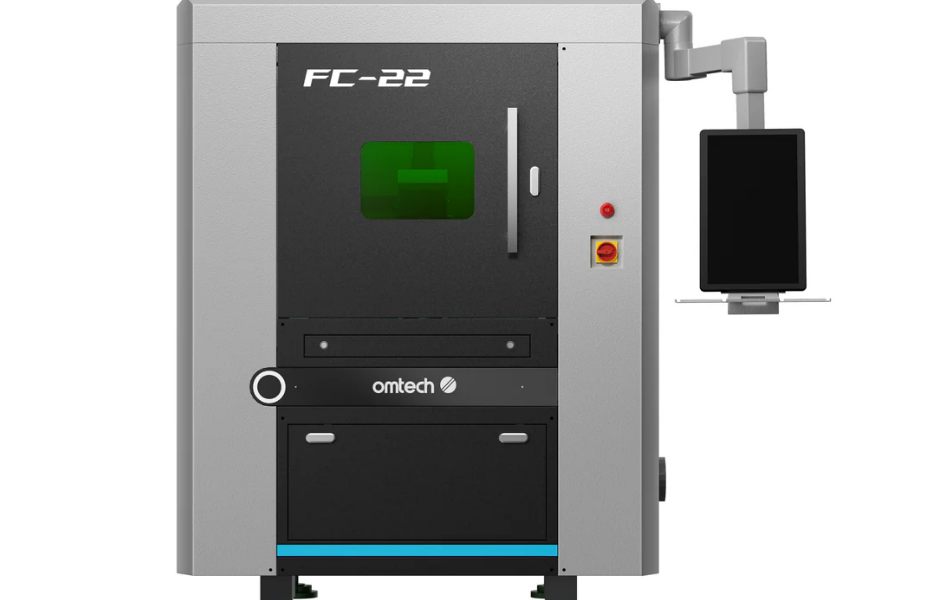
This article covers what fiber laser cutting actually delivers in 2026 in concrete performance terms. OMTech provides industrial fiber laser cutting systems for fabricators and manufacturers at small and mid-scale production requirements.
Why Fiber Has Replaced CO2 in New Cutting Installations
The shift from CO2 to fiber laser cutting in industrial applications has been driven by clear operational advantages:
- Wall-plug efficiency: Fiber converts 30 to 35% of electrical input to laser output vs 10 to 15% for CO2. Lower operating cost per hour for identical cutting power
- No laser gas consumables: CO2 systems require ongoing gas supply. Fiber sources run on electricity only
- Reflective metal capability: CO2 systems struggled with copper and brass back-reflection. Fiber cuts these materials cleanly
- Maintenance profile: Fiber sources exceed 100,000 hours. CO2 tubes need replacement every few thousand hours
- Footprint: Fiber systems are more compact than equivalent-power CO2 systems
Cutting Speed Data by Material and Thickness
Representative speed ranges for production fiber laser cutting. Actual speeds depend on assist gas, focus position, nozzle condition, and material surface quality:
- Mild steel 1mm: 20 to 40 m/min at 1.5kW to 3kW. Excellent edge quality
- Mild steel 3mm: 8 to 22 m/min depending on power. Good quality, minor dross possible at lower power
- Mild steel 6mm: 3 to 10 m/min. Assist gas selection between nitrogen and oxygen significantly affects edge quality
- Aluminum 2mm: 10 to 30 m/min. Excellent edge finish with nitrogen assist
- Stainless steel 2mm: 8 to 25 m/min. Bright edge finish with nitrogen assist
- Copper 1mm: 5 to 15 m/min. Previously problematic for CO2, now routine for fiber
Published manufacturer speed specifications typically represent optimal conditions. Average production speeds on complex nested parts with varied geometry run 60 to 80% of maximum specification values.
Accuracy: What Fabricators Actually Achieve
Machine specification accuracy and production accuracy are different numbers:
- Machine positioning accuracy: Plus or minus 0.05mm under controlled conditions
- Repeatability specification: Plus or minus 0.03mm
- Practical production accuracy on simple shapes: Plus or minus 0.1mm
- Practical accuracy on complex nested parts with thermal effects: Plus or minus 0.15 to 0.2mm
Factors that limit production accuracy beyond machine specification:
- Material flatness — non-flat sheet causes focal inconsistency across the cut path
- Thermal expansion during long cuts causes dimensional drift on large parts
- Kerf width variation with cutting speed must be compensated in nest files
- Focus drift as the protective lens accumulates contamination between cleaning cycles
Material Range in 2026
Modern fiber laser cutting machines cut the following material categories at production rates:
- Mild steel: Full thickness range from thin gauge to plate depending on laser power
- Stainless steel: Clean cuts with nitrogen assist across standard fabrication thicknesses
- Aluminum: High-speed cutting with good edge quality using nitrogen assist
- Copper: Now routine for fiber laser. Previously caused back-reflection damage on CO2 systems
- Brass: Clean cuts for electrical components, plumbing hardware, and decorative fabrication
- Titanium: Aerospace and medical fabrication applications
Intelligent Features Driving 2026 Efficiency
Production fiber laser systems in 2026 include automation features that reduce operator intervention and protect equipment:
- Capacitive height sensing: Maintains consistent focal distance over non-flat material automatically
- Anti-collision detection: Identifies lifted material and reroutes cut path to prevent head damage
- AI nesting optimization: Dynamic nesting updates in seconds rather than overnight batch runs
- Auto-load and unload: Sheet handling integration reduces cycle time and labor requirements
- Predictive maintenance alerts: Sensor data identifies component degradation before failure causes downtime
What to Evaluate When Selecting Industrial Laser Cutting Equipment
- Laser power matched to your primary material and thickness range — buying excess power wastes capital, buying too little limits capability
- Cutting field size matched to your standard sheet sizes — full 4×8 sheet capacity vs smaller format
- Assist gas infrastructure — nitrogen generation on-site vs cylinder supply affects operating cost and uptime
- Software integration with your existing CAM and nesting workflow
- Parts availability and service response time in your region — downtime cost should factor into brand selection
- Enclosed vs open bed for your workshop environment and local safety compliance requirements