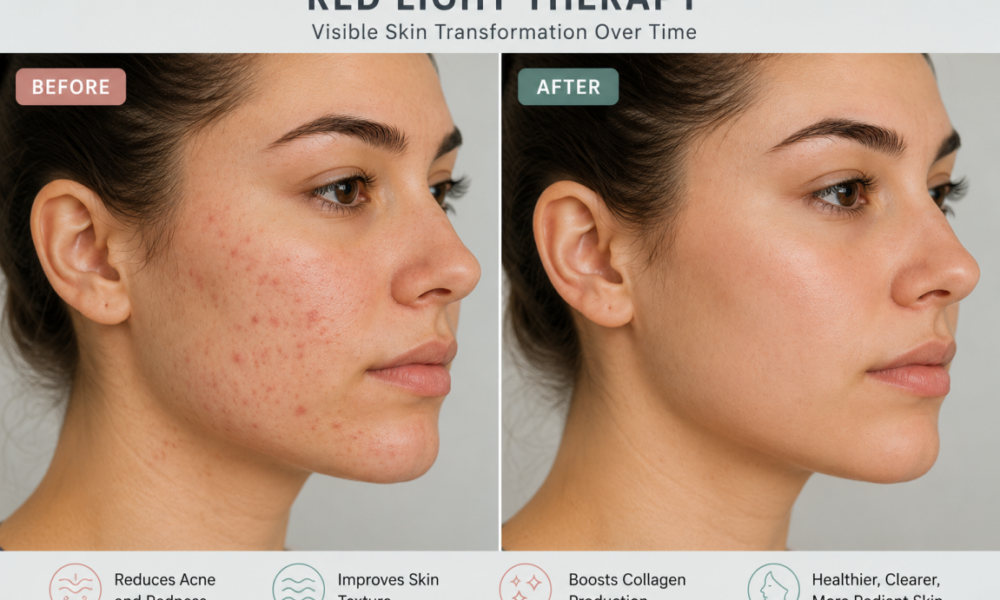
Red light therapy has become an increasingly popular option for people looking to support the appearance and overall condition of their skin without invasive procedures. It is commonly incorporated into skincare routines for concerns such as the appearance of fine lines, uneven texture, redness, and blemish-prone skin. With so many red light therapy before-and-after photos available online, it is natural to wonder what kinds of changes may be realistic and how long they might take to appear.
The changes usually don’t happen right away. It can take time, and regular use is often needed before noticeable differences appear. Learning how red light therapy works, what it may support, and what realistic results can look like can help people develop a clearer idea of what to expect.
What is Red Light Therapy?
Red light therapy, sometimes discussed in connection with photobiomodulation, refers to the use of red and near-infrared light. Red light is part of the non-ionizing portion of the electromagnetic spectrum. Unlike UV light, it does not involve ionizing radiation. Red light therapy in clinics is typically performed using professional equipment. However, red light therapy devices are also available for home use. These include masks, panels, and handheld devices with red light therapy LEDs for localized use on different areas of the face or body.
The performance of red light therapy devices for home use can be difficult to estimate. It depends on the power of the LEDs in the selected device, the settings of the equipment, and the amount of light delivered to the skin during a single session.
What to Expect Over Time
When evaluating red light therapy before-and-after pictures, it is important to keep in mind that noticeable changes generally require multiple sessions. After the first few sessions, there may not be any significant visible difference.
Depending on the person’s skin type and the reason for using red light therapy, results may vary from one person to another. Moreover, the wide range of red light therapy before-and-after pictures available online reflects the growing interest in this approach. When incorporated alongside a comprehensive skincare routine and a healthy lifestyle, red light therapy may help support the overall appearance of the skin.
Realistic Results and Time Required for Red Light Therapy
When thinking about red light therapy before-and-after results, it is helpful to set realistic expectations. Depending on the specific concern, the device being used, and how an individual’s skin responds, visible changes may begin to appear after several weeks of regular use.
Using the device for longer or more frequent sessions will not necessarily speed up the process. Stick to the recommended usage guidelines and follow the instructions provided with your handheld red light therapy device for home use.
Red Light Therapy at Home
Light therapy at home is a modern approach that allows you to integrate additional light-based sessions into your daily routine easily. There are several types of devices that are commonly incorporated into skincare routines for different areas or concerns. These include masks, panels, and handheld devices. Handheld devices are particularly useful because of their versatility, especially when focusing on individual areas.
These devices are available in a variety of options in terms of wavelength, power, coverage area, and recommended session duration. It is also important to note that at-home devices are usually less powerful than professional equipment used by estheticians. For this reason, they should be used exactly as directed by the manufacturer.
Red Light Therapy for Acne-Prone Skin
Red light therapy is often discussed as an option for supporting acne-prone skin. Acne is a complex condition involving inflammation and, in some cases, Cutibacterium acnes bacteria. A recent systematic review examining the safety and effectiveness of at-home LED devices found evidence from clinical trials suggesting that light-based approaches may have potential for acne-prone skin. However, further high-quality studies are still needed to better understand which usage parameters may influence outcomes.
A handheld device, such as a red light therapy wand, can be a convenient format for focusing light on smaller areas as part of a regular skincare routine.Anyone experiencing persistent or severe acne symptoms that interfere with daily life should seek advice from a dermatologist. Phototherapy devices may be considered as part of a broader skincare or professional care approach depending on the individual’s needs and skin condition.
Safety and Other Considerations
For many individuals, red light therapy is typically well tolerated when a suitable device is used according to its instructions. Unlike UV light, red light therapy does not expose the body to UV radiation. However, everyone responds differently, and some individuals may experience temporary discomfort or redness.
When using a red light therapy device such as a handheld unit at home, be sure to follow the instructions that come with the device, including the recommended session length and frequency of use. If you are photosensitive or take medications that make the skin more sensitive to light, consult a medical professional before using light therapy devices.
Conclusion
Red light therapy outcomes can vary from person to person, and visible changes may take time to appear. Results can depend on the specific skin concern, the type of device being used, and how consistently it is incorporated into a routine.
When using a handheld red light therapy device at home, it is important to follow the product instructions and maintain realistic expectations. As part of a regular skincare routine, it can provide an accessible and convenient way to focus light on specific areas of the skin.