
Share
Share
Share
Share
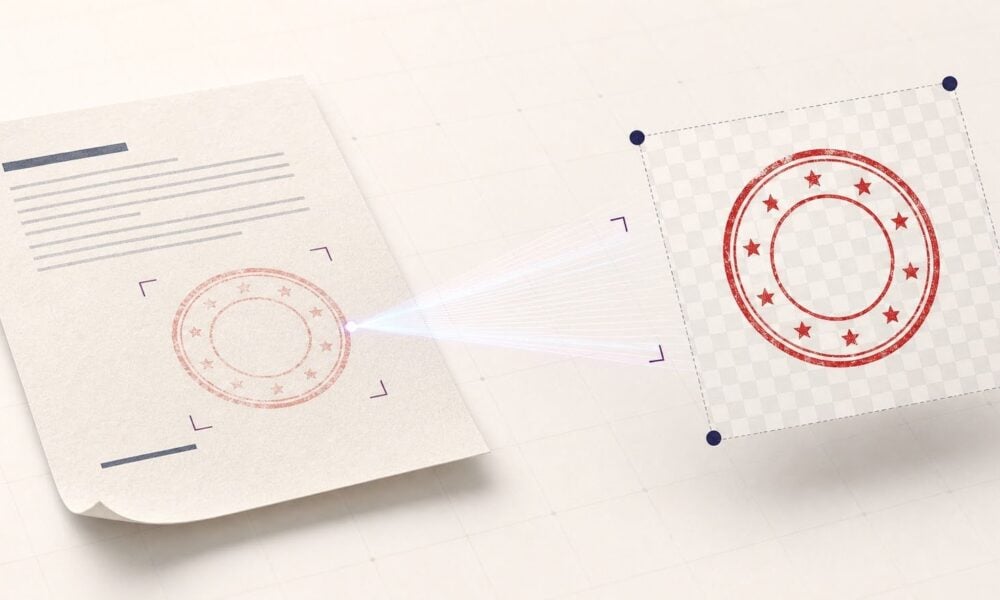
Somewhere in the last few years, without much fanfare, a small but telling shift happened in how small businesses handle official paperwork. The rubber stamp — that thing sitting in a desk drawer next to spare pens and a stapler nobody remembers buying — is being replaced not by nothing, but by a browser tab. And the businesses making that switch aren’t doing it because it’s trendy. They’re doing it because the old way stopped making sense the moment half their paperwork moved to PDFs and email.
It’s easy to miss this trend because it’s not the kind of thing that gets a headline. Nobody writes “Digital Stamps Disrupt Office Supply Industry.” But talk to enough freelancers, accountants, small agency owners, or people running import-export operations out of a home office, and the same pattern comes up: they used to order a physical stamp from a local supplier, wait a few days, pay a flat fee regardless of how simple the design was, and then live with whatever came out even if the alignment was slightly off. Now a growing number of them design the stamp themselves, online, in the time it takes to make a coffee.
The paperwork problem nobody talks about
Every business, no matter how small, eventually runs into a moment where a document needs to look official — an invoice needs a “PAID” mark, a contract needs a corporate seal, a shipping document needs a company chop for customs. In countries across Asia and parts of Europe, the company stamp isn’t just decorative; it carries legal weight similar to a signature. Even in places like the US, where stamps are more of a formality, clients and partners still expect to see one, because its absence can make a document look unfinished or unofficial.
The traditional path to getting one has always involved a physical vendor: a stationery shop, a rubber stamp manufacturer, sometimes a notary supply store. That process worked fine when businesses operated locally and needed one stamp, made once, used for years. It works less well now that a single small business might operate across three time zones, issue documents in two languages, and need a different stamp variant for invoicing than for contracts — sometimes on the same day, sometimes for a client who needed it yesterday.
What changed on the software side
The bottleneck used to be design tools. Vector graphics software like Illustrator can technically produce a stamp design, but it assumes a level of design fluency most business owners don’t have and shouldn’t need. Free tools that popped up over the years tended to solve half the problem — you could make something that looked like a stamp, but exporting a usable, print-ready file often required a paid upgrade you didn’t find out about until the final step, or the output was a flattened image unsuitable for an actual rubber stamp order.
Why this matters more for finance and cross-border operations than people assume
This shift is particularly relevant for businesses dealing with finance, trade, or cross-border transactions, where documentation requirements tend to be stricter and more varied. A company invoicing clients in multiple currencies might need a stamp variant for each entity it operates under. An accounting firm might need a “Received,” “Approved,” or “Paid in Full” stamp that changes depending on the client’s internal process. A consultant registering a business in a new jurisdiction might suddenly need a compliant company seal design faster than a local vendor can turn one around.
In all of these cases, the cost isn’t really the stamp itself — most physical stamps are cheap in isolation. The cost is the friction: the back-and-forth with a vendor, the days of turnaround, the awkward conversation with a client about why a document isn’t ready yet. Cutting that friction out, by moving stamp creation into a five-minute browser task that produces exactly the file format needed, is a small operational efficiency that adds up over a year of running a business.
The bigger pattern: micro-tools replacing micro-vendors
This isn’t an isolated case. It fits into a broader pattern that’s been reshaping how small businesses operate: tasks that used to require a specialized local vendor — printing, basic design, simple legal document generation, even bookkeeping — are increasingly handled through narrowly focused online tools that do one thing well and hand back a usable file immediately. The appeal isn’t necessarily that the online version is cheaper, although it often is. It’s that it removes a dependency on someone else’s schedule and someone else’s interpretation of what you asked for.
Stamp design happens to be a particularly clean example of this pattern because it’s a task with a clear input (text, logo, shape) and a clear output (a usable image or vector file), with very little ambiguity in between. That makes it well suited to being solved entirely in software, without losing anything in translation the way more subjective design tasks might.
What this means going forward
None of this suggests physical stamps are disappearing — plenty of jurisdictions and industries still require an actual rubber stamp impression on paper documents, and that’s not changing anytime soon. What’s changing is where the design work happens and who’s doing it. Fewer businesses are treating stamp creation as a specialized task that requires an external vendor, and more are treating it as a five-minute administrative task they handle themselves, the same way they’d generate an invoice template or format a PDF.
For small business owners who haven’t looked at this space recently, it’s worth a second look. The tools have moved well past the clunky, watermark-heavy generators of a few years ago, and the ability to go from a blank template to a properly formatted, export-ready stamp — in the exact file type a given situation requires — has become a small but genuinely useful upgrade to how administrative work gets done. It’s not a headline-grabbing shift, but it’s the kind of quiet efficiency gain that, once a business owner tries it, makes going back to the old vendor-dependent process feel unnecessarily slow.